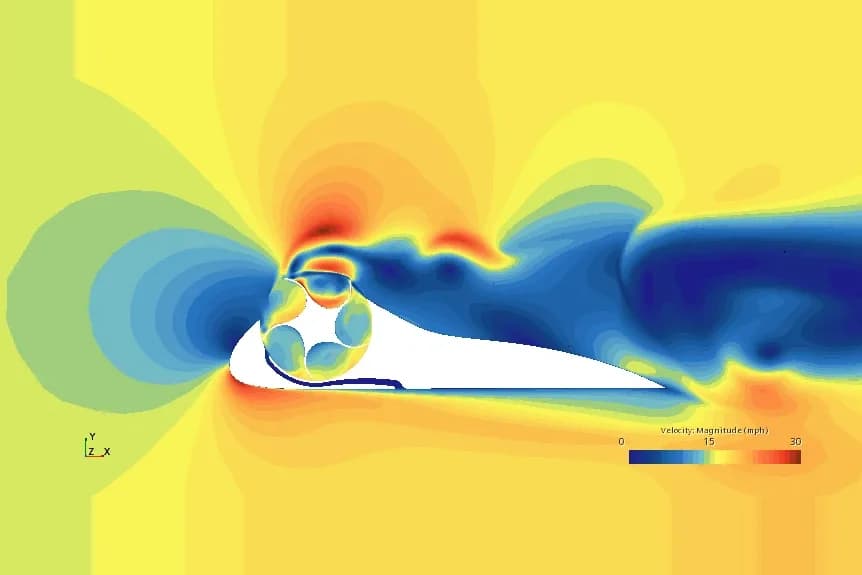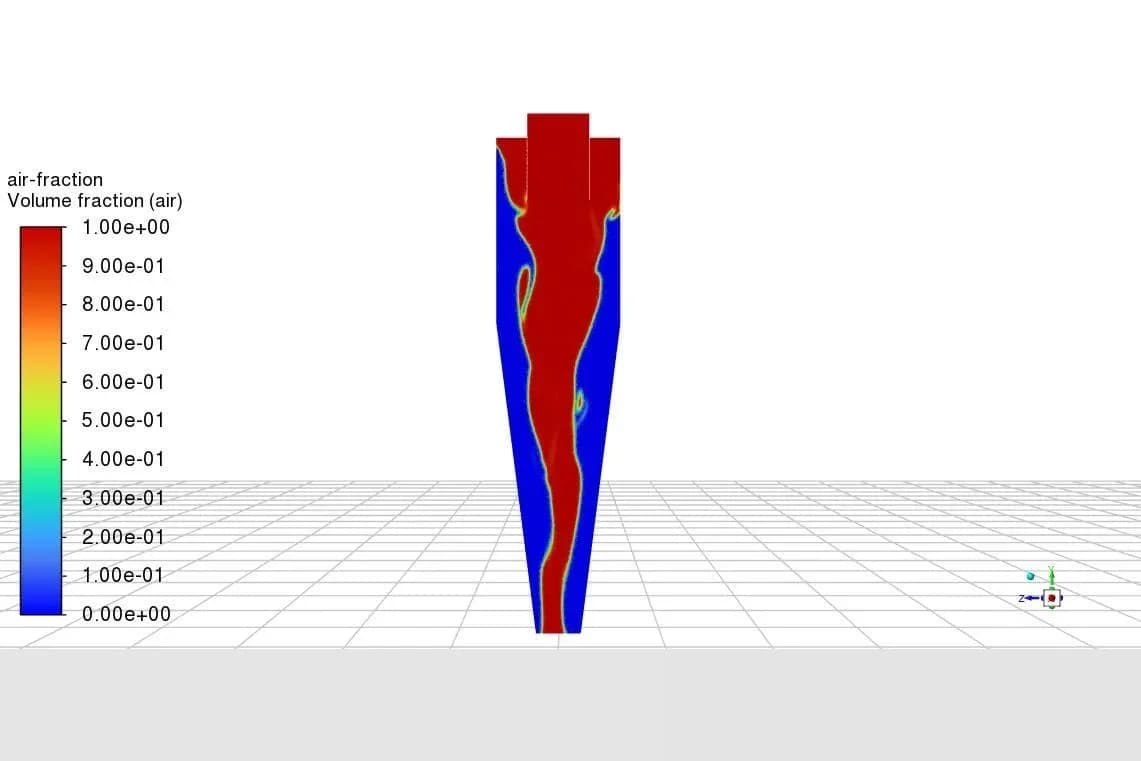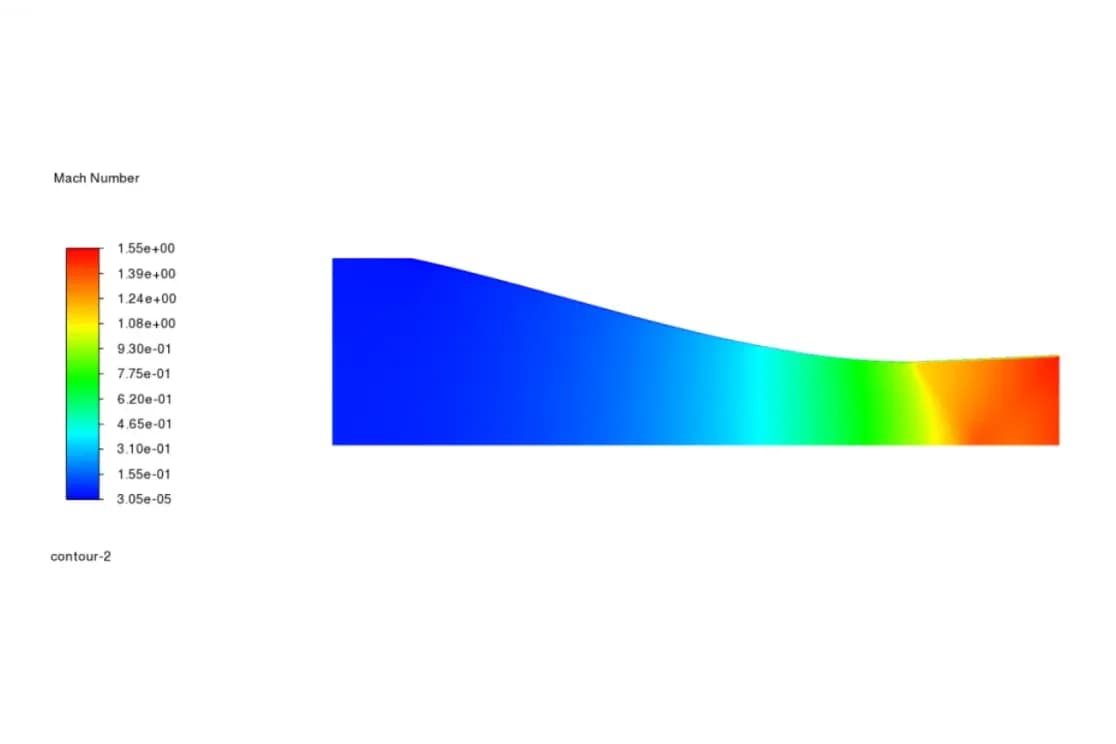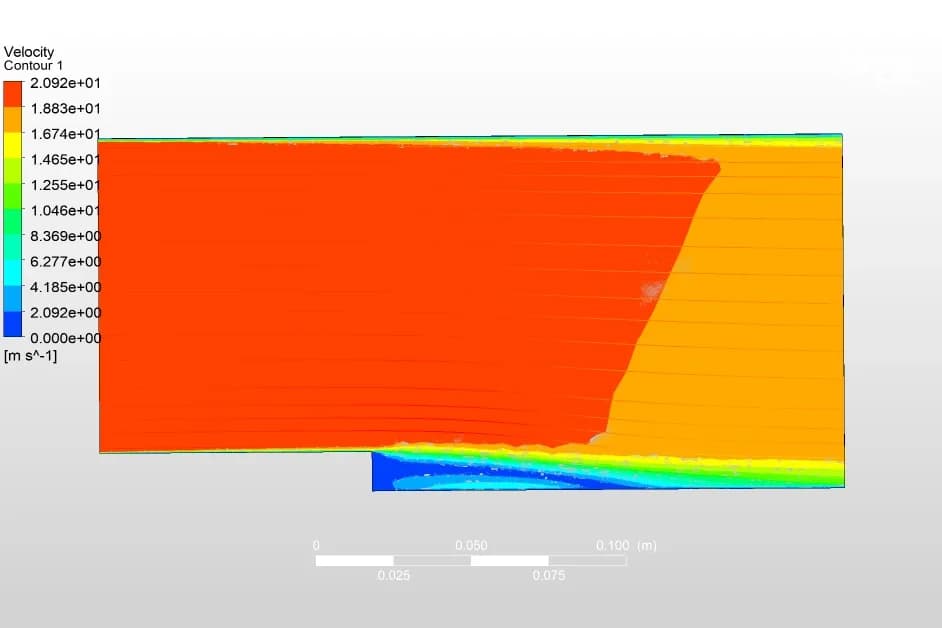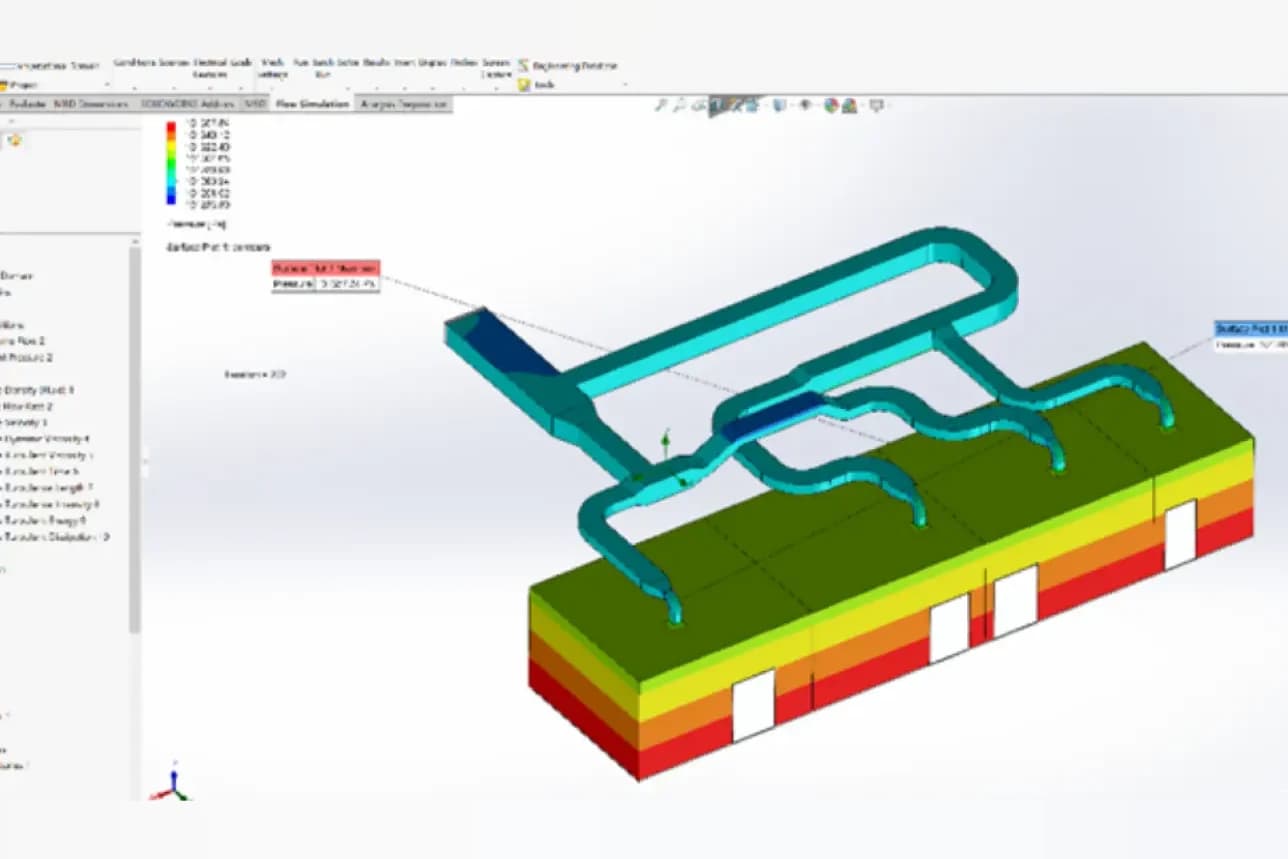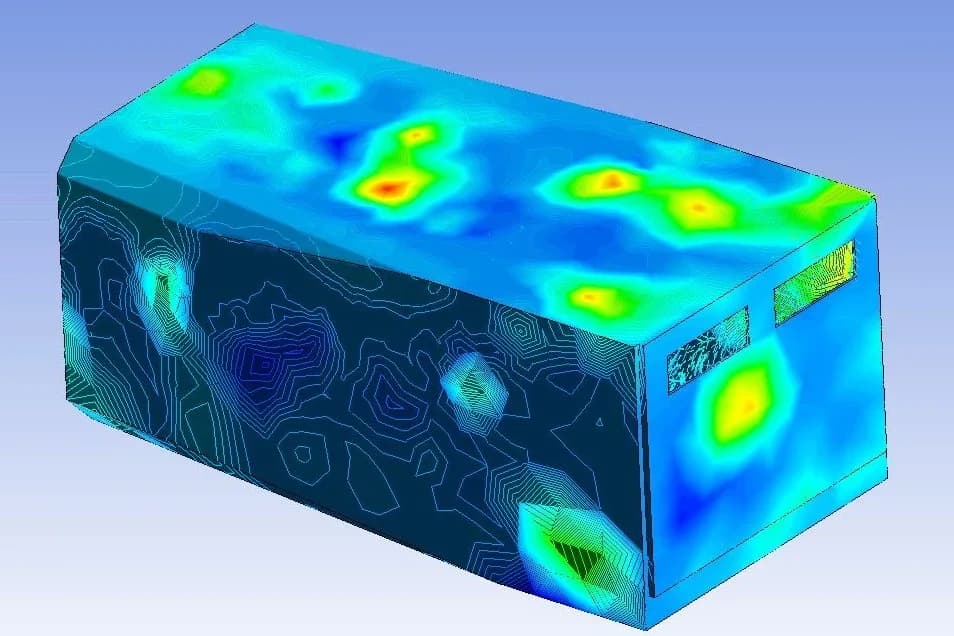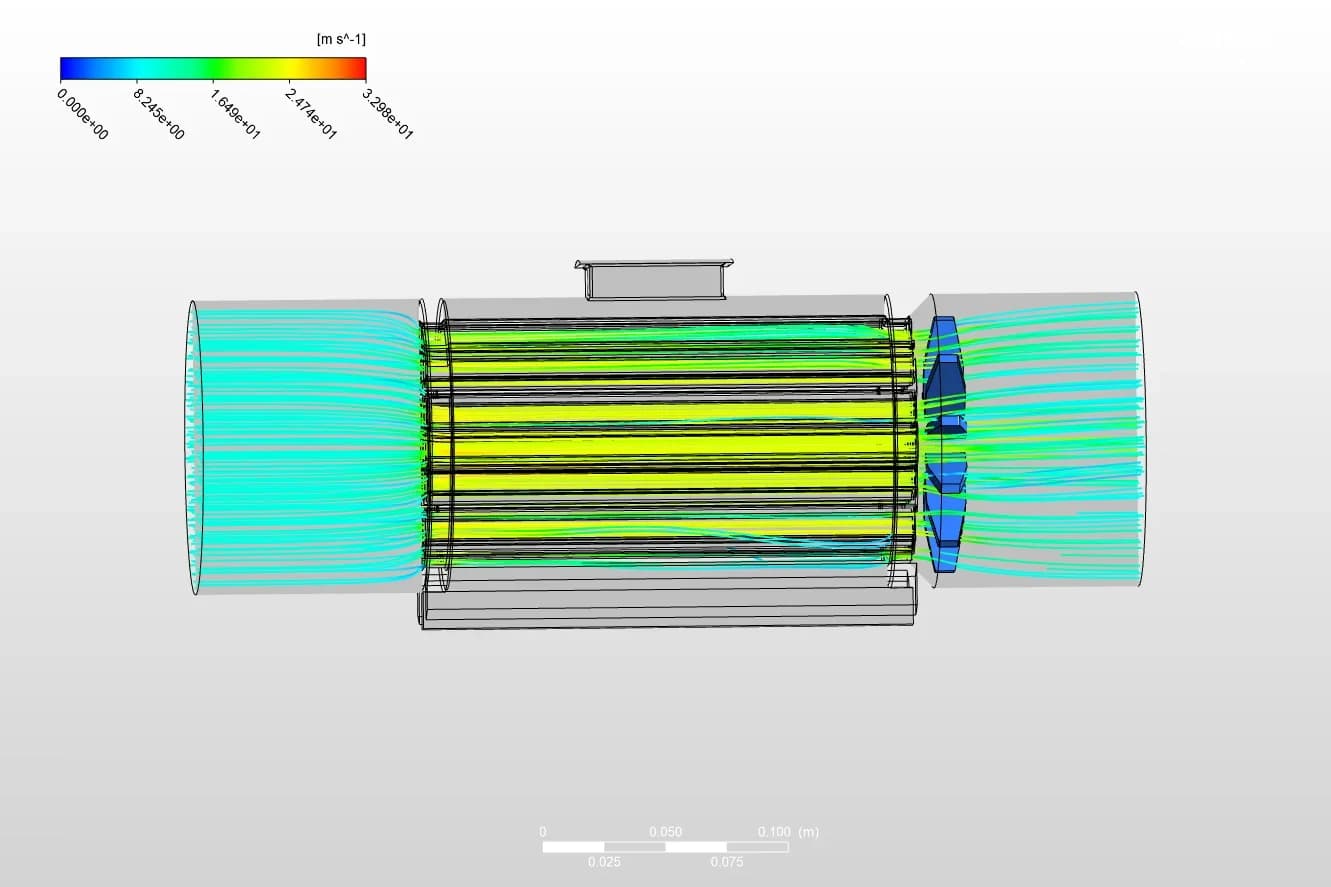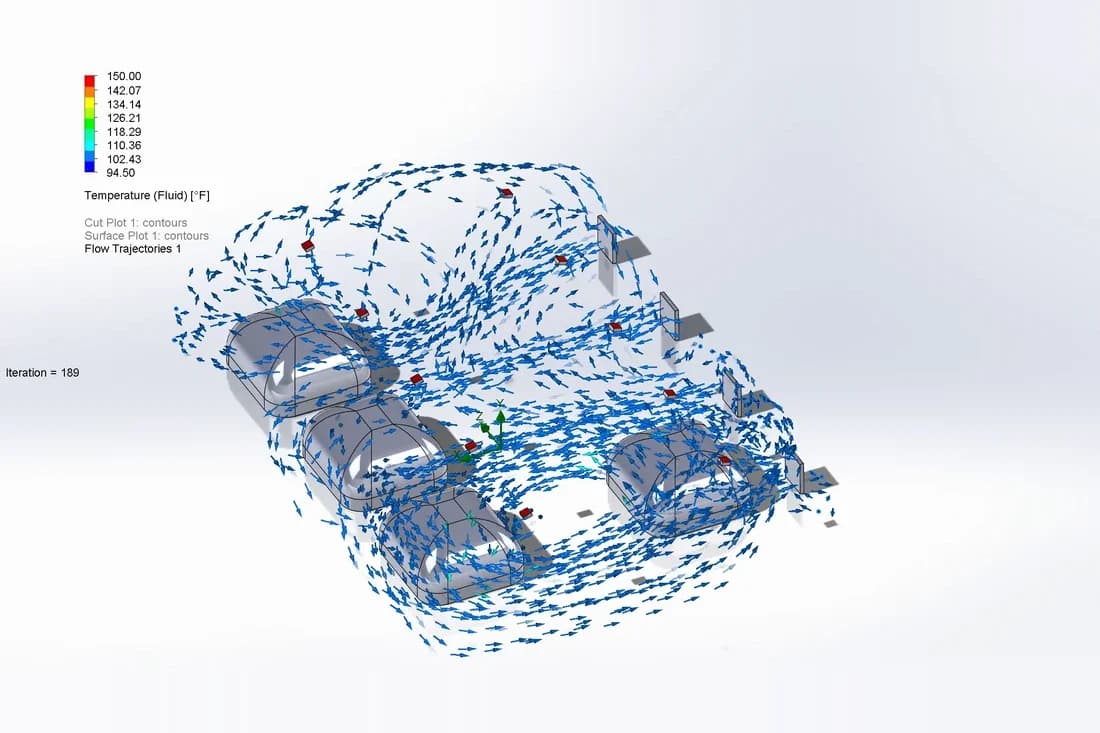
From airflow and cooling to mixing and pressure drop, CFD shows what is happening inside your design so you can improve it fast.

Our CFD consulting engineers show you how air, water, gas and heat move through and around your design before you build it. With computational fluid dynamics we predict velocity, pressure, temperature and forces, find recirculation zones, hot spots and pressure losses, and test design changes in days instead of weeks of prototyping.
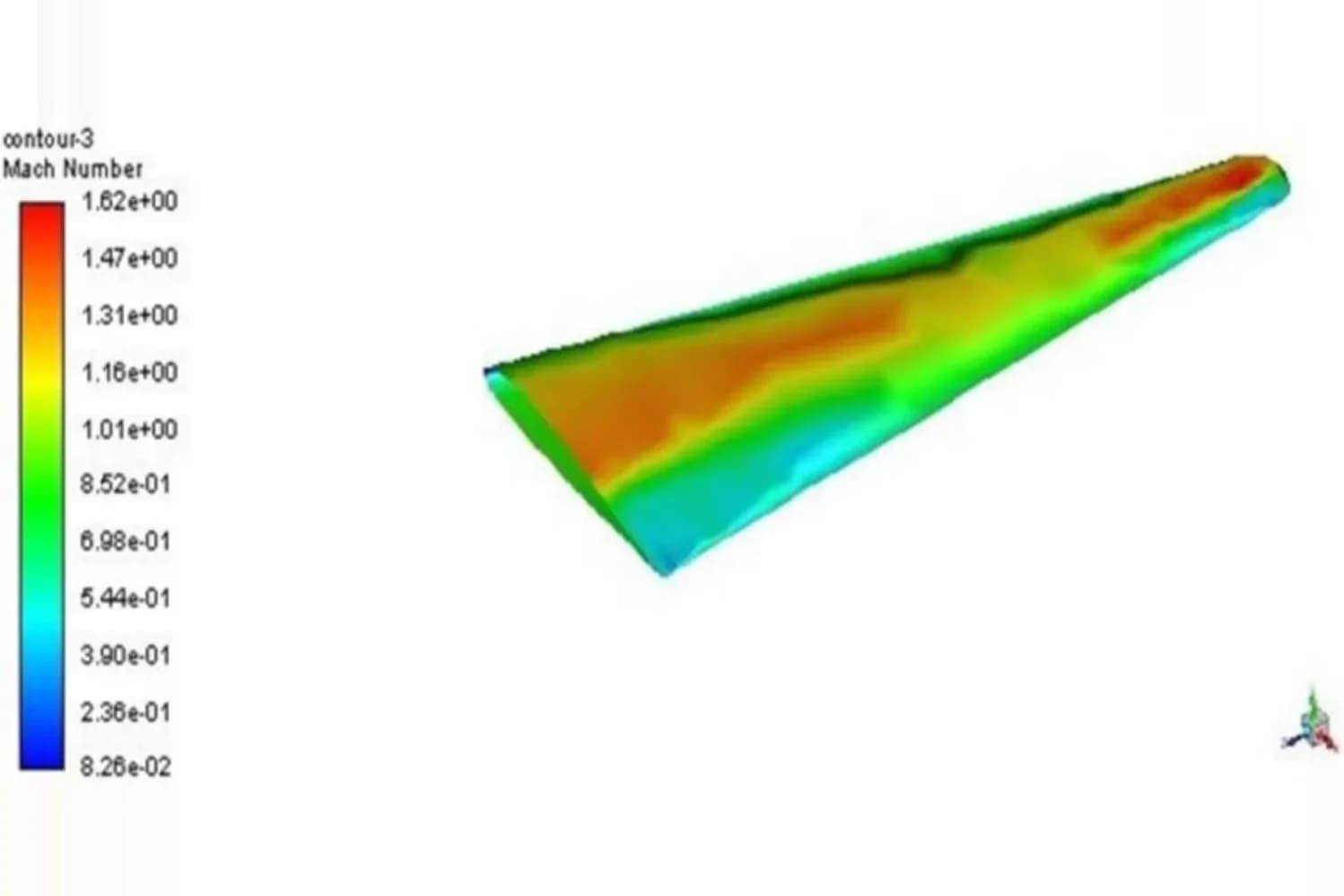
Our work ranges from the external aerodynamics of drones, aircraft wings and race car wings to internal flows in ducts, nozzles and cyclone separators, ventilation and thermal comfort in warehouses, offices and kitchens, multiphase flows with free surfaces, and rotating machinery such as fans and wind turbines.
Accuracy is built in rather than assumed: boundary layers resolved with inflation layers, turbulence models chosen for the flow, convergence tracked on the quantities that matter, and validation against published experiments, as in our backward-facing step benchmark. You receive clear plots and animations, the key numbers and specific design recommendations.

Many projects need design and simulation together, and you can keep both with one team.
Finite Element Analysis - FEAOur FEA services show how your parts handle stress, vibration and heat, so you can make them stronger, lighter and safer.Explore the service
3D CAD ModelingOur CAD services turn concepts into precise 3D models and drawings, ready for simulation and manufacturing.Explore the serviceWe run CFD on a wide range of systems and operating conditions. These are the studies clients ask us for most, and what each one tells you.

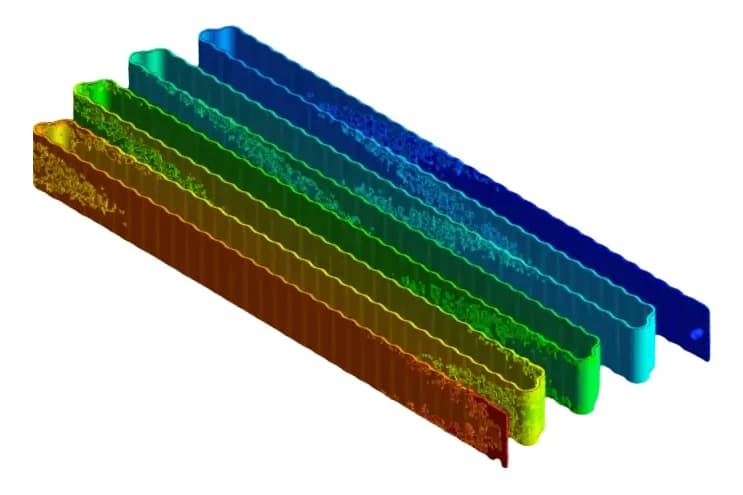
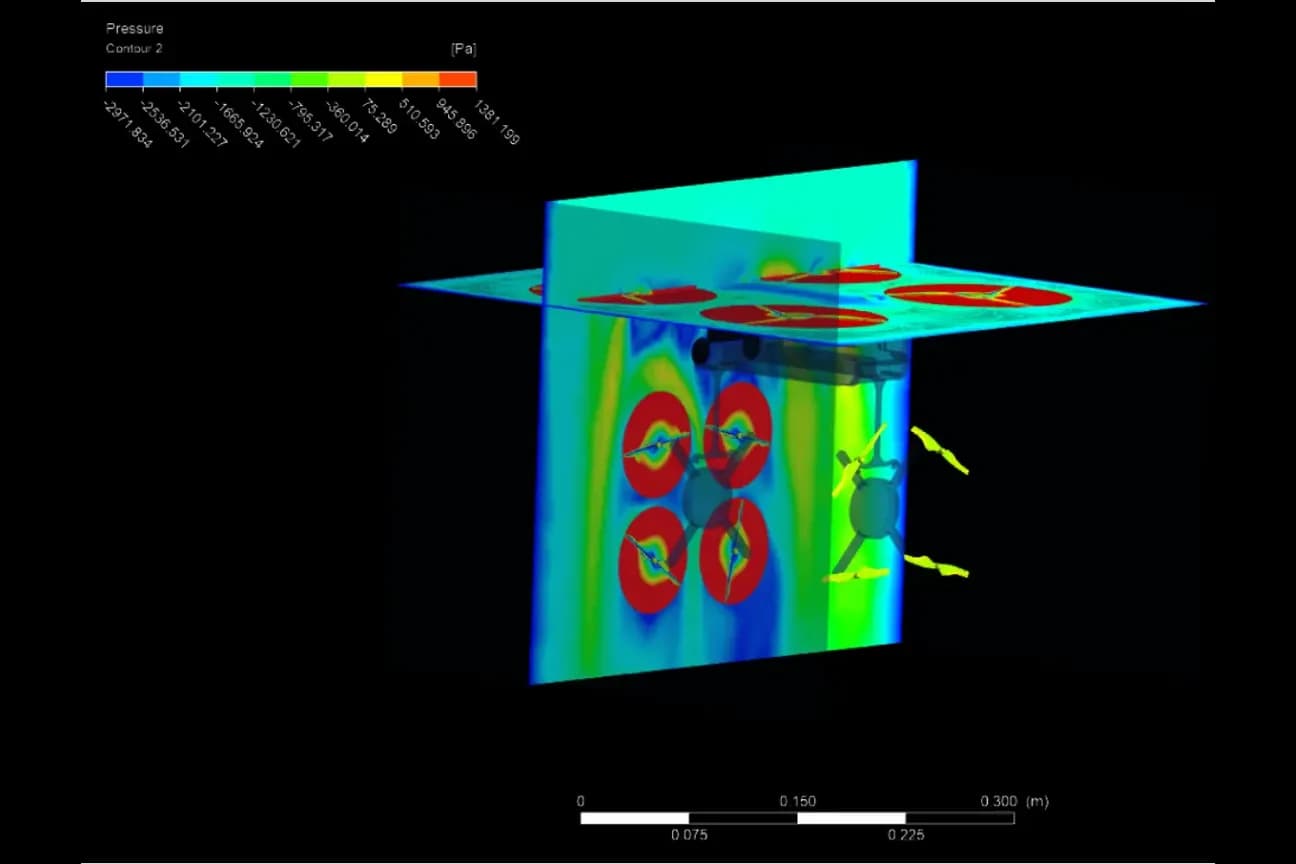
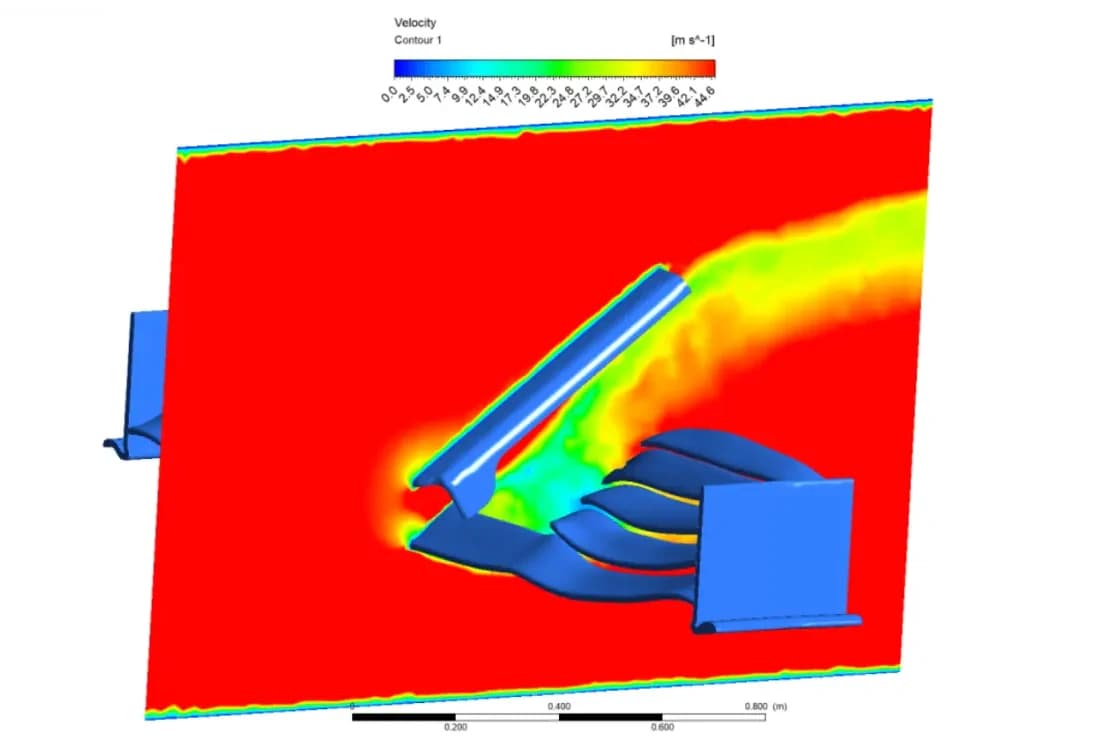
Virtual wind tunnel and internal airflow studies that cut drag, add downforce or balance flow between outlets, as in our drone, F1 wing and duct cooling projects.

Reacting flow models of burners and combustors that predict flame shape, temperatures and stability, as in our micro gas turbine case study.

Fluid flow coupled with heat transfer, structural deformation or electromagnetics, for problems where one physical effect drives another.

Tracking dust, droplets and particles through the flow to predict separation efficiency, deposition and erosion, as in our cyclone and swirl separator studies.

Phase change models for casting, moulding, thermal storage and freezing that follow the melt front and predict solidification time.

Ventilation, air distribution and thermal comfort in warehouses, offices and commercial kitchens, judged on air speed, temperature and how well fresh air reaches people.

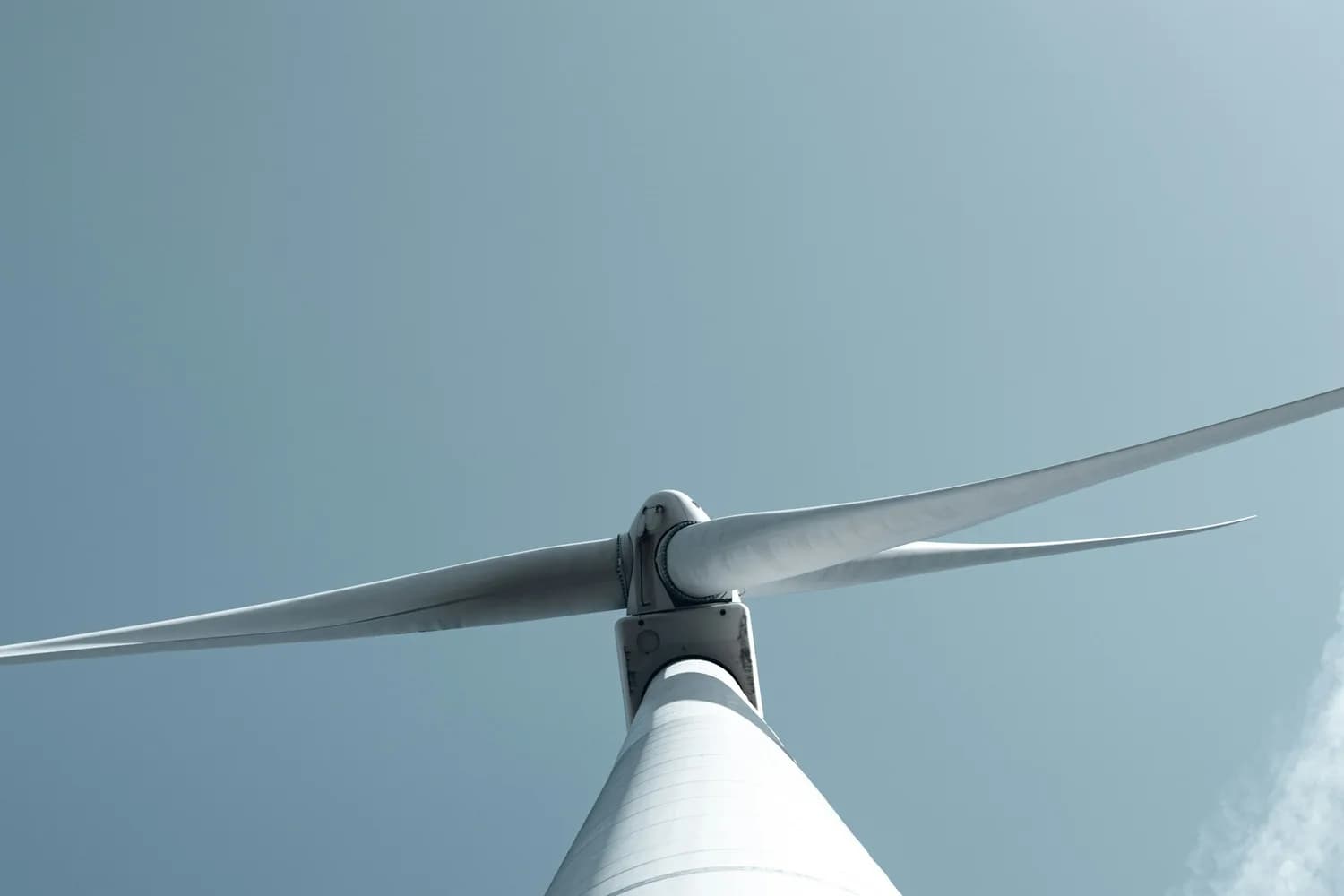
Rotating region and moving mesh models of fans, pumps and turbines that predict power, flow rate and efficiency, as in our wind turbine study.

Passing flow pressures to a structural model, and deflections back when they matter, to check wings, valves and flexible parts under fluid load.

Parametric studies that vary one feature at a time, such as slant angle, winglet shape or inlet size, to find the best performing design.

Electromagnetic field simulation of motors, generators and coils, often paired with CFD to remove the heat they produce.

Free surface flows with the Volume of Fluid method, from tank filling and siphoning to sloshing and flow around submerged bodies.

Conjugate heat transfer through solids and fluids to size heat sinks, fans and vents and keep electronics and machinery within their temperature limits.
A clear, predictable process from your first message to results you can design with.
Tell us what you need to know, such as pressure drop, drag, cooling performance, flow balance or comfort, and send your CAD with the operating conditions.
We agree the flow physics, outputs and acceptance criteria, then send a quote for the work involved. Every project is priced individually after we review your files.
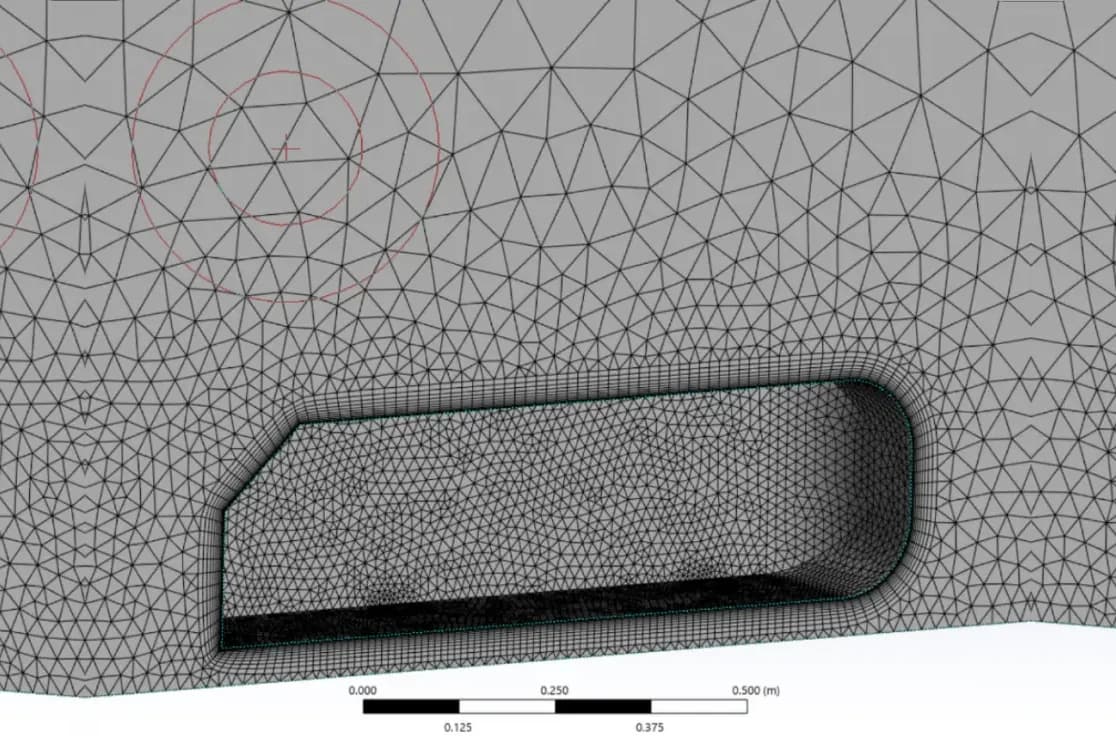
We extract the flow volume, add inflation layers along walls to resolve the boundary layer, and refine the mesh wherever the flow changes quickly.
Turbulence, heat transfer, multiphase or rotation models are chosen to suit your flow, and convergence is tracked on the quantities you care about.
Mesh independence checks, mass and energy balances and comparison with experiments or published data confirm that the answer can be trusted.
Contours, streamlines and animations, the key numbers in a table, and specific design changes, explained in a review call with your team.
Computational fluid dynamics we have delivered for clients, from battery cooling, drones and race car wings to cyclone separators, ventilation and wind turbines.
We choose the solver that suits the physics of your problem.

Turbulent, compressible, multiphase and reacting flows, used in most of our CFD projects.

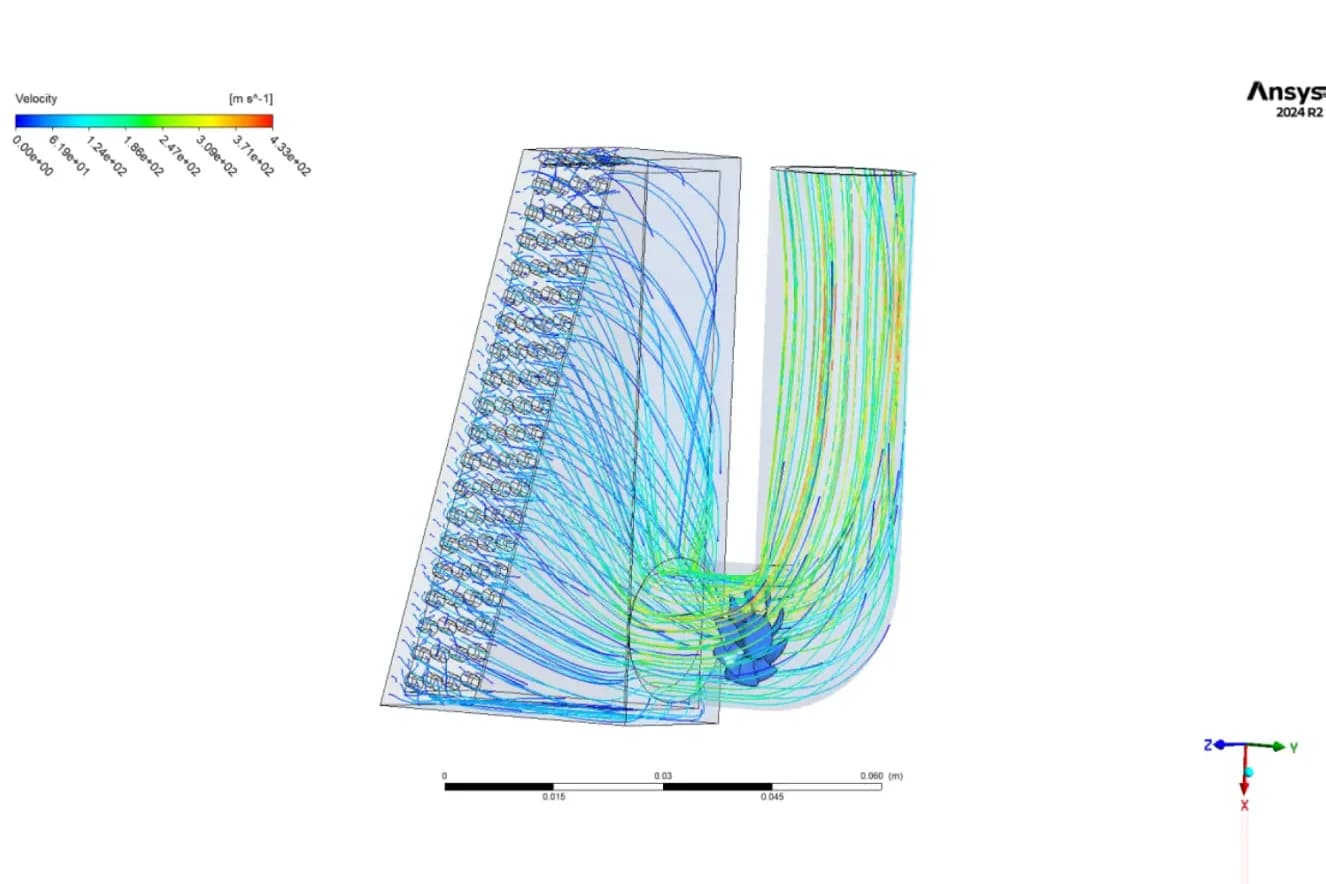
Rotating equipment and turbomachinery, as in our fan heater airflow study.
Large, automated studies and rotating machinery, as in our wind turbine analysis.

Flow coupled with heat transfer, electrical or chemical physics, and microfluidics.

Quick design checks directly inside the CAD model, as in our swirl separator study.
Cloud-based CFD for fast parametric runs without local hardware limits.
At SOLVO Engineers, We Commit To Delivering Innovative, Focused And Personalized
CFD or computational fluid dynamics uses models to simulate airflow, heat, and turbulence. CFD analysis predicts pressure, velocity, temperature, and forces before prototyping, reducing cost, time, and risk.
Computational fluid dynamics reveals flow separation, recirculation, and hot spots early. CFD simulations guide shapes, vents, and cooling choices, improving performance, energy efficiency, reliability, and compliance while shortening iterations.
CFD analysis uncovers excessive pressure drop, vortices, cavitation, erosion risk, mixing issues, insufficient cooling, and noise sources. Finding them early prevents redesigns, improves durability, and increases safety margins.
Accuracy depends on boundary conditions, mesh quality, turbulence models, and material data. We validate with experiments when possible, perform sensitivity checks, and document assumptions so predictions align with real behavior.
We run CFD simulations for air, water, oils, gases, steam, and multiphase mixtures. Models include heat transfer, conjugate cooling, compressible flows, rotating machinery, reacting flows, and species transport.
You receive a clear report, visuals, and design recommendations. Deliverables include contour plots, streamlines, key metrics, and the simulation files, plus a review meeting to discuss results and next steps.
Many CFD projects finish within days to a few weeks depending on geometry cleanup, physics complexity, and computing needs. We set milestones and communicate progress clearly at each stage.
We accept STEP, IGES and Parasolid files as well as native SolidWorks models. You receive a PDF report with plots and key results, animations of the flow and, on request, the simulation case files.
Yes. When possible we compare CFD results with lab measurements or field data like temperatures, flow rates, and pressures. This feedback improves models and builds confidence for certification decisions.
Absolutely. We use CFD to iterate shapes, ducts, inlets, and vents, balancing pressure drop, mixing, and cooling. The outcome is lighter, quieter, more efficient products with fewer parts.
At SOLVO Engineers, We Commit To Delivering Innovative, Focused And Personalized
Practical articles on the flows behind our CFD services.

Read the articleCOMSOL or Ansys Fluent? An at-a-glance table, a verdict for aerospace, energy, electronics cooling and microfluidics, plus STAR-CCM+ and SolidWorks compared.

Read the articleHow CFD thermal simulation designs better heat sinks, enclosures and airflow for electronic products: fins, fans, vents, hot spots and natural convection.

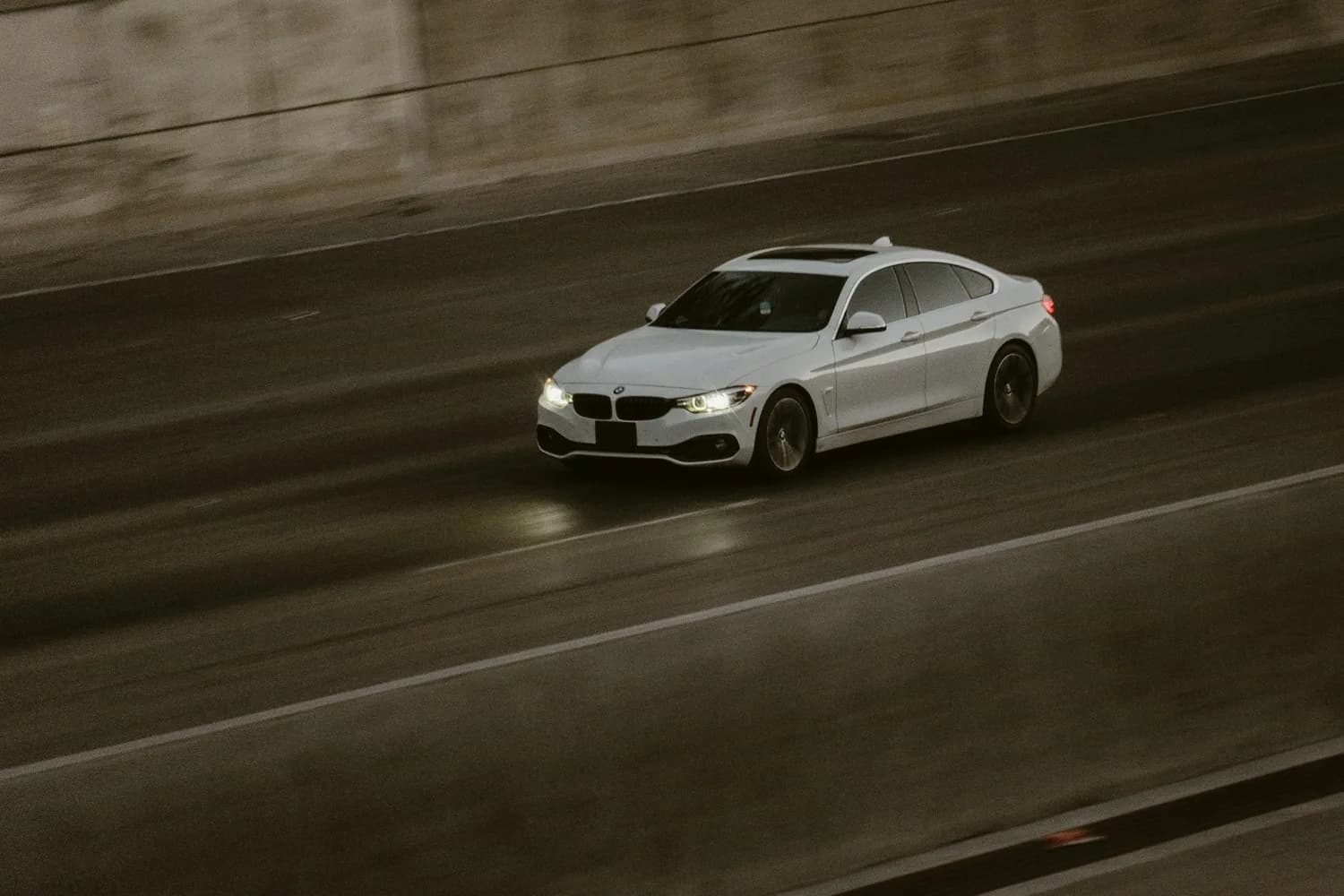
Read the articleHow automotive CFD cuts aerodynamic drag on cars, trucks and EVs: rear-end shape, wheels, underbody and cooling airflow, plus what you need to start.

Read the articleHow CFD and FEA help design wind turbines: rotor aerodynamics and power curves, blade strength and fatigue, tower resonance and generators.

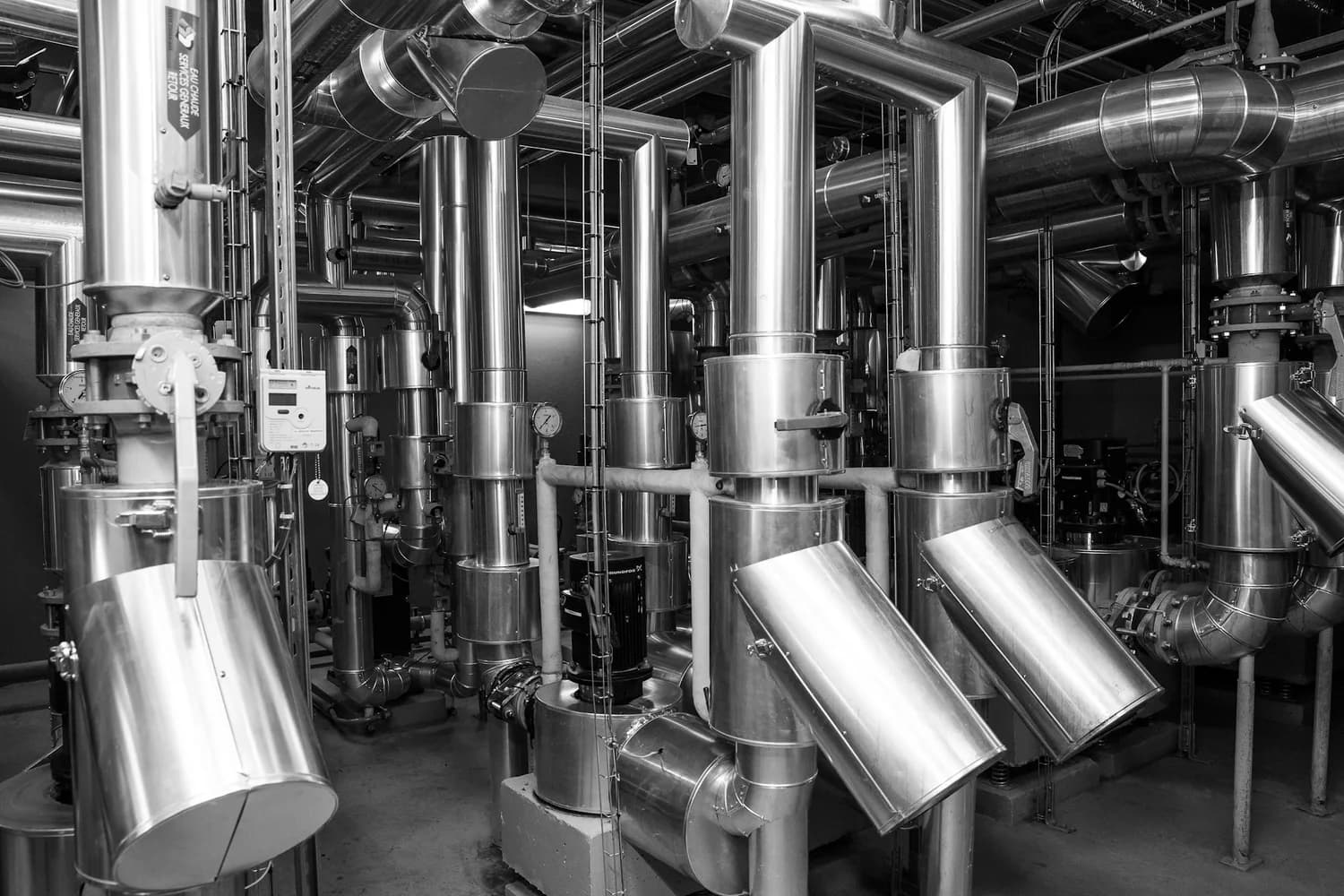
Read the articleHow CFD and FEA improve heat exchangers: flow maldistribution, pressure drop, fouling, flow-induced tube vibration, tubesheet and thermal stress, and flanges.

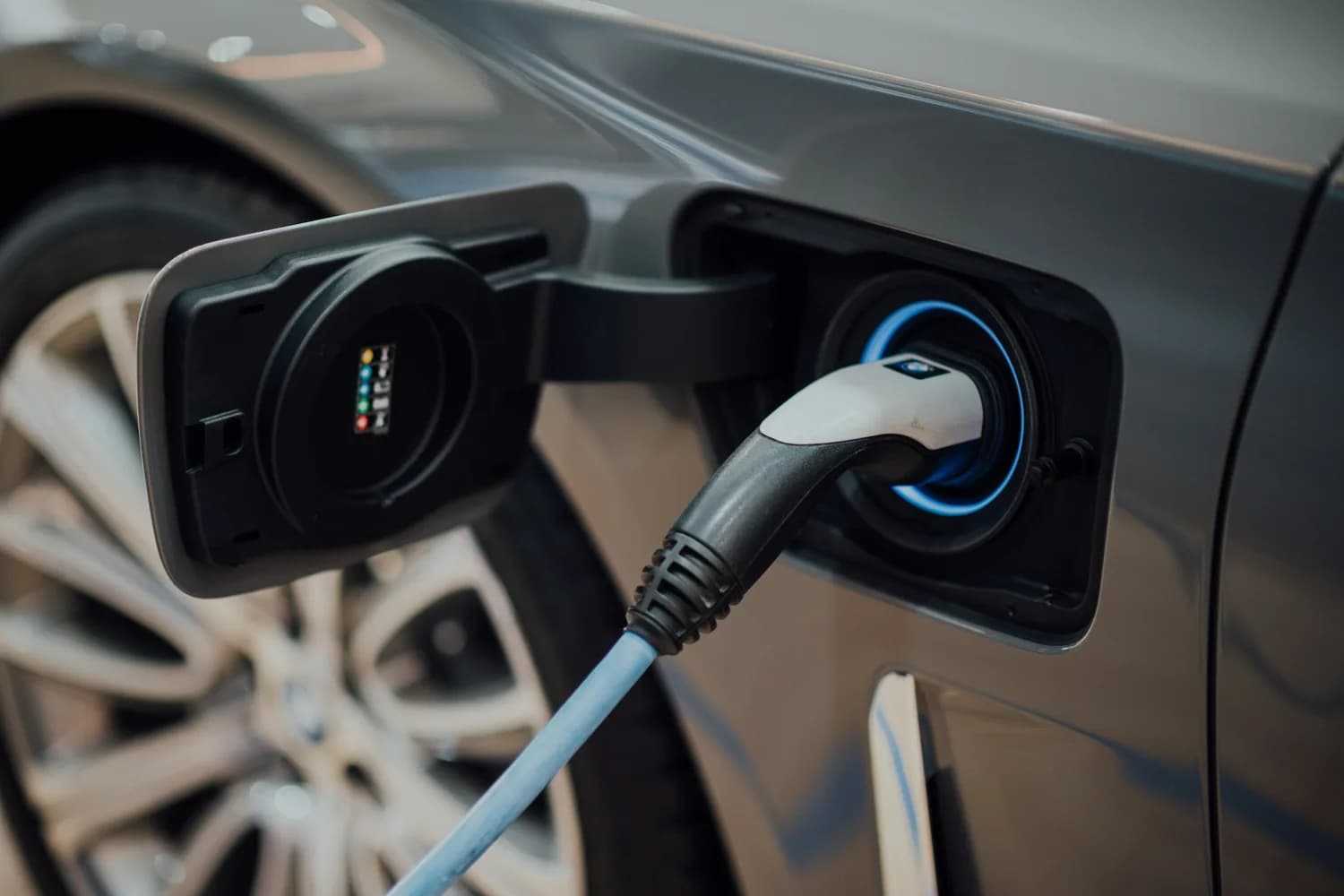
Read the articleHow CFD and FEA help EV teams design battery packs: cooling plates, cell temperatures, enclosure strength, vibration, crash and thermal runaway.