
Introduction
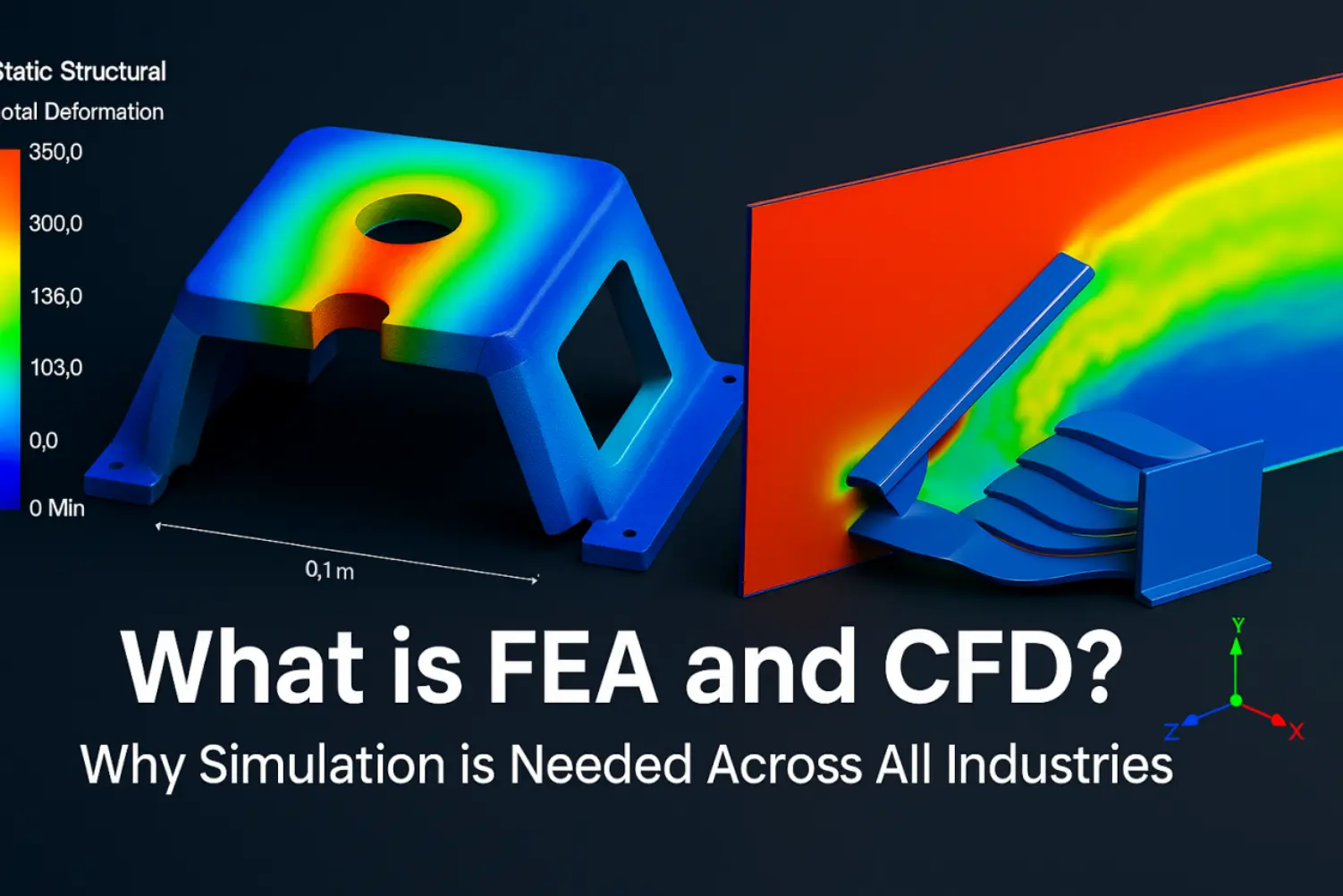
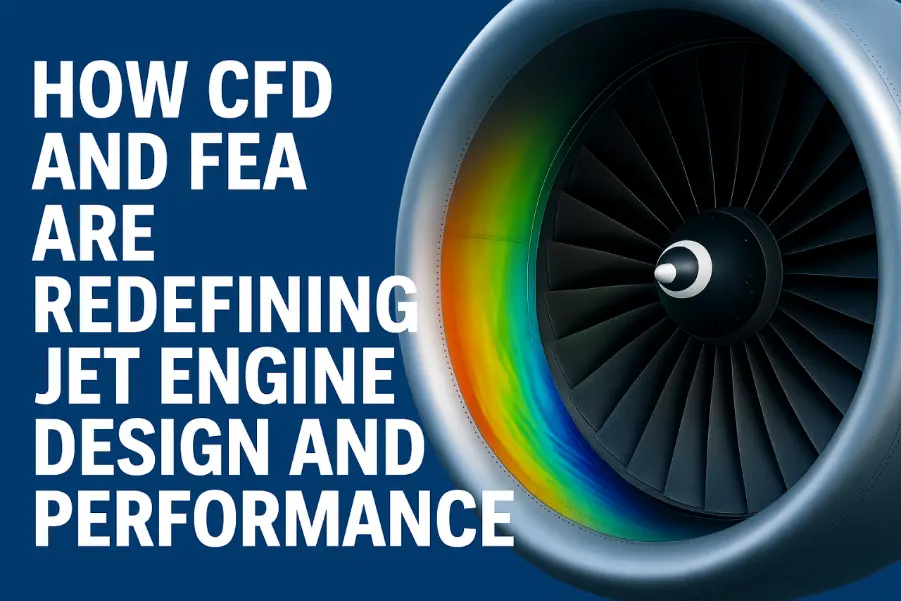
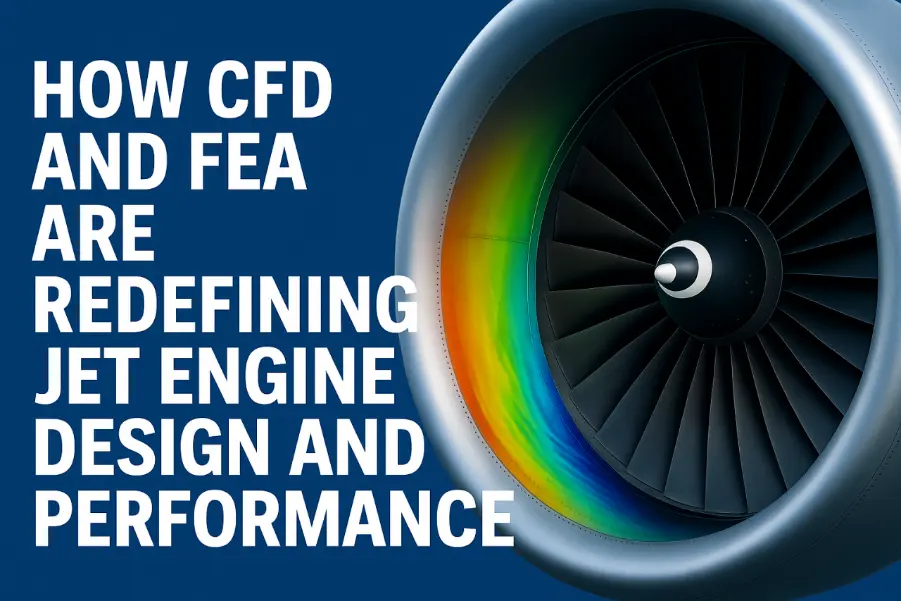
In the aerospace and defense industry, the design of jet engines has always been a complex challenge. With high expectations for fuel efficiency, thermal stability, noise reduction, and safety, engineers are constantly seeking better ways to develop and validate engine components. Thanks to the advancement of digital simulation tools such as Computational Fluid Dynamics (CFD) and Finite Element Analysis (FEA), the entire design and testing process has evolved—enabling faster, more accurate, and cost-effective innovations.
Why Jet Engines Demand Advanced Simulation
Jet engines operate in extremely harsh environments—temperatures can soar beyond 1,500°C and components rotate at tens of thousands of revolutions per minute. These conditions demand not only aerodynamic excellence but also structural resilience. Traditional trial-and-error testing is simply not practical at this scale due to time, cost, and safety constraints. That's where CFD and FEA come in.
- CFD helps analyze how air and combustion gases flow through the engine, optimize air intake designs, simulate pressure drops, and even assess turbulence and shockwave formation in supersonic regimes.
Together, these tools give engineers a digital twin of their engine before a single part is manufactured.
Key Applications of CFD and FEA in Jet Engines
- Turbine Blade Cooling: CFD is used to design intricate internal cooling channels in blades and evaluate heat transfer performance, while FEA assesses thermal stresses to avoid cracks and creep.
- Compressor Stall Prediction: CFD simulations help understand and prevent compressor stall conditions by optimizing blade angles and pressure ratios.
- Vibration and Harmonic Analysis: Using FEA, engineers predict natural frequencies and mode shapes of rotating components to avoid resonance and structural failure.
- Noise Reduction: CFD is used to model noise generation due to turbulent exhaust flow, helping reduce emissions and meet international standards.
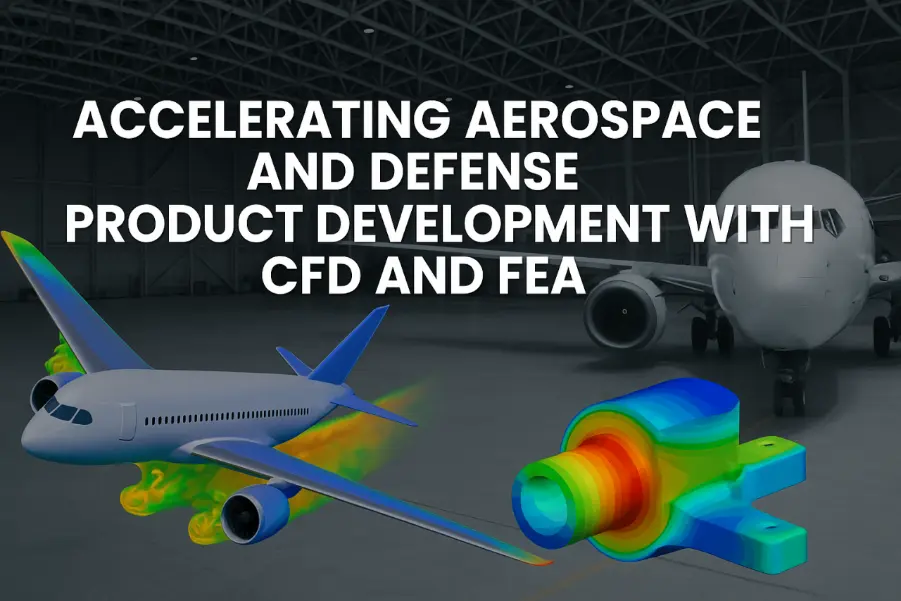
FEA in Aerospace and Defense Engineering
Finite Element Analysis complements CFD by focusing on structural performance. It helps engineers evaluate how components respond to loads such as vibration, pressure, acceleration, or thermal expansion. Applications include:
- Wingbox and fuselage stress analysis
- Landing gear impact simulations
- Rocket and missile casing deformation
- Composite material failure prediction
- Modal and harmonic vibration analysis
With FEA, aerospace engineers can predict fatigue life, identify high-stress zones, and optimize material usage while meeting weight and safety requirements. This is particularly important when working with expensive composites or mission-critical components.
Benefits of Simulation in Aerospace Engineering
By integrating CFD and FEA early in the design process, manufacturers can reduce design cycles, improve fuel efficiency, lower emissions, and enhance safety. The result is a more sustainable development process—essential for the aerospace and defense industry where precision, reliability, and innovation are critical.
Conclusion
The future of jet engine development will continue to rely heavily on simulation. Whether it's reducing emissions in commercial aviation or enhancing propulsion systems for next-generation defense aircraft, CFD and FEA are proving to be indispensable tools. As software tools like Ansys, STAR-CCM+, and COMSOL grow even more advanced, their ability to push the limits of what's possible in jet engine design becomes clearer every day.