
Introduction
In the world of modern engineering, the ability to predict how a product will perform before building it physically is not just a competitive advantage—it's a necessity. Two of the most powerful digital tools making this possible are FEA (Finite Element Analysis) and CFD (Computational Fluid Dynamics). These simulation technologies help engineers and designers evaluate performance, improve safety, reduce material waste, and accelerate product development cycles.
Whether you're building an aircraft wing, a smartphone casing, or a cooling system for a warehouse, FEA and CFD have become essential in virtually every industry. But what are these tools exactly, and why are they so important?
Understanding FEA – Finite Element Analysis
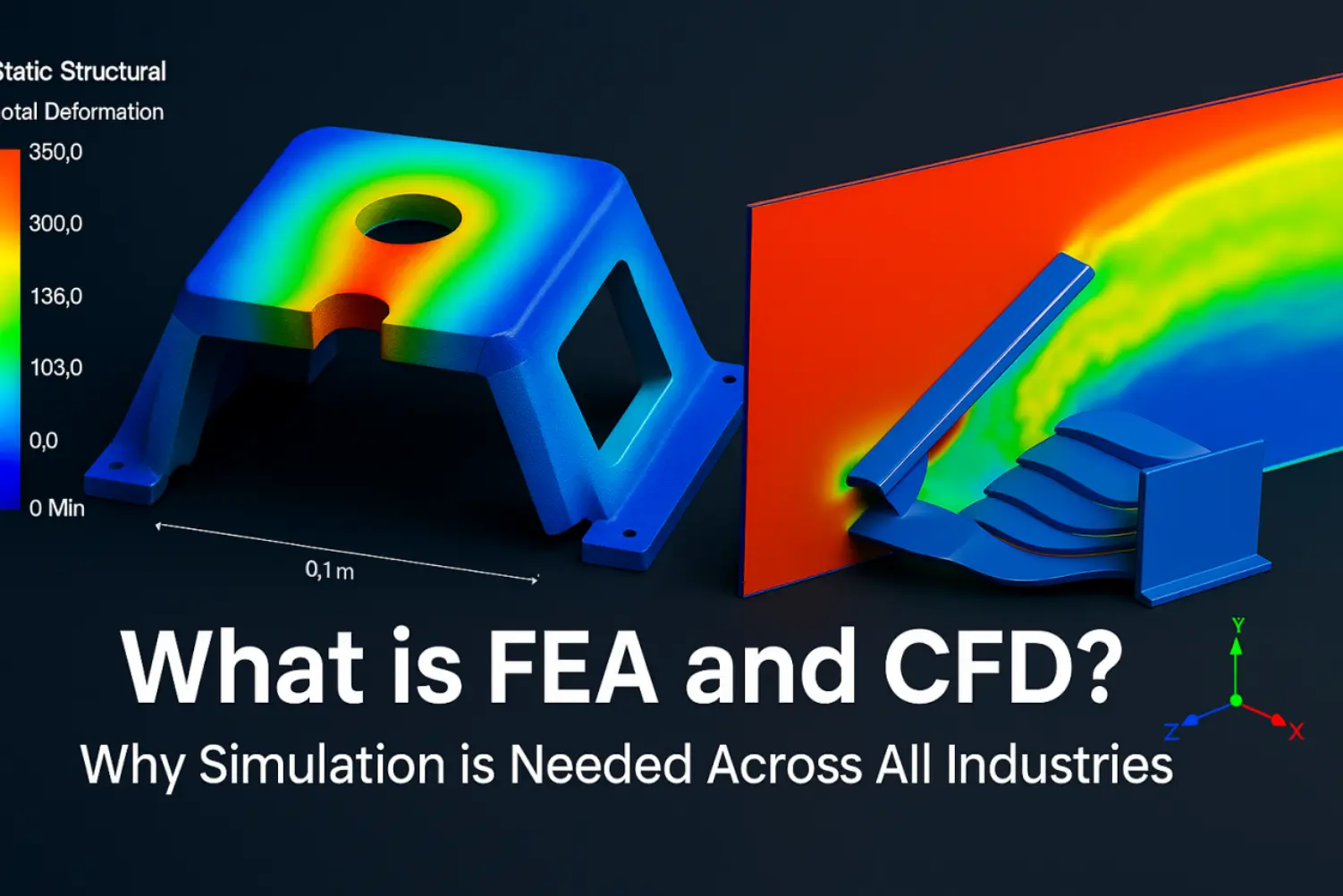
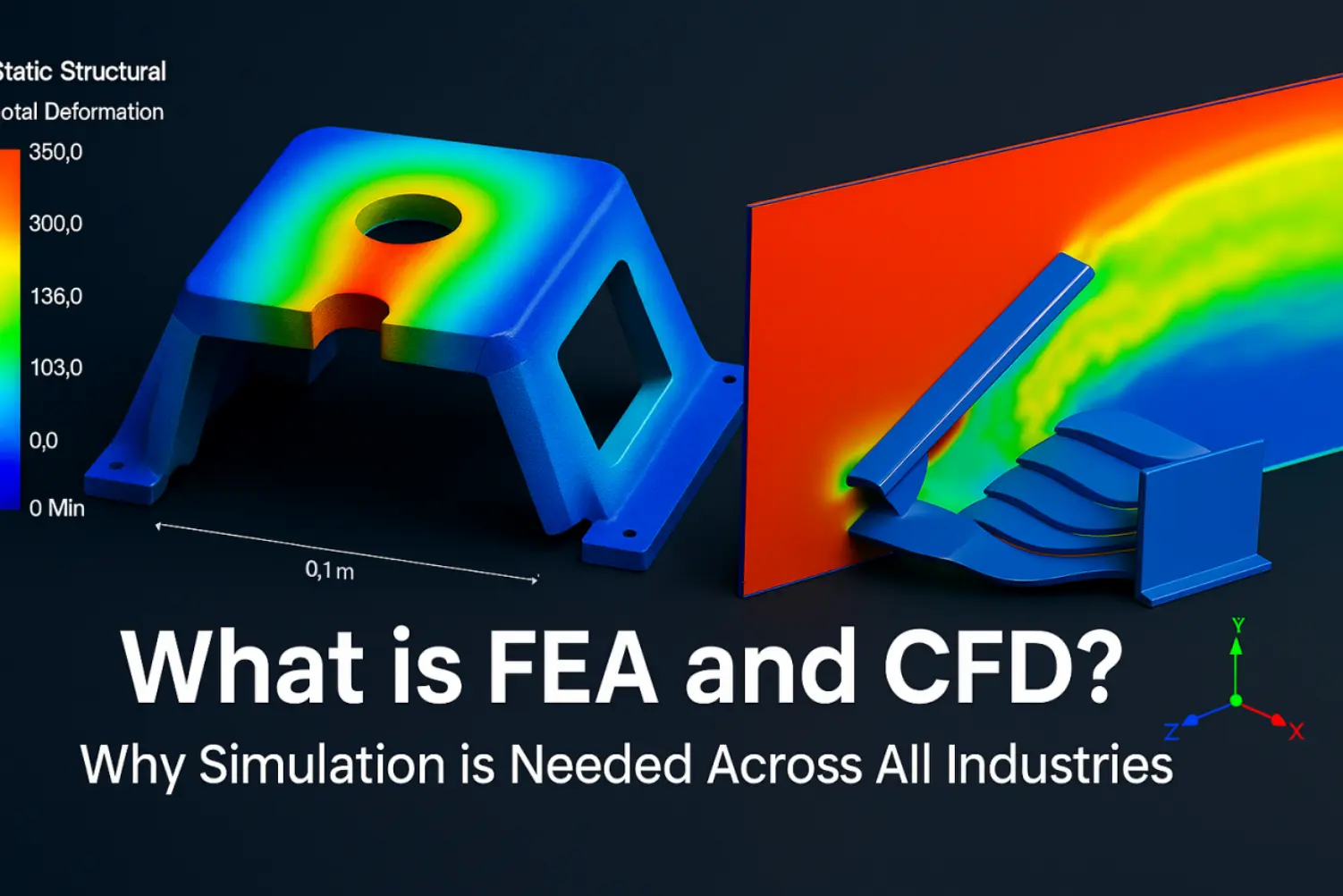
FEA is a simulation technique that helps engineers understand how a physical object behaves under real-world forces such as pressure, heat, vibration, and mechanical loads. It involves breaking down a part into a large number of small elements. Mathematical equations are then applied to each of these elements to estimate stress, strain, deformation, and other physical responses.
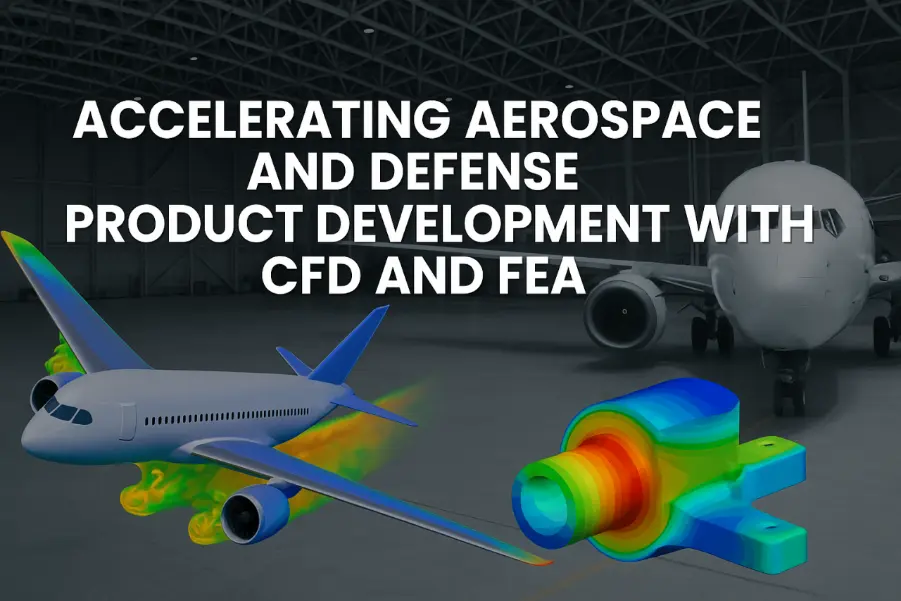
This method allows teams to predict whether a product will bend, crack, or break under load—even before it is manufactured. Engineers can identify weak points in a design and improve them without ever cutting a piece of material or creating a prototype. FEA is widely used in industries like aerospace, automotive, medical devices, and consumer products. With tools like Ansys Mechanical, SolidWorks Simulation, and Abaqus, engineers can quickly evaluate whether a design meets strength and safety requirements.
Understanding CFD – Computational Fluid Dynamics
While FEA focuses on structural behavior, CFD is used to simulate the movement of fluids, whether air, water, gas, or liquid coolant—within or around a system. This technique is crucial for analyzing how air flows over a car, how heat moves through a cooling chamber, or how pressure changes inside a pipe.
CFD uses mathematical models to solve complex fluid flow equations and predict how fluids will behave in various environments. Engineers use CFD to analyze temperature distribution, airflow efficiency, pressure drops, and turbulence patterns in a wide range of applications.
Software like Ansys Fluent, COMSOL Multiphysics, SolidWorks Flow Simulation, and STAR-CCM+ offer advanced capabilities to simulate real-world flow behavior with high accuracy.
Why These Tools Matter Across All Industries
The use of FEA and CFD has grown far beyond traditional sectors like aerospace and automotive. These tools are now crucial in industries such as consumer electronics, biomedical devices, building systems, energy, and even agriculture. Simulation empowers teams to test multiple design variations virtually and choose the most efficient, cost-effective, and safe option.
For example, an electronics engineer might use FEA to ensure a smartphone case can survive a drop test, and use CFD to analyze cooling inside the device. An HVAC designer might use CFD to optimize airflow in a warehouse to reduce energy consumption while improving thermal comfort.
What makes these tools so valuable is their ability to reduce the need for physical prototyping. Testing a real-world product can be expensive, slow, and limited in scope. With FEA and CFD, engineers can simulate hundreds of operating conditions, material types, or load scenarios quickly and accurately. This dramatically shortens the product development timeline and improves overall quality.
How Simulation Improves Product Development
Incorporating FEA and CFD early in the design process gives engineers the power to make better decisions based on data. Teams can reduce material usage, avoid costly overdesign, and address potential failures before they happen. Simulation also helps with compliance, allowing engineers to meet performance and safety standards before entering physical testing or certification.
Here's what companies gain from using simulation tools:
- Faster design iterations
- Fewer physical prototypes
- Reduced development costs
- Increased innovation with risk-free experimentation
- Higher confidence in product reliability
As a result, simulation is no longer just an optional step. It has become an expected part of modern product development workflows.
Conclusion
FEA and CFD are revolutionizing the way engineers and product teams develop everything from mechanical parts to entire systems. These tools bring the power of predictive engineering into every phase of design—from concept to validation—saving time, reducing cost, and enhancing performance.
Regardless of the industry or product type, simulation is now a standard requirement. Businesses that embrace these technologies early gain a clear edge in efficiency, innovation, and speed to market. If you're still relying solely on physical testing and trial-and-error design, now is the time to move forward with a simulation-first approach.