
Home / Projects / CFD Analysis for Optimizing Drone Aerodynamics and Performance
CFD Analysis for Optimizing Drone Aerodynamics and Performance
Project Summary
This project involved a comprehensive Computational Fluid Dynamics (CFD) analysis to evaluate and optimize the aerodynamic performance of a multi-rotor drone platform. The primary objective was to reduce drag, improve lift distribution, and enhance overall flight stability under various operating conditions. By simulating airflow over the drone structure using Ansys Fluent, the project aimed to identify high-drag regions, streamline body contours, and improve aerodynamic efficiency for longer flight times and better maneuverability.
With the growing demand for UAVs (unmanned aerial vehicles) across industries including surveillance, delivery, and environmental monitoring, optimizing the aerodynamic behavior of drones is critical. Even small improvements in aerodynamic performance can lead to significant gains in flight range, energy consumption, and thermal load distribution on onboard systems.
Objectives and Approach
The main goals of this CFD simulation were:
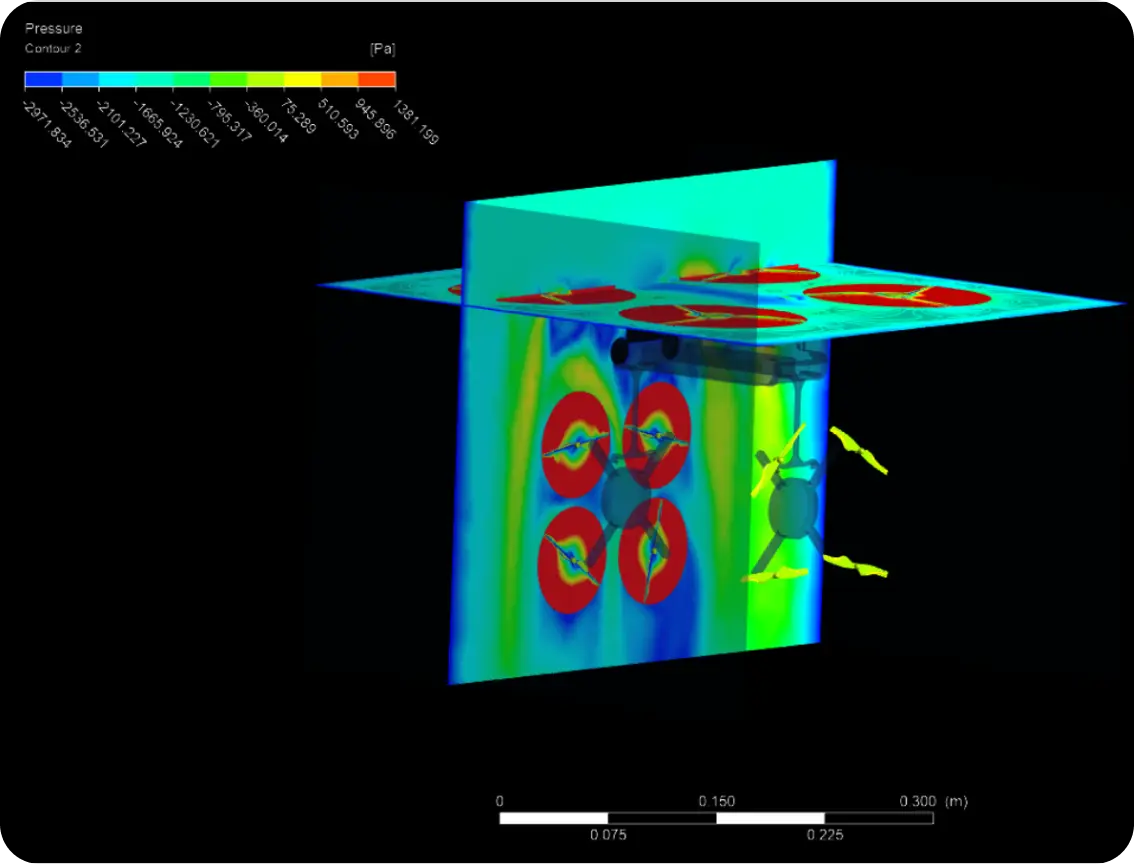
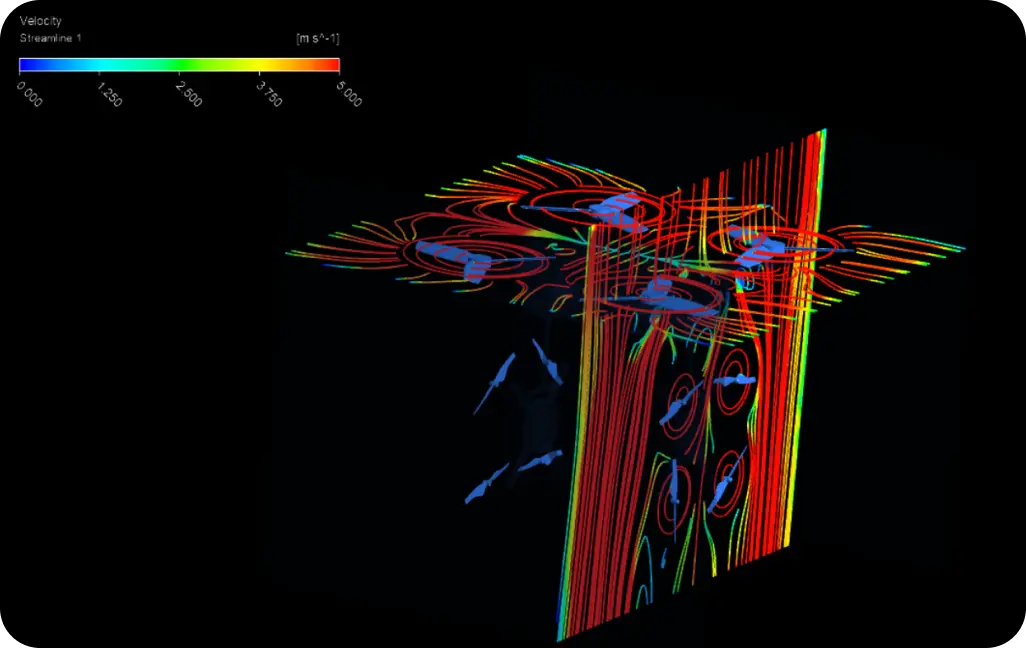
- To analyze airflow patterns, pressure distribution, and wake formation around the drone body and propellers.
- To quantify aerodynamic drag and identify regions contributing to performance losses.
- To evaluate lift generation and pressure asymmetries that affect stability and flight control.
- To provide design recommendations for geometry optimization, especially around rotor arms, landing gear, and fuselage fairings.
A high-resolution 3D model of the drone was prepared, including propeller geometry, motor mounts, and key aerodynamic surfaces. The simulations were performed using Ansys Fluent with turbulence modeling (k-omega SST) and pressure-based solver for incompressible steady flow. Parametric studies were conducted with varying flight speeds and angles of attack to replicate hover, climb, and cruise modes.

Results and Findings
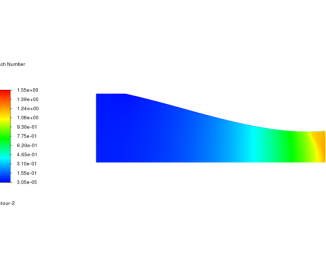
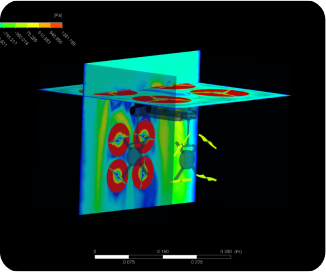
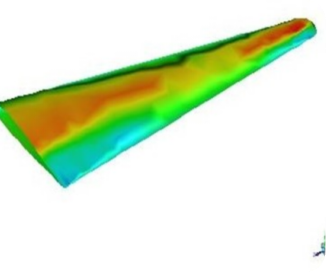
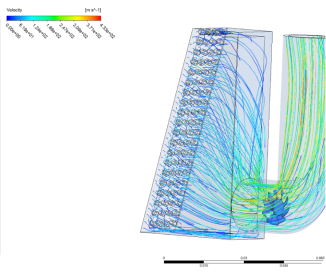
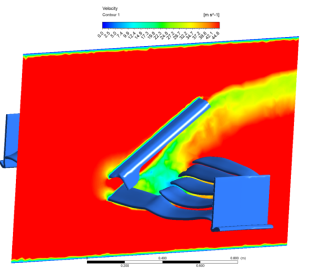
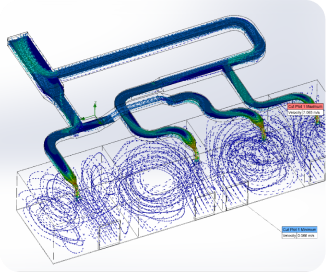
The CFD results provided a clear visualization of flow separation zones, low-pressure wake regions, and turbulent flow interactions around the drone's components. Major insights included:
- High drag concentration was observed at the arm-body junctions and under the central fuselage due to flow stagnation.
- Propeller-induced downwash significantly influenced flow behavior near the rear arms, indicating the need for asymmetric design considerations.
- Streamlining the landing gear and smoothing the underbody reduced pressure drag by over 12%, with potential battery life improvements of up to 8%.
- The wake profile showed enhanced symmetry after modifying the arm profile, leading to improved lateral stability during forward flight.
Overall, the analysis helped inform a more aerodynamically balanced design that minimized energy losses and improved control response in crosswind scenarios.
Conclusion
This CFD-based aerodynamic optimization of a drone platform using Ansys Fluent successfully demonstrated the value of digital simulation in UAV design. By combining geometry tuning with advanced turbulence modeling, the project achieved quantifiable improvements in drag reduction and aerodynamic balance.
Such analyses are essential for engineers working in aerospace, UAV development, advanced vehicle design, or unmanned systems, where performance and endurance depend heavily on flow behavior.
Our Projects
See how Solvo Products has helped its clients achieve their vision of digital innovation.
Our Technologies
 Contact Us
Get in touch with us