
Home / Projects / HVAC Simulation – Increasing Natural Flow in Warehouse Using Ansys CFD
HVAC Simulation – Increasing Natural Flow in Warehouse Using Ansys CFD
Project Summary
This project focused on performing a comprehensive HVAC (Heating, Ventilation, and Air Conditioning) simulation of a warehouse using Computational Fluid Dynamics (CFD) in Ansys. The primary objective was to improve natural ventilation efficiency and optimize airflow patterns within the warehouse to enhance occupant comfort, ensure air quality, and reduce dependence on forced mechanical ventilation systems.
Warehouses are typically large enclosed spaces with limited airflow control, making natural ventilation critical for maintaining a safe and comfortable environment. By evaluating air velocity, pressure distribution, and turbulence behavior throughout the duct system, the study aimed to identify regions of stagnation or poor flow and implement design modifications for enhanced airflow performance.
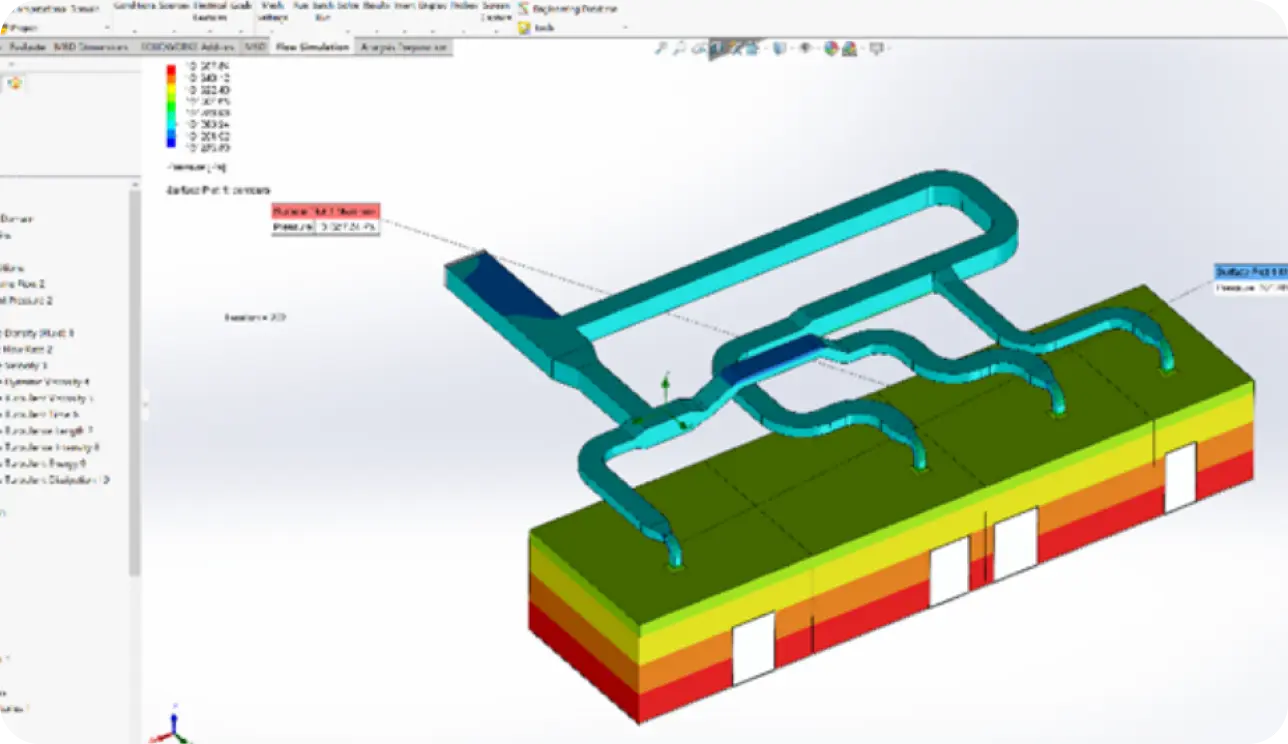
Objectives and Approach
Primary goals:
The key objectives of this project were:
- To simulate the air velocity distribution throughout the duct network and main warehouse volume.
- To identify zones of low airflow or high turbulence intensity.
- To evaluate pressure drop across diffusers and ducts.
- To reduce turbulence in connector ducts through geometric improvements.
- To provide data-driven design recommendations that increase natural airflow with minimal energy input.
Simulation tools and methodology:
- Software Used: Ansys Fluent (2024 R2)
- Simulation Type: Steady-state turbulent flow (RANS modeling)
- Turbulence Model: k-ε standard model
- Geometry: Multi-duct system with diffusers and small connecting ducts
- Boundary Conditions: Air inlet through natural vents; outlet at ceiling ducts
- Mesh: Hex-dominant mesh with refinement near connectors and diffusers
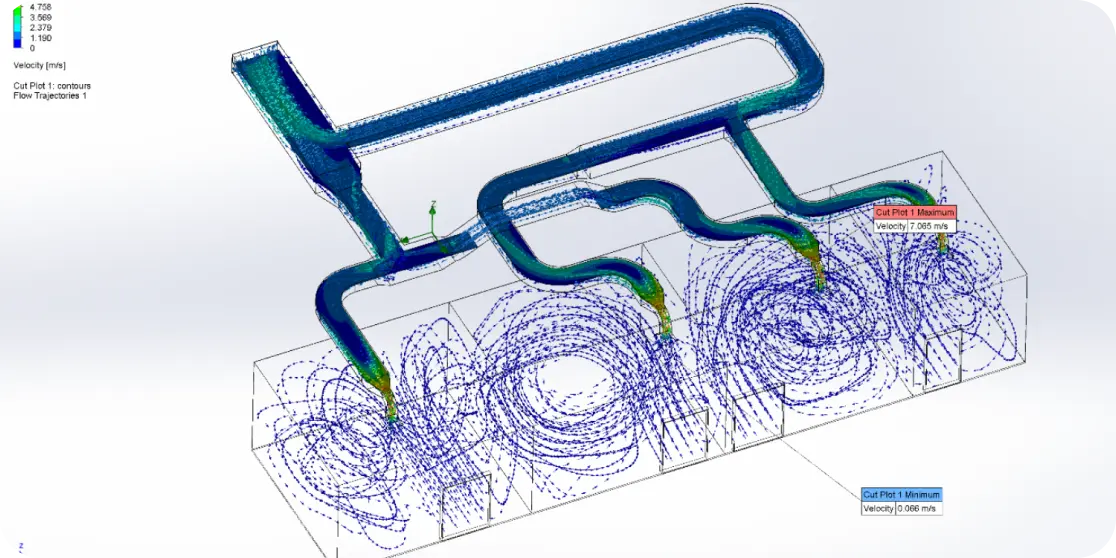
Results and Interpretation
Velocity Profile
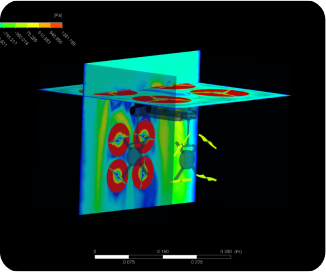
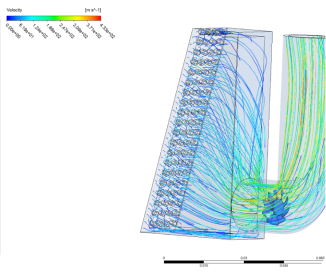
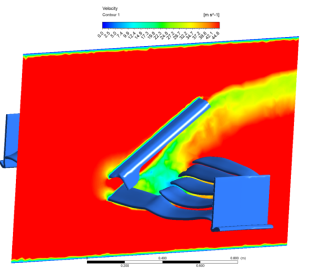
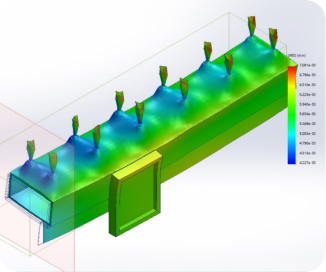
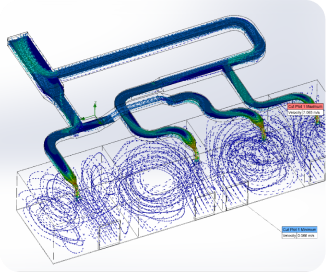
The airflow analysis revealed a maximum velocity of 6.8 m/s, observed near the diffuser outlets, while the minimum velocity occurred near the duct junctions and far-field regions within the warehouse. The velocity cut plots demonstrated strong airflow patterns near the ceiling-level diffusers, ensuring effective air delivery to the upper zones. However, stagnation zones were identified near the lower rear end of the warehouse, indicating areas where airflow distribution could be improved for more uniform ventilation.
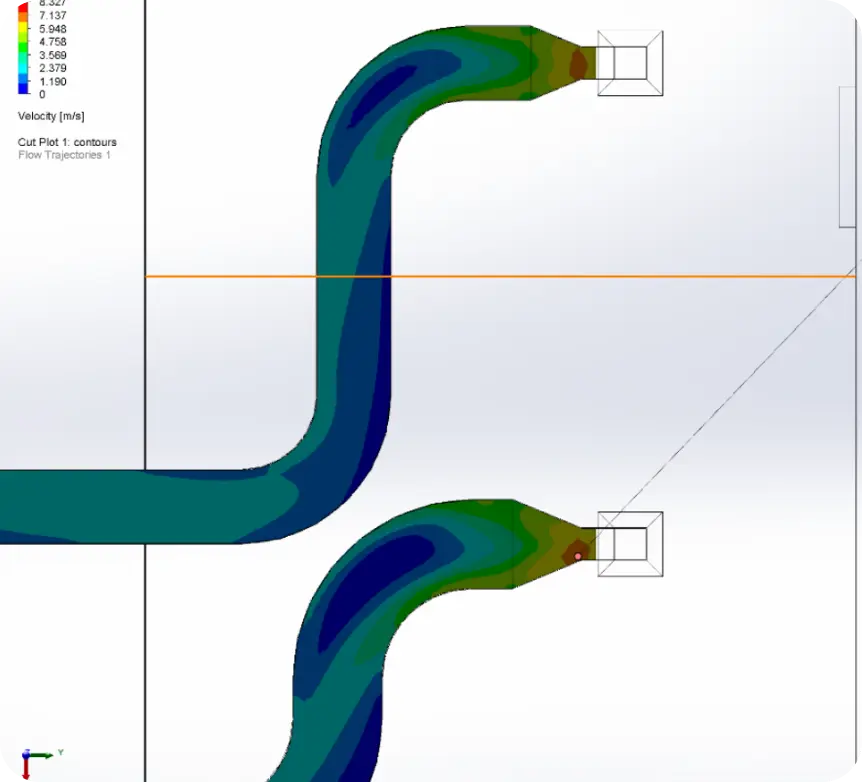
Surface Pressure Distribution
The pressure contour plots indicated a moderate pressure drop from the inlet to the diffuser outlets. This result confirms that the duct system design effectively pulls air through the network with minimal resistance and efficient flow continuity. The overall pressure behavior suggests that the airflow is being managed well across the system, with no significant losses that could compromise ventilation efficiency.
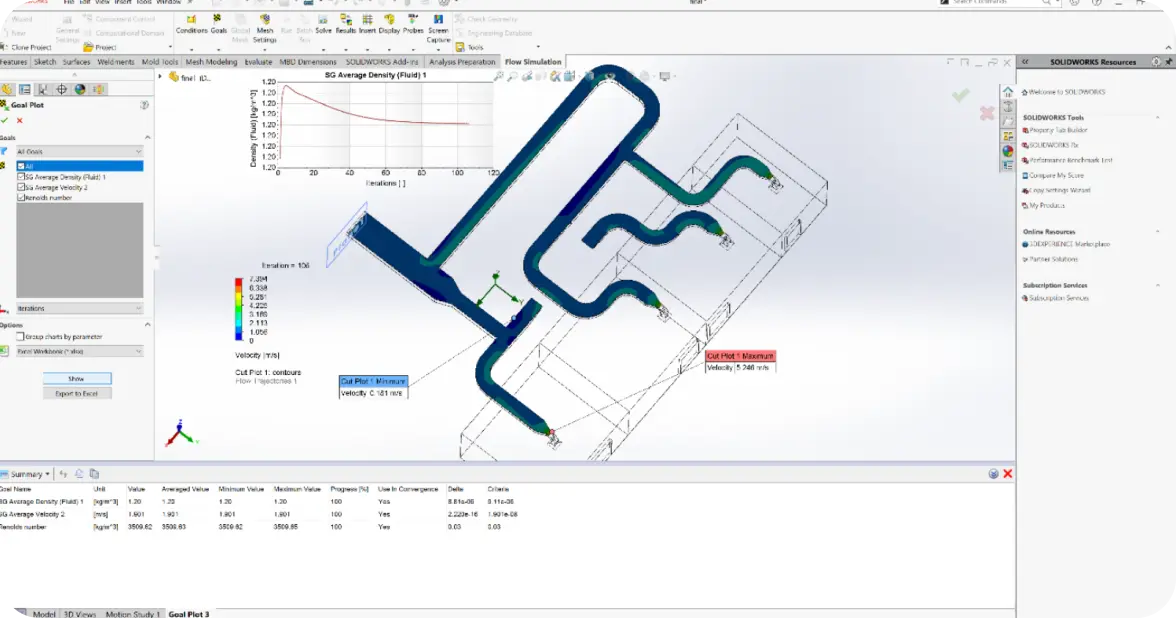
Turbulence Analysis
Localized turbulence zones were detected within small connector ducts positioned between the main duct and the diffusers. These regions, highlighted by red and yellow contours in the simulation, represented areas of increased chaotic flow. The turbulence was primarily caused by reduced cross-sectional areas and sharp bends within these connector ducts, which disrupted the otherwise smooth airflow pattern.
Improvement Recommendations
To enhance the overall airflow efficiency, several improvements are recommended. The small rigid connector ducts should be replaced with flexible ducting featuring larger hydraulic diameters to minimize turbulence intensity. Additionally, optimizing the diffuser orientation and outlet shape can improve the evenness of airflow distribution throughout the warehouse. Lastly, increasing the number of air inlets at strategic points will promote better cross-ventilation, particularly in areas prone to stagnation, ensuring a more balanced and efficient air circulation system.
Conclusion
The CFD simulation clearly demonstrated that natural ventilation in warehouse environments can be significantly enhanced by modifying the duct geometry, diffuser placement, and airflow paths. Through this simulation, we provided a clear roadmap for reducing turbulence, maximizing natural flow, and enhancing indoor air distribution without relying entirely on powered HVAC components.
The analysis highlights how CFD modeling using Ansys can be a powerful tool for validating and optimizing ventilation strategies in industrial settings. These improvements are crucial for energy-efficient design, regulatory compliance, and worker comfort.
Our Projects
See how Solvo Products has helped its clients achieve their vision of digital innovation.
Our Technologies
 Contact Us
Get in touch with us