
About the client
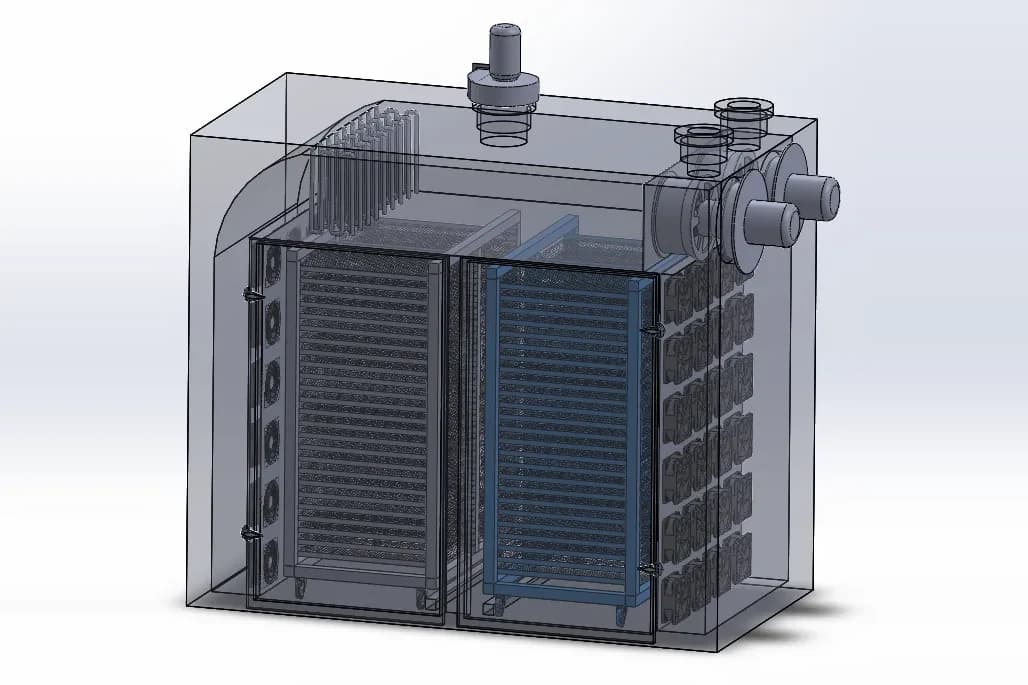
Commercial Dehydrators America builds industrial dehydrator systems. One of their units, a chamber holding 50 stacked drying trays, was not drying evenly: at its design air speed of 1 m/s the airflow was disturbed, far from laminar and inconsistent, so some trays finished their cycle while others were still partly moist.
Their requirement was clear: smooth, laminar airflow across every tray at 1 m/s, so that products dry uniformly whatever their position in the stack.
The challenge
Even airflow in a dehydrator is harder to achieve than it looks. At low speeds such as 1 m/s, air easily separates, stalls or recirculates, especially when the tray spacing and the duct routing are not designed to guide it. This unit suffered from:
The result was lower energy efficiency and, more importantly, uneven drying cycles that affected product quality and production scheduling.
Our approach
Build the CFD model
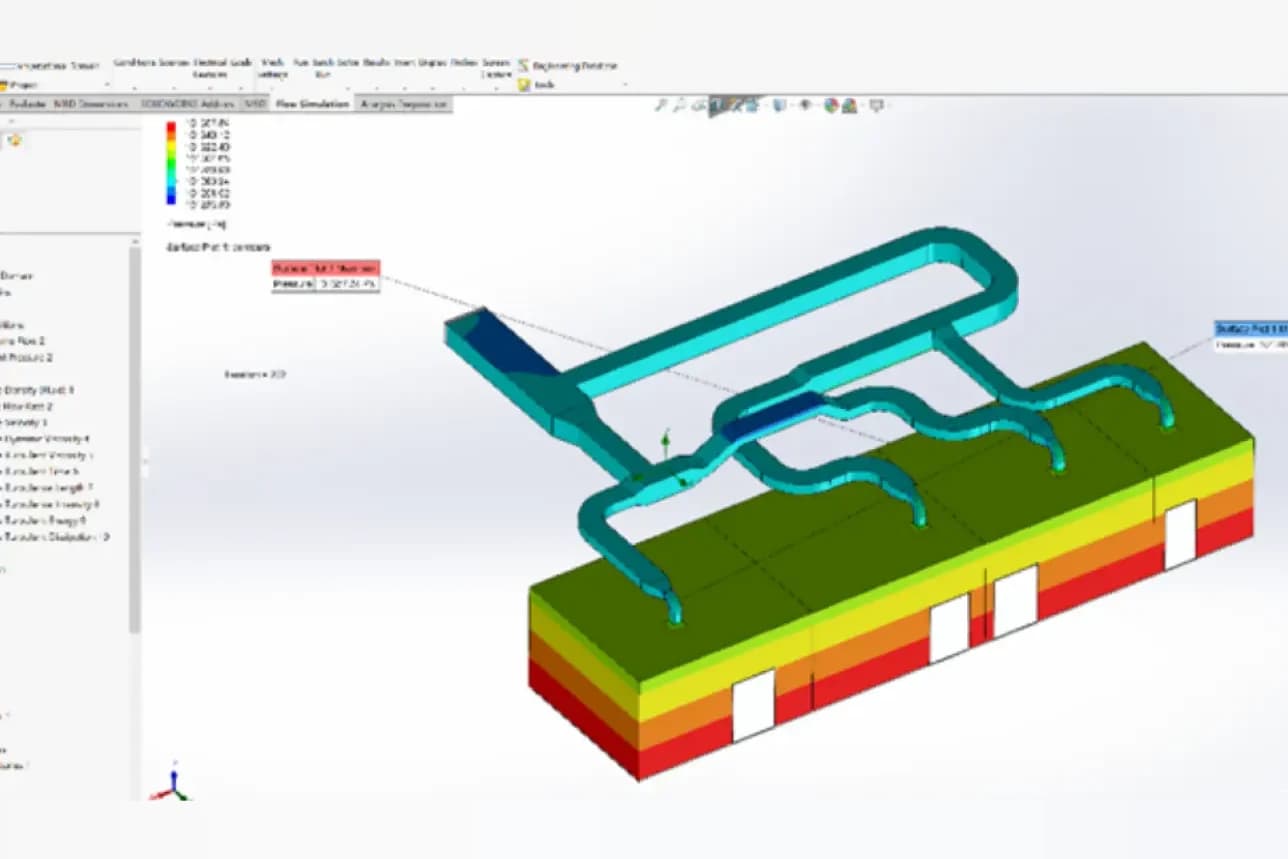
From the client's CAD model of the drying chamber, we built a detailed mesh focused on the air channels, the gaps between the trays and the fan inlets and outlets.
Diagnose the baseline
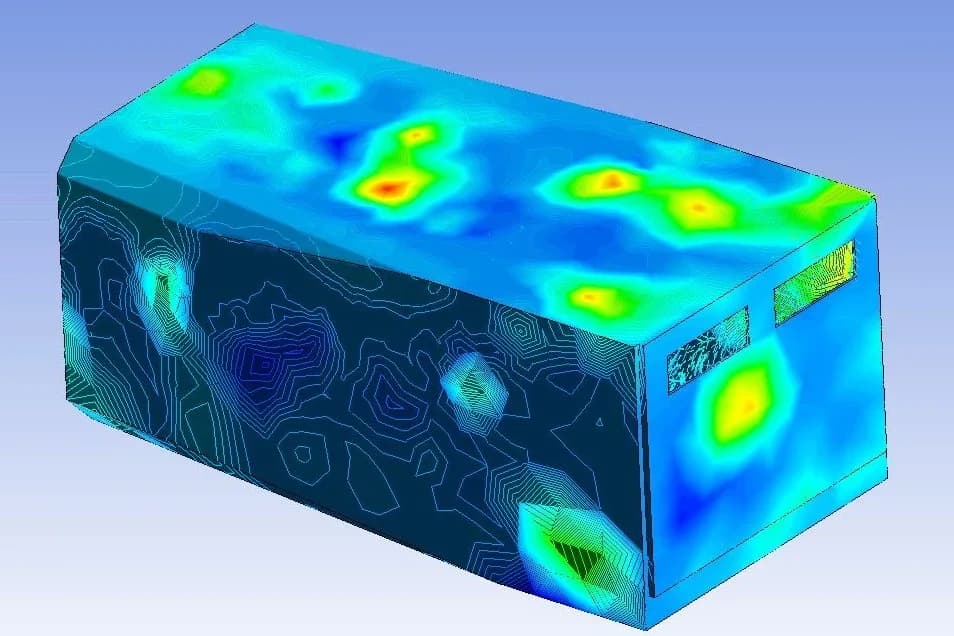
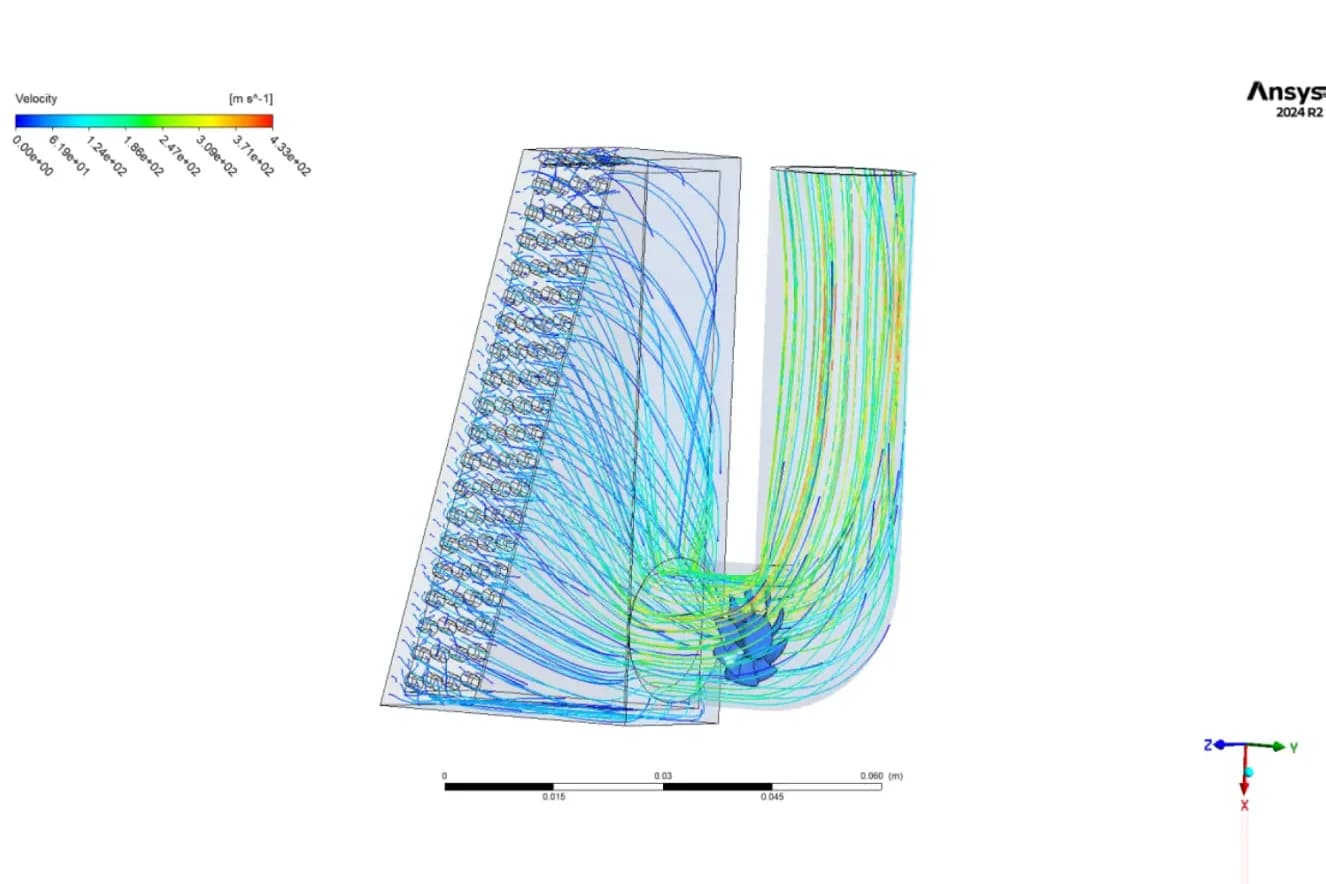
The first simulations confirmed the problem: at the 1 m/s target the flow was far from laminar, with hotspots and stagnation zones between trays and an uneven velocity along the length of the chamber.
Iterate the design
We simulated a series of changes: fans relocated for symmetric inlet flow and circulation, internal ducting and flow guides to cut the pressure drop and spread the air, flow straighteners considered at the tray entries, and outlet angles adjusted to keep the air moving along the chamber without corner vortices.
Verify the final layout
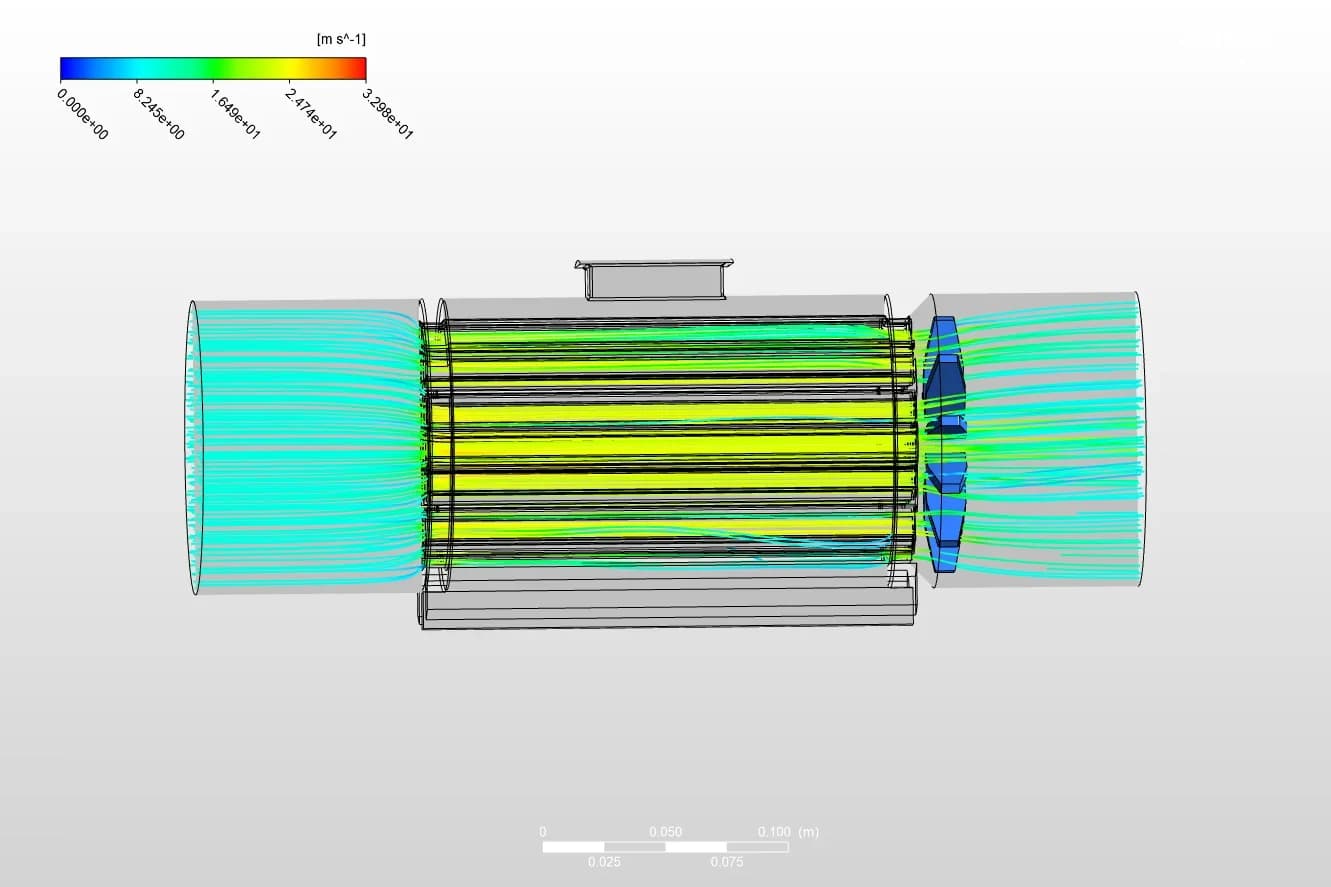
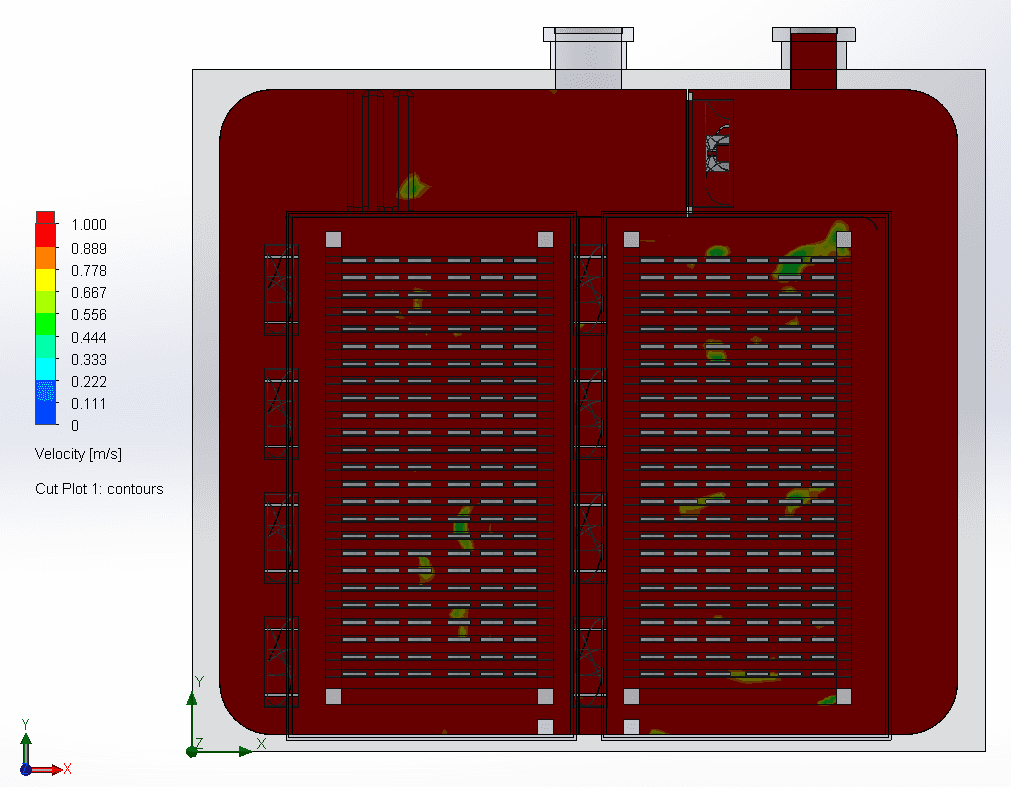
The optimised design was checked with velocity, axial velocity and pressure maps through the whole chamber before it was signed off.
Results: 1 m/s across every tray
The final design transformed the airflow through the chamber:
What it means for production
With even airflow through every tray, the dehydrator delivers:
After reviewing the CFD results, Commercial Dehydrators America adopted the final design for manufacturing. The project shows how CFD solves problems nobody can see from the outside, such as an internal flow imbalance. We have used the same approach on the airflow of a restaurant kitchen's extraction and of a fan heater.
Frequently asked questions
Why do industrial dehydrators dry unevenly?
Because the airflow is uneven. At low air speeds such as 1 m/s, the air separates, stalls and recirculates around trays, corners and walls, so some trays get much more air than others and dry faster.
How does CFD improve the airflow in a dryer?
CFD shows the velocity and pressure through every tray gap before anything is built, so fan positions, ducting, flow guides and outlet angles can be tested and compared on screen until the flow is even.
What changed in the redesigned dehydrator?
The fans were relocated for a symmetric inlet flow, internal ducting and flow guides were added to spread the air and cut the pressure drop, the outlet angles were adjusted to prevent corner vortices, and flow straighteners were considered at the tray entries.
How even is the airflow after the optimisation?
Within ±5% across all 50 trays, at the 1 m/s target velocity, with laminar, directional flow and no significant recirculation.