Project overview
Battery packs in electric vehicles produce heat as they charge and discharge, and they perform best, and last longest, within a narrow temperature range. Liquid cooling through channels next to the cells is a common answer, and how well it works depends on both the channel design and the coolant.
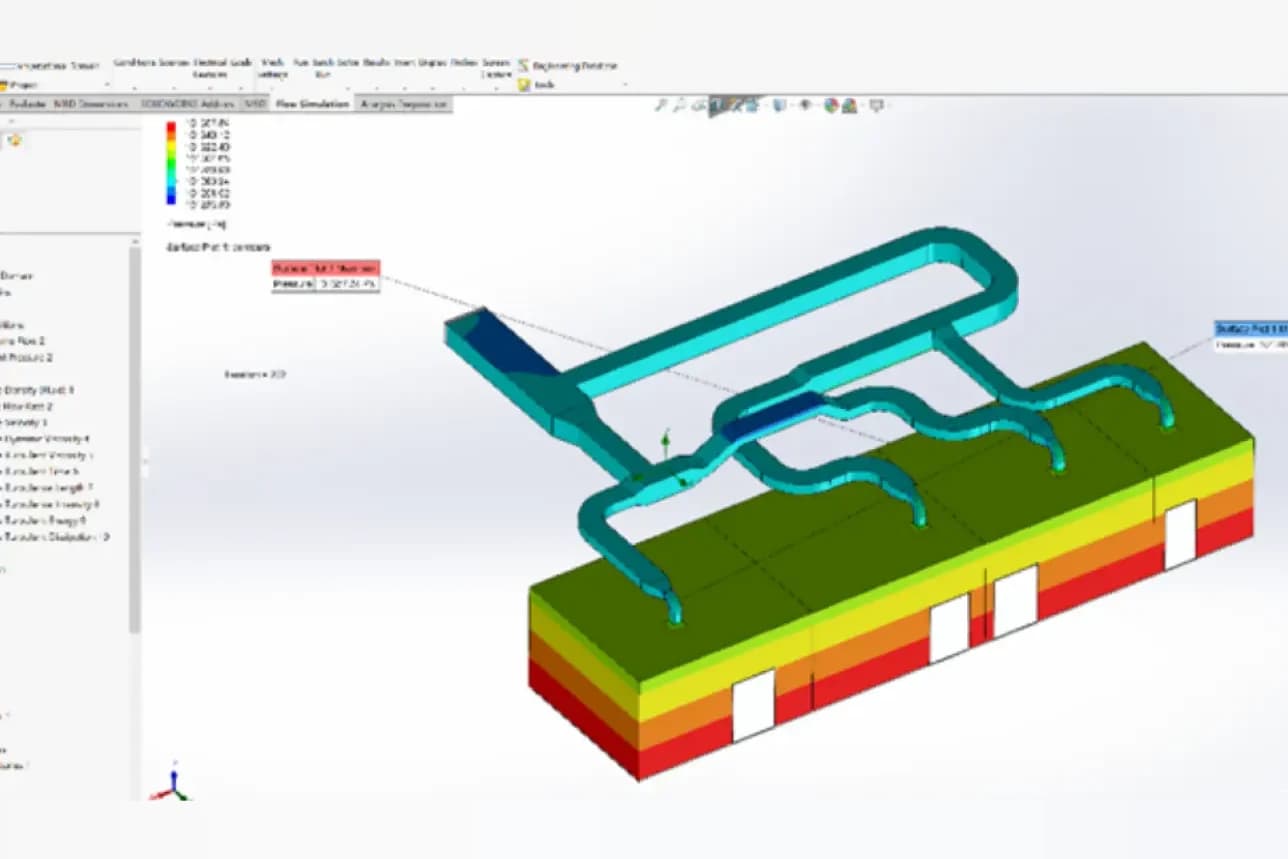
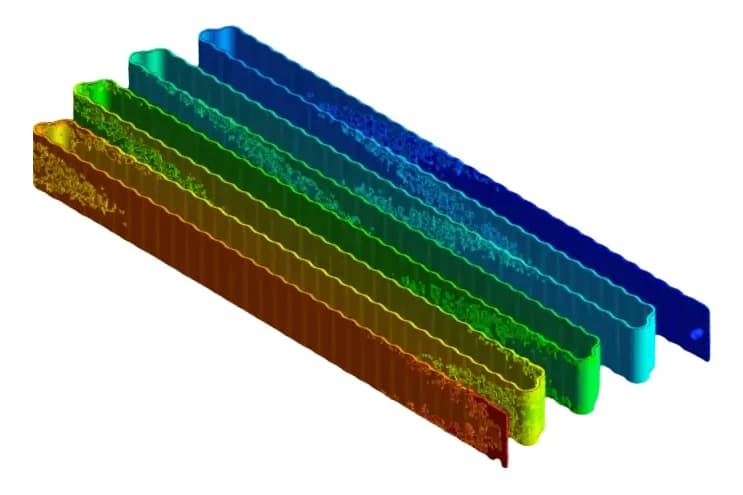
In this project we tested the cooling channels of a car battery with CFD in Ansys. The coolant is a nanofluid: a base fluid carrying graphene nanoparticles, added to help the coolant carry heat. The model follows the coolant through four wavy channels, so the cooling design can be judged before a prototype is built.
Objectives
The cooling design
| Feature | Design | Why it matters |
|---|---|---|
| Channels | 4, wavy walls | The waves keep disturbing the flow, which helps heat transfer |
| Coolant | Nanofluid | A base fluid carrying graphene nanoparticles |
| Application | EV battery | Liquid cooling for a car battery |
| Tool | Ansys | CFD of the coolant flow and heat transfer |
Both choices aim at the same thing. Wavy walls keep breaking up the layer of slow, warm fluid next to the wall, so heat passes into the coolant more readily than in a straight channel, at the cost of a higher pressure drop. Graphene conducts heat exceptionally well, so dispersing it in the coolant is a way to raise how much heat the fluid can carry.
Results
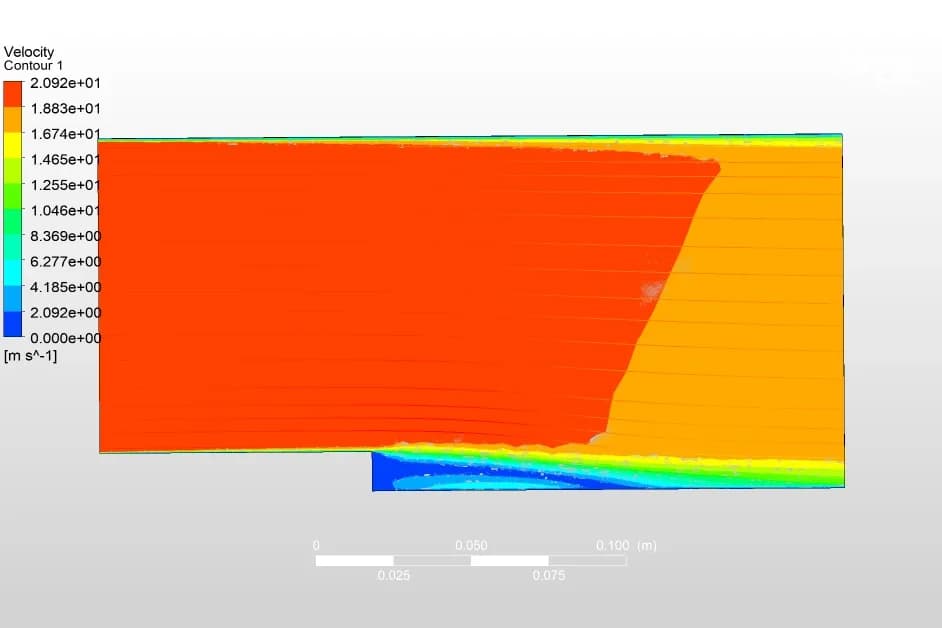
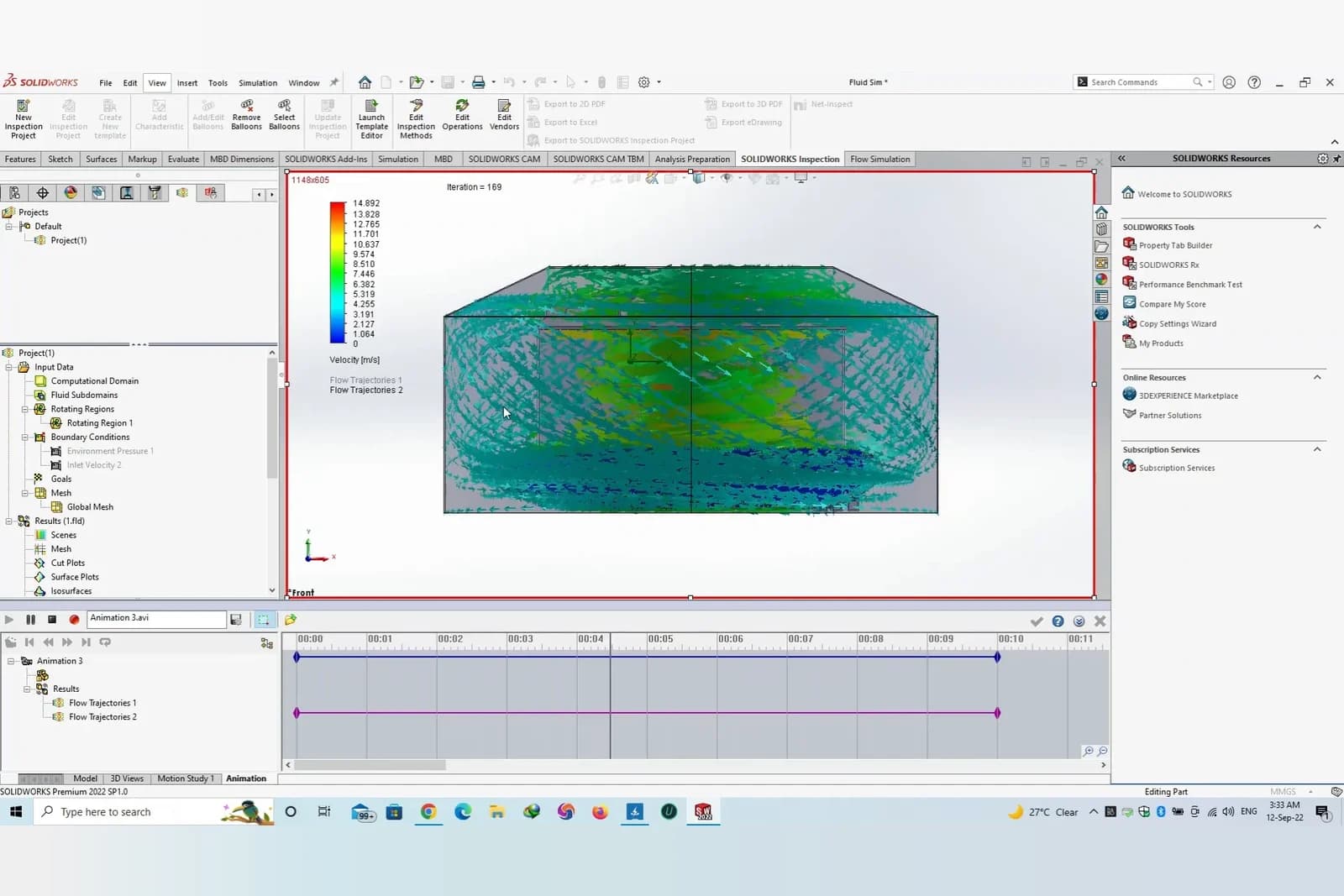
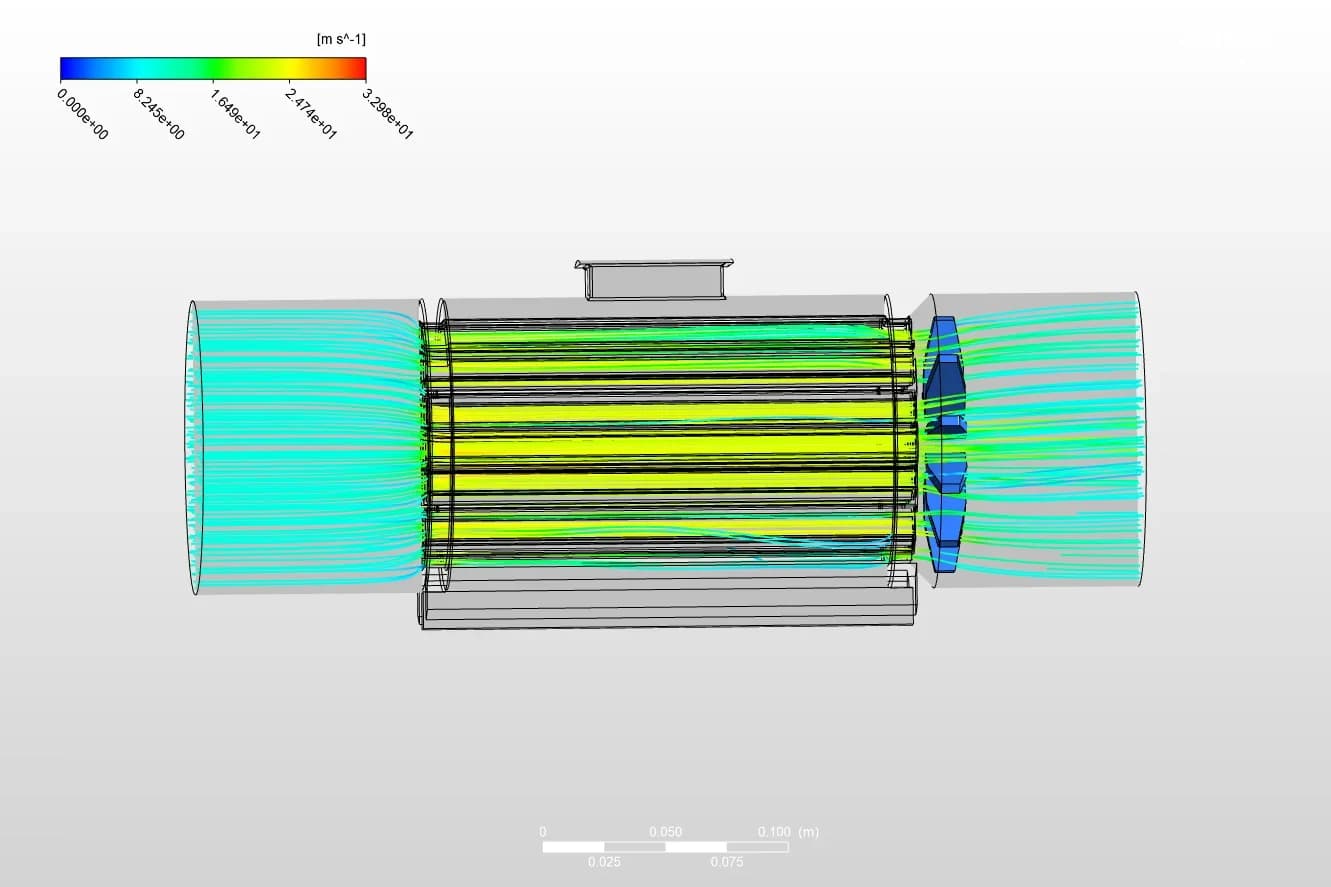
The CFD model at the top of this page shows the coolant moving through all four channels, with the graphene particles carried along the channel walls. The result changes from one channel to the next across the set (red to blue), the kind of difference a cooling test needs to reveal: it shows how evenly the cooling is shared across the battery.
Testing the design in CFD means changes to the channel shape, the flow rate or the particle loading can be compared on screen, instead of building and instrumenting a series of prototypes.
Frequently asked questions
What is a graphene nanofluid?
A coolant with graphene nanoparticles dispersed in a base fluid such as water or glycol. Graphene conducts heat very well, so even a small amount of it can raise the coolant's thermal conductivity and help it carry heat away.
Why use wavy cooling channels?
Wavy walls keep disturbing the flow, which thins the layer of slow, warm fluid next to the wall and increases heat transfer compared with a straight channel, at the cost of a somewhat higher pressure drop.
Why test battery cooling with CFD?
CFD shows how the coolant and the heat move through every channel before anything is built, so channel shapes, flow rates and coolants can be compared quickly and at low cost.
Which software was used?
Ansys, for the CFD of the coolant flow and heat transfer through the cooling channels.