Project overview
The front wing of a Formula One car plays a critical role in the aerodynamic efficiency of the whole vehicle. Small changes to its geometry can have a large effect on drag, downforce, how the tyre wake is controlled and how the car behaves in corners.
In this project we ran a detailed computational fluid dynamics (CFD) analysis in Ansys Fluent 2024 R2 of a multi-element front wing modelled on the Mercedes-AMG W11, the car known for its record-breaking efficiency in the 2020 season. The goal was to reduce drag while keeping the downforce under control, using velocity contours and streamlines to study flow separation, vortex generation and the wake.
Objectives
How we built the front wing CFD model
Detailed wing geometry
The wing was recreated with its complex curvature, flaps and endplates, to represent the real W11 geometry accurately.
Solver setup
Steady-state external flow, solved in Ansys Fluent 2024 R2.
Turbulence model
The SST k-ω model, to capture the near-wall flow and the separated regions behind the elements.
Flow visualisation
Velocity contours and streamlines, used to study the flow and to check how well each design change worked.
Results: velocity, vortices and wake
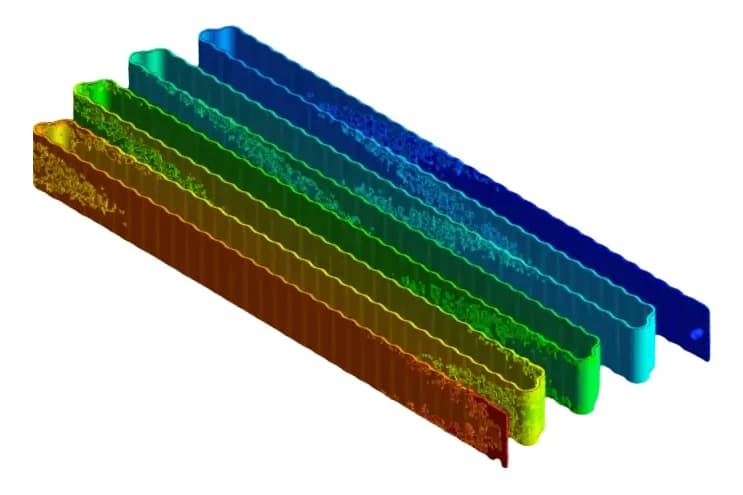
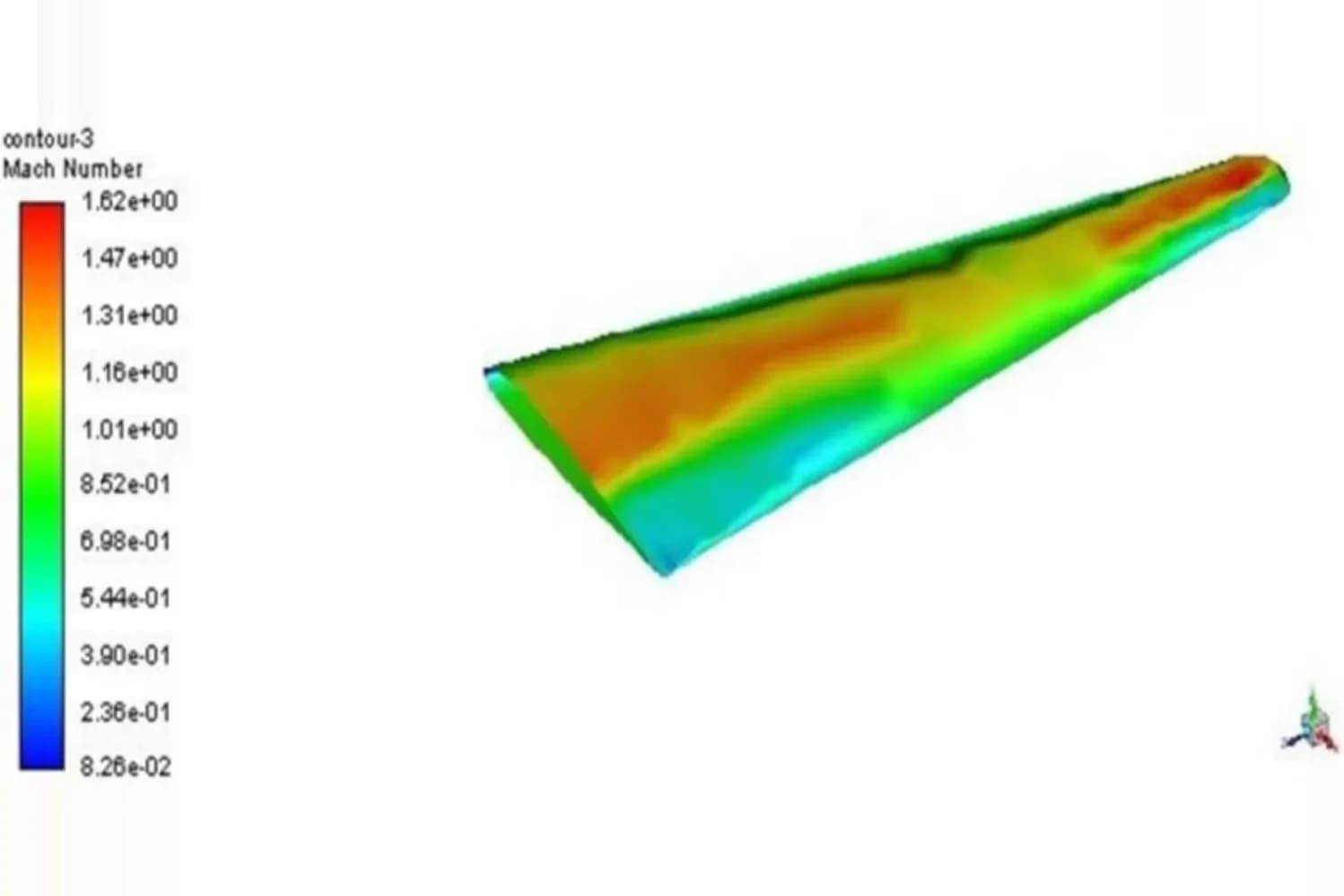
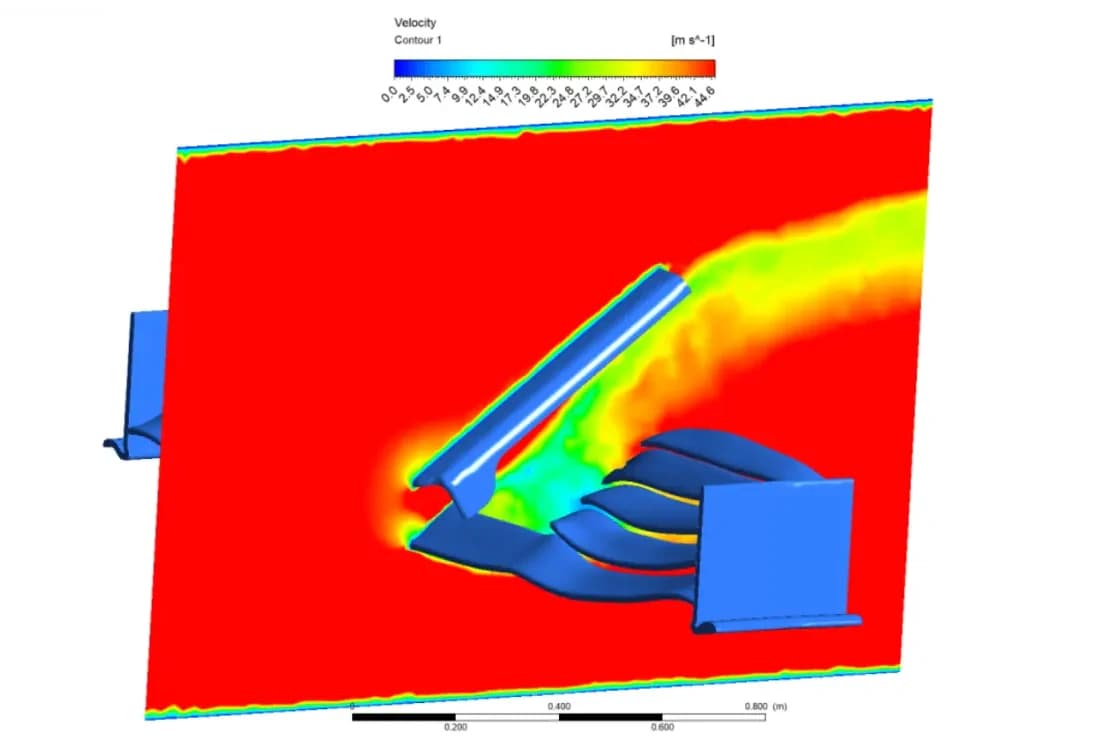
The velocity contours, like the one at the top of this page, show how the air moves over the wing elements:
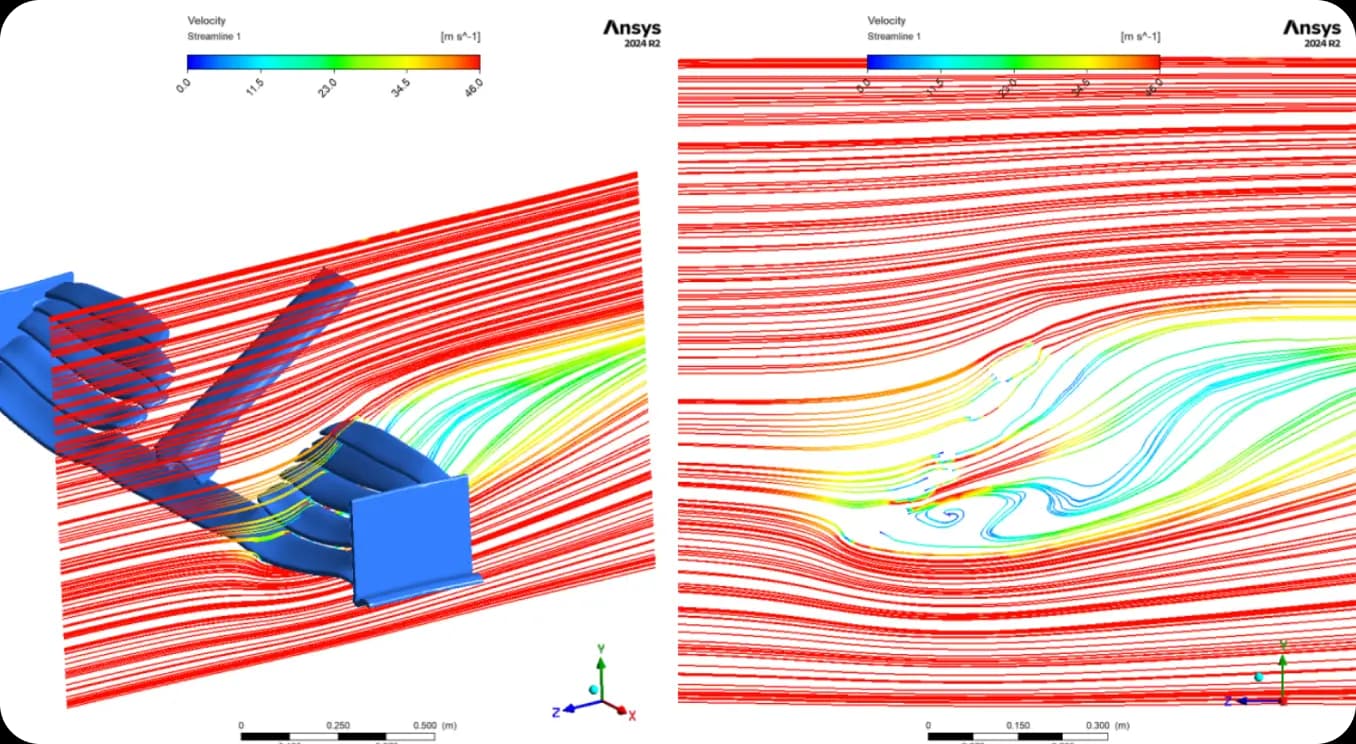
The streamlines add more detail:
Drag reduction and its effect on the car
The design refinements gave a noticeable reduction in pressure drag across the front of the wing. They also reduced the turbulence in the wake, so the air reaching the rear aerodynamic parts is less disturbed.
For a racing car, that means better straight-line speed and more consistent corner entry, two of the most important performance factors in competitive motorsport, achieved while keeping the downforce the car needs.
Frequently asked questions
Why does the front wing matter so much on an F1 car?
It is the first part to meet the air, so it shapes the flow over the rest of the car. Small changes to its geometry affect drag, downforce, the control of the tyre wake and cornering performance.
What did the CFD show about the wing's flow?
The air accelerated strongly over the upper surfaces, to a peak of about 46 m/s over the high-camber flaps, while staying attached on the lower surfaces. The wake was clean, with only a mild vortex near the flap junction and no major separation.
What did the drag reduction achieve?
The refinements noticeably reduced the pressure drag at the front of the wing and the turbulence in its wake, giving less disturbed air to the rear aerodynamic parts. That supports straight-line speed and consistent corner entry while keeping the downforce.
Which software and turbulence model were used?
Ansys Fluent 2024 R2, with steady-state flow and the SST k-ω turbulence model to capture the near-wall and separated flow around the wing elements.