Project overview
Drones (UAVs) are used more and more for surveillance, delivery and environmental monitoring, and their flight time depends heavily on aerodynamics. Even small improvements can bring large gains in range and energy use, and change the thermal loads on the onboard systems.
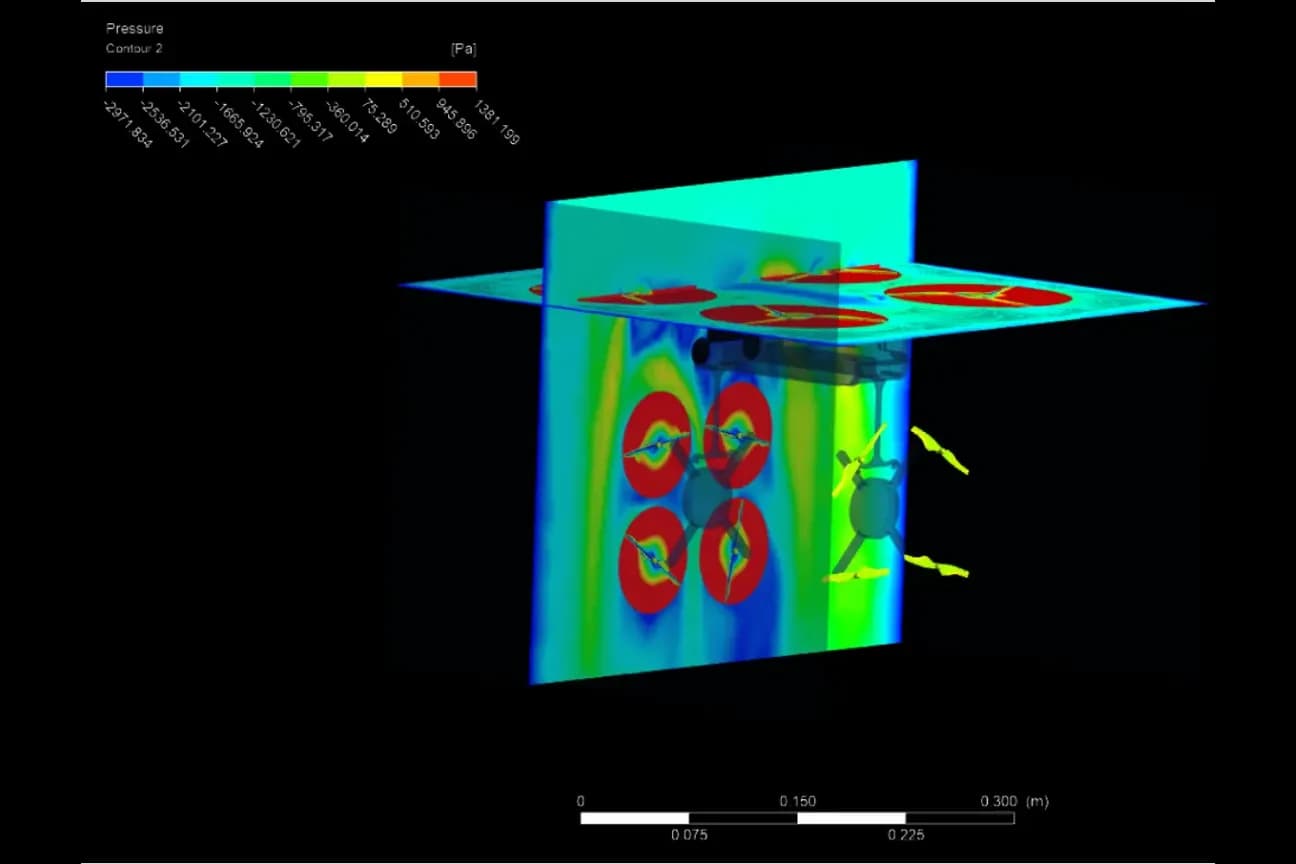
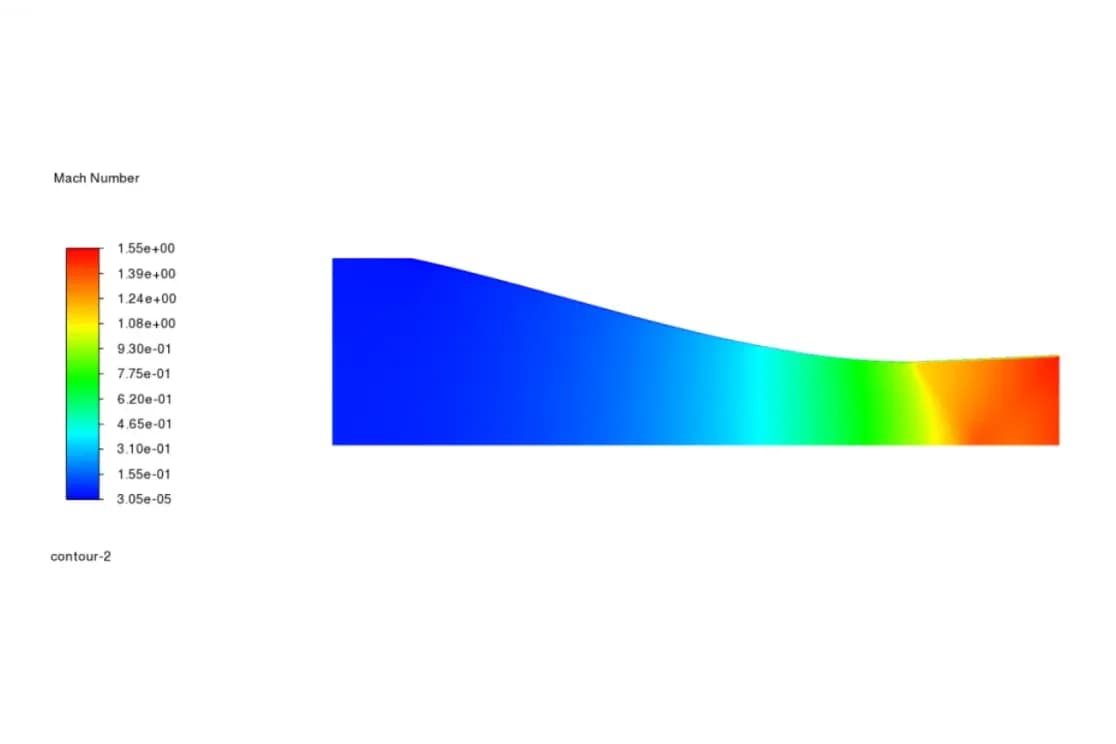
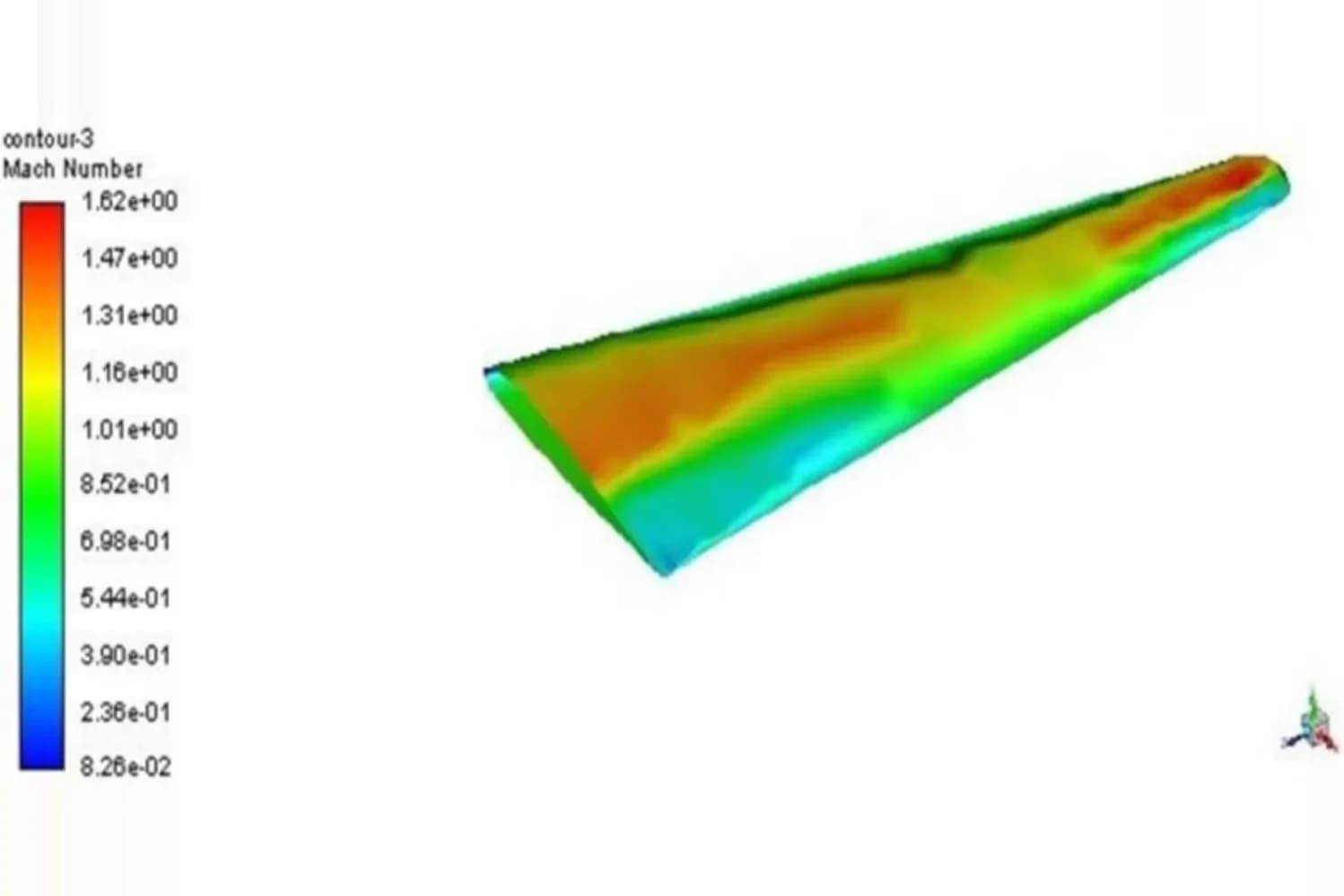
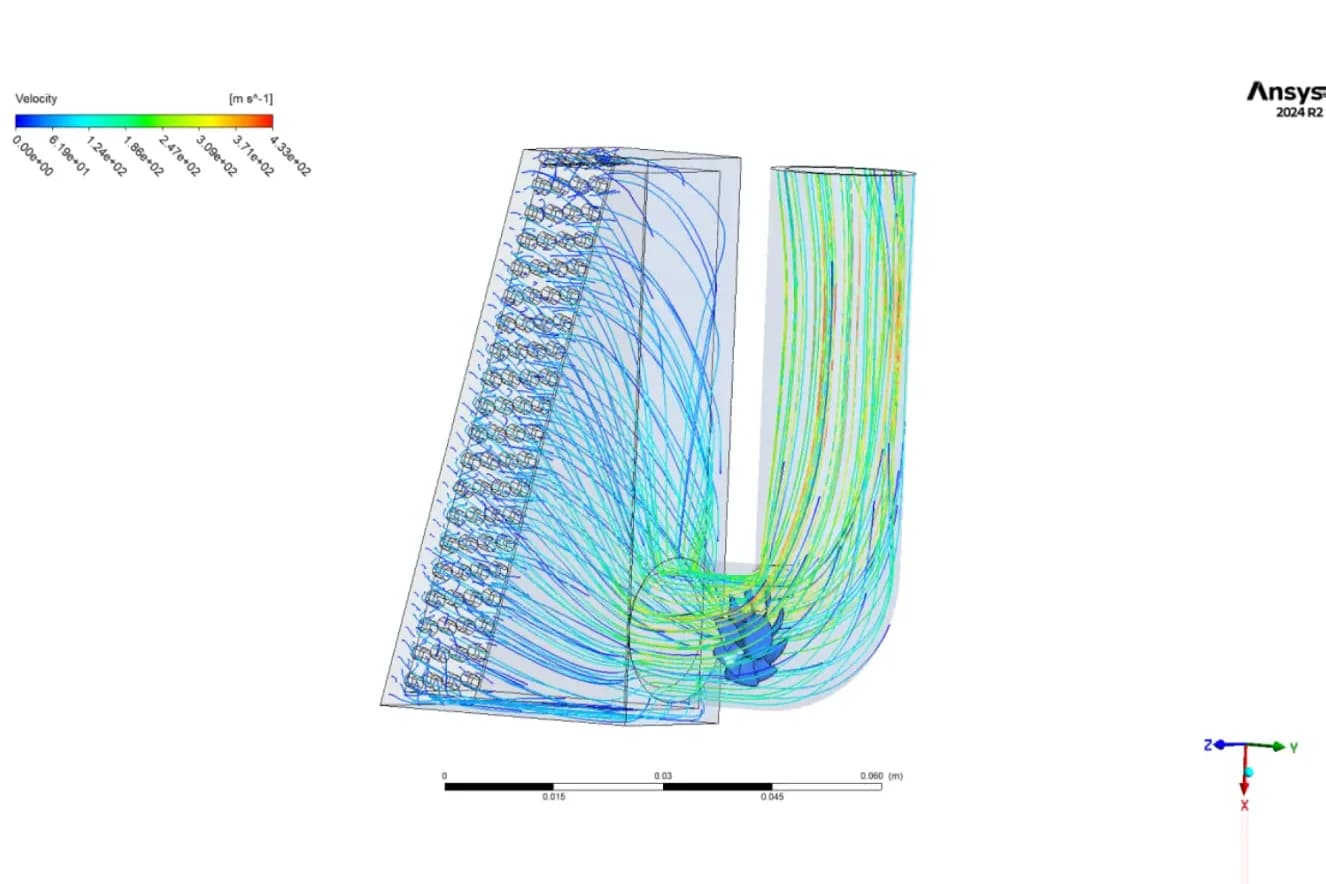
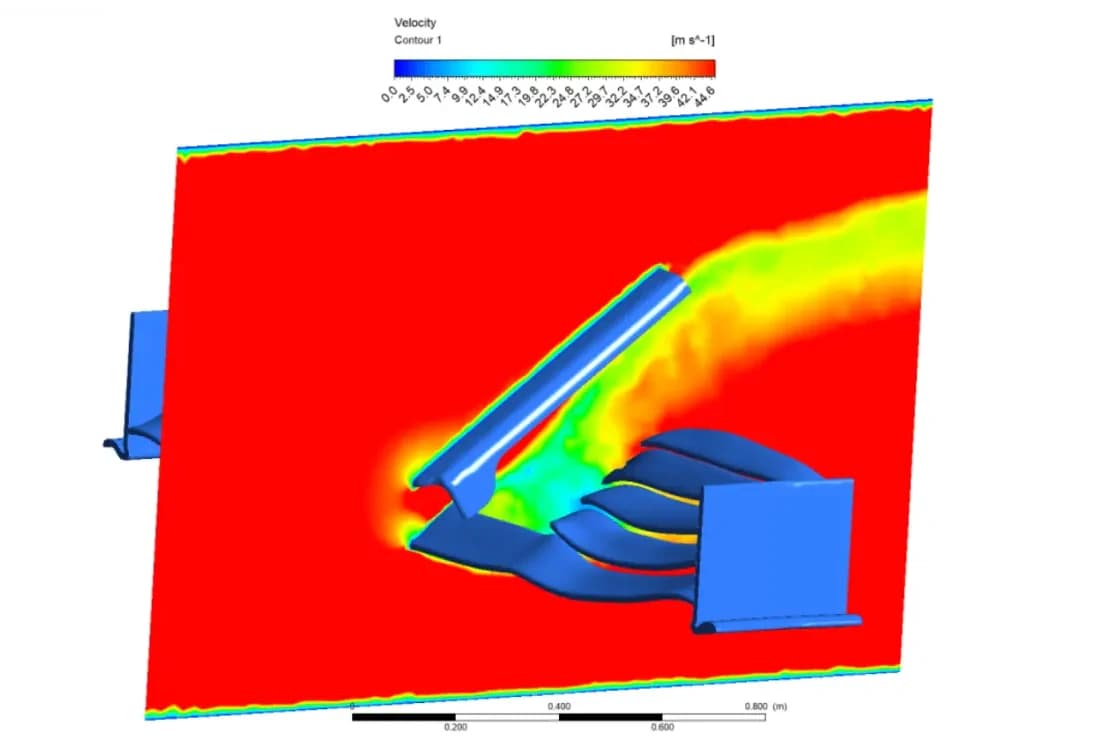
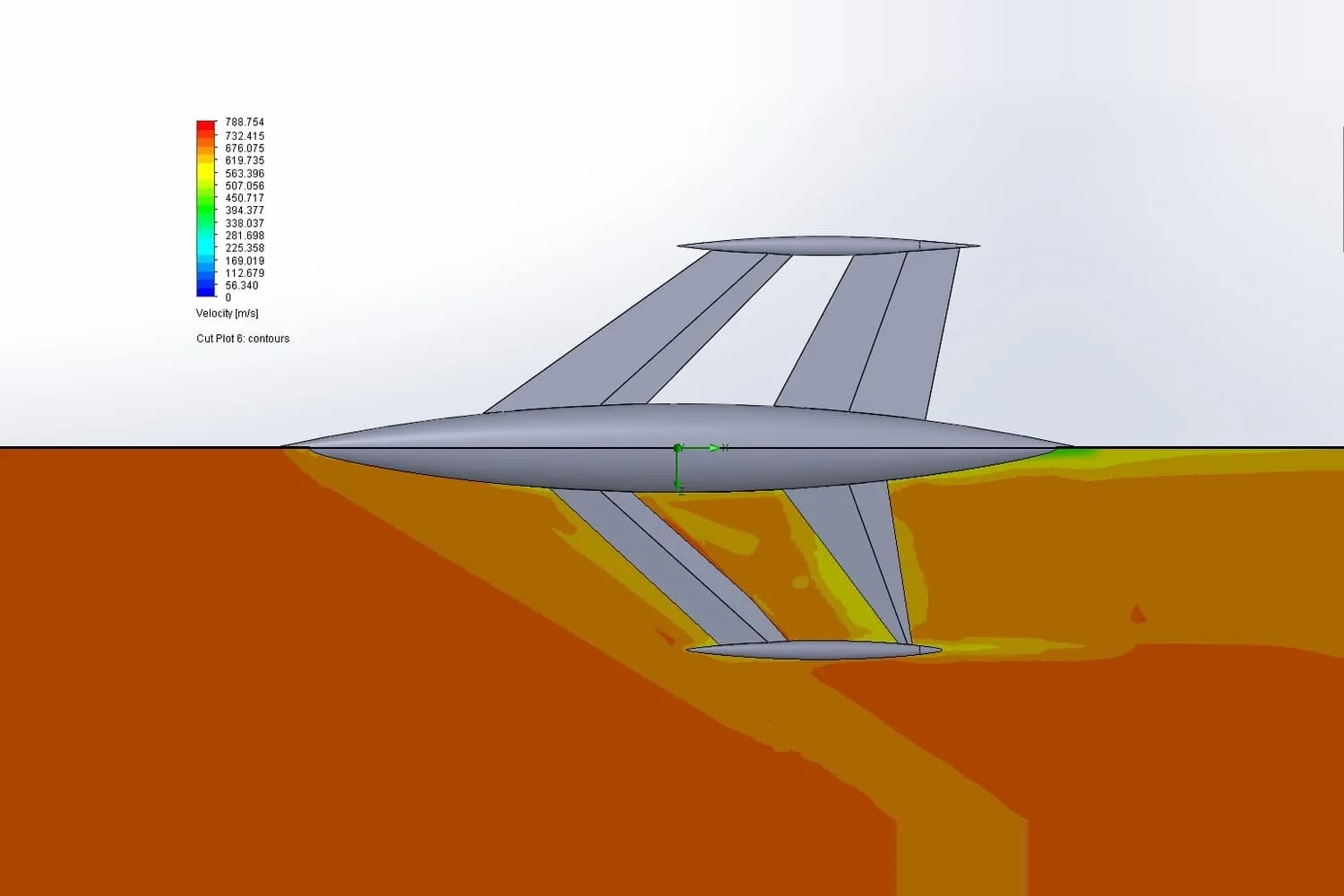
In this project we ran a computational fluid dynamics (CFD) analysis of a multi-rotor drone in Ansys Fluent to reduce drag, improve the lift distribution and make the drone more stable across its operating conditions. By simulating the airflow over the whole structure, we found the high-drag regions, streamlined the body and improved the aerodynamic efficiency for longer flights and better manoeuvrability.
Objectives
How we set up the drone CFD model
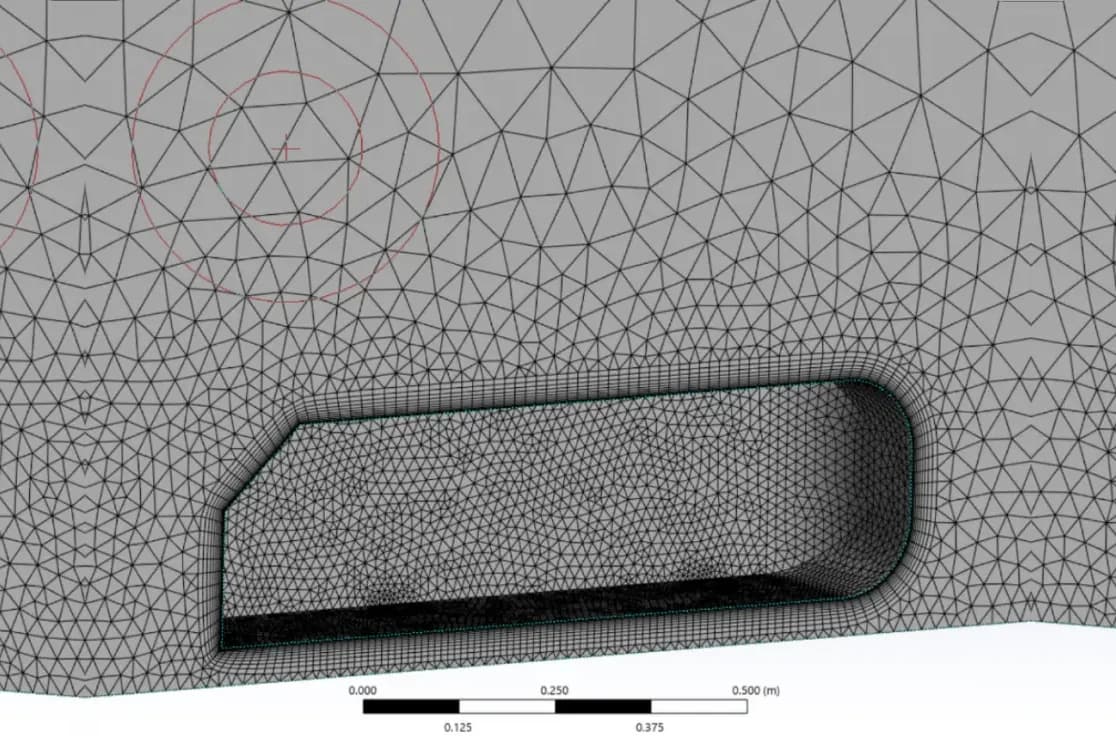
Detailed 3D model
A high-resolution model of the drone, including the propeller geometry, the motor mounts and the main aerodynamic surfaces.
Solver
Ansys Fluent's pressure-based solver for steady, incompressible flow.
Turbulence model
The k-ω SST model, to capture the flow separation and the turbulent wake around the components.
Flight modes
Parametric runs at different flight speeds and angles of attack, to represent hover, climb and cruise.
Design changes
Streamlined landing gear, a smoother underbody and a modified arm profile, each compared with the original design.
Results: where the drag comes from
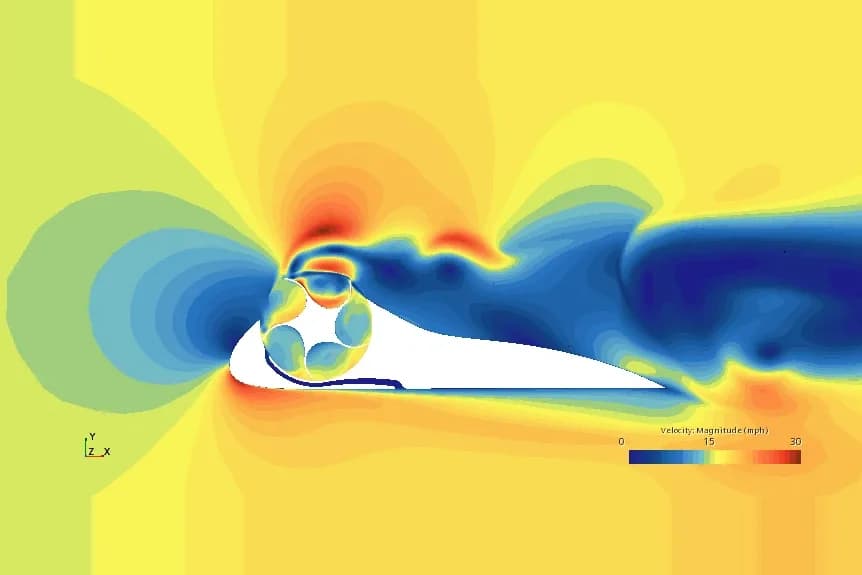
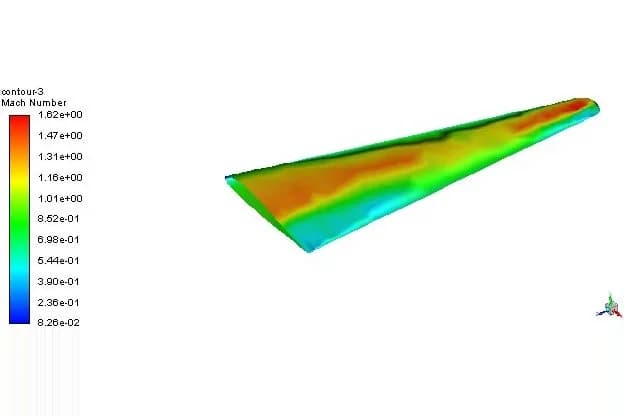
The CFD results showed the flow separation zones, the low-pressure wake and the turbulent interactions between the drone's components:
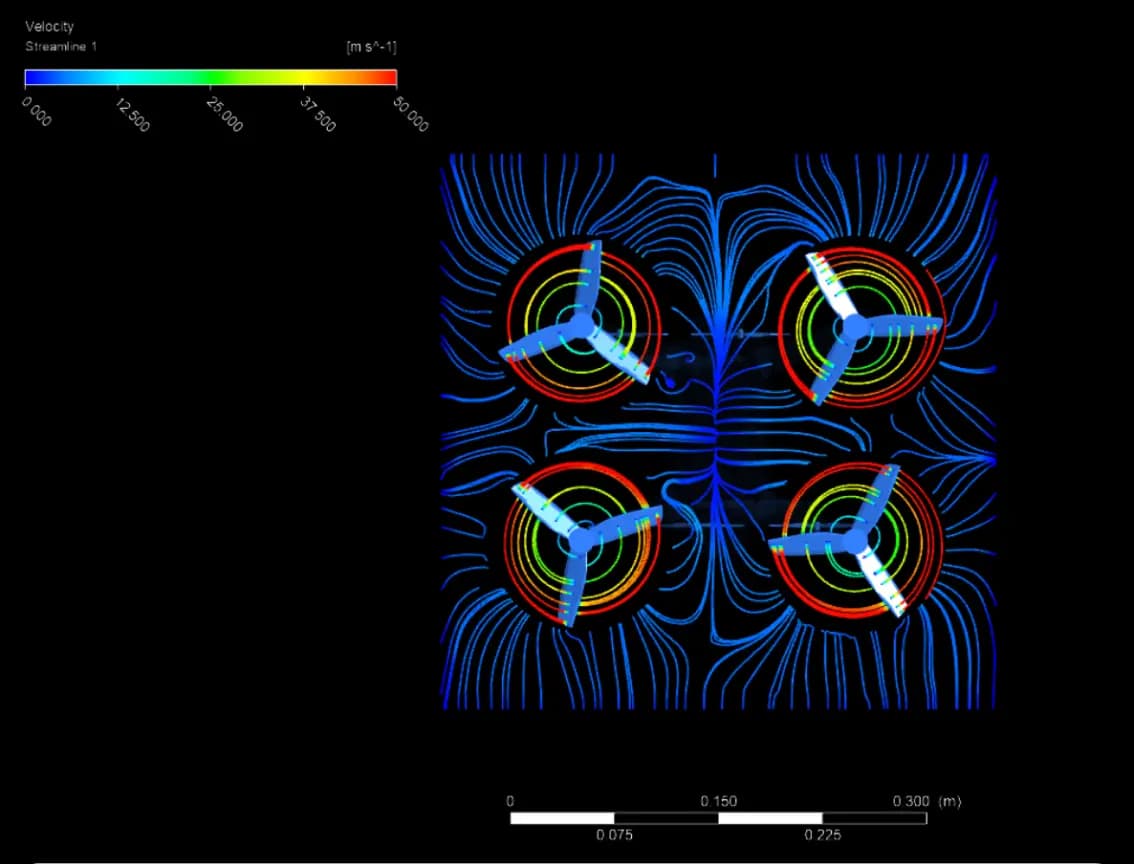
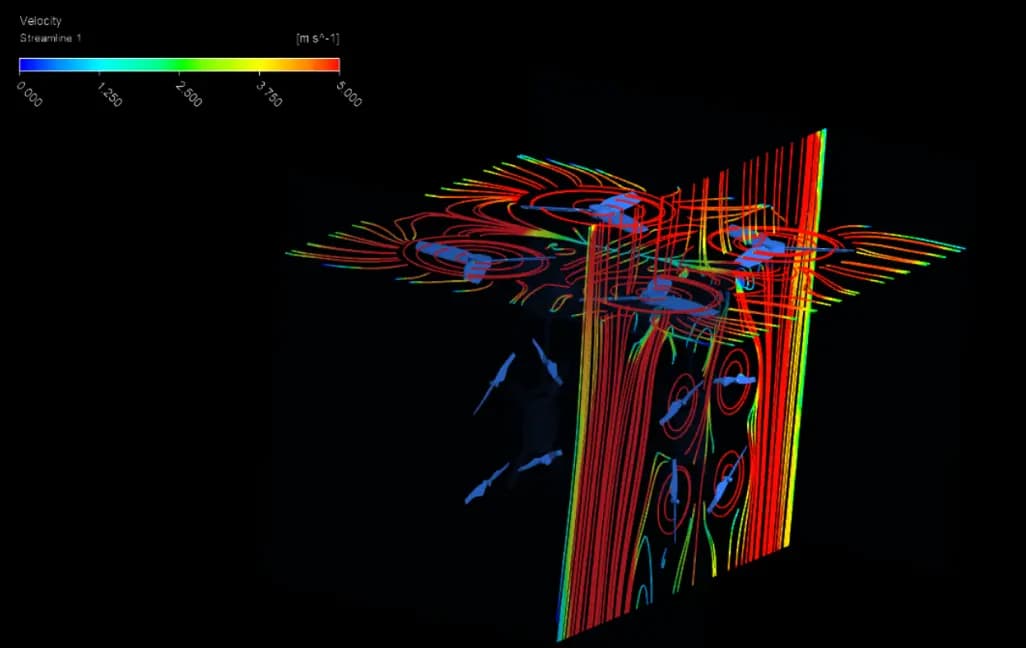
The pressure drag fell by over 12%; the second bar is drawn at 88%.

Design changes and their effect
| Part | Change | Effect |
|---|---|---|
| Landing gear | Streamlined | Lower pressure drag (over 12% together with the underbody) |
| Underbody | Smoothed | Lower pressure drag (over 12% together with the landing gear) |
| Rotor arms | Profile modified | A more symmetric wake and better lateral stability |
Together, the changes gave a more aerodynamically balanced design that wastes less energy and responds better to the controls in crosswinds.
Why CFD matters for drone design
Combining geometry changes with turbulence-resolving CFD gave measurable improvements in drag and aerodynamic balance before any prototype was built. For UAVs and other unmanned systems, where performance and endurance depend so much on the airflow, this kind of analysis is one of the most effective ways to extend flight time.
Frequently asked questions
Where does most of a drone's drag come from?
In this study, drag was concentrated at the junctions between the rotor arms and the body and under the central fuselage, where the flow stagnates. The landing gear and underbody also added pressure drag until they were streamlined.
How much did the aerodynamic changes help?
Streamlining the landing gear and smoothing the underbody reduced the pressure drag by over 12%, with a potential battery life improvement of up to 8%. A modified arm profile also made the wake more symmetric, improving lateral stability in forward flight.
Which flight conditions were simulated?
Parametric runs at different flight speeds and angles of attack, representing hover, climb and cruise, so the design was checked across the drone's main operating modes.
Which software and turbulence model were used?
Ansys Fluent with the pressure-based solver for steady, incompressible flow and the k-ω SST turbulence model, on a detailed 3D model including the propellers and motor mounts.