
Home / Projects / Filling and Emptying of a Water Tank Using the VOF Multiphase Model
Filling and Emptying of a Water Tank Using the VOF Multiphase Model
This project models the filling and emptying of a water tank as a transient multiphase problem, solved with the volume of fluid (VOF) model for air and water in Ansys Fluent. An initial water level is set in the tank, the water supply is turned on for the first second of the simulation and then shut off, and the model tracks what happens next.
As the tank fills, the water level rises until it flows over the top of a U-tube and starts a siphon. Once that siphon takes hold, it keeps pulling water out on its own and effectively empties the tank, even with the supply switched off. The whole sequence is captured by following the air and water interface through time.
Objectives
The aim was to capture a self-draining tank from start to finish and show that the siphon forms on its own. The objectives were:
- Model the filling and emptying of a water tank as a transient air and water problem using the VOF multiphase model.
- Feed the tank for the first second only, then shut the supply off and let the physics take over.
- Capture the moment the water reaches the U-tube and the siphon starts.
- Follow the air and water interface through time as the siphon drains the tank.
Model and Mesh
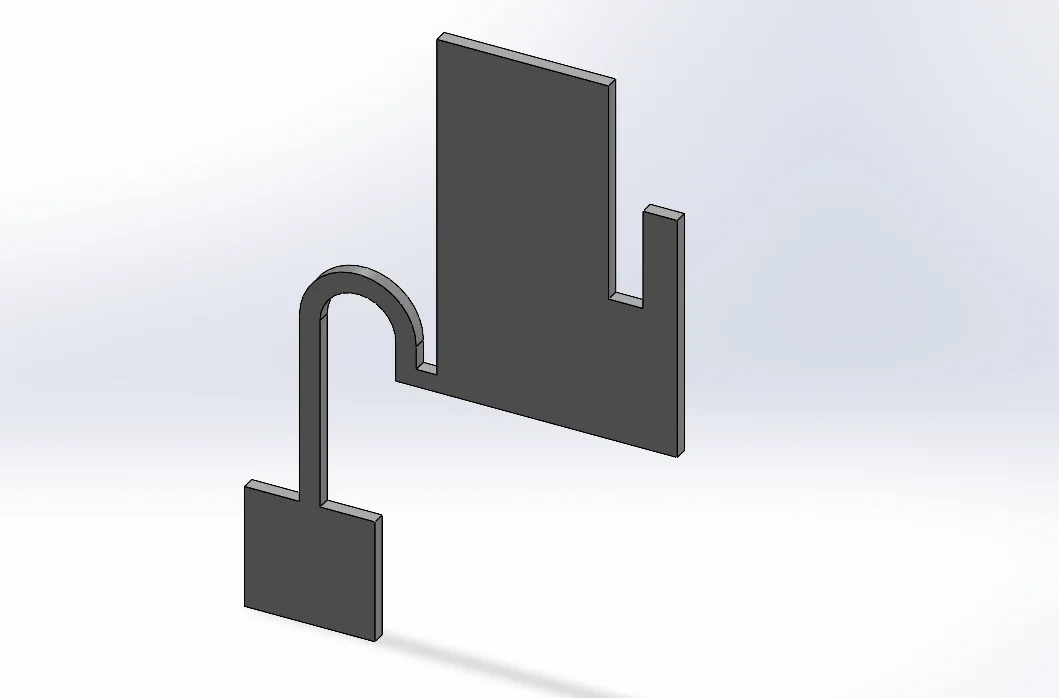
The tank and its U-tube were modelled in SolidWorks and then meshed for the simulation. The inlet and outlet were named on the model, along with the wall, ambient, and side wall surfaces, so each boundary could be given the right condition.
Getting these named selections right is what lets the water enter, leave, and interact with the tank correctly once the solver runs.
VOF Multiphase Setup
The problem was set up as a transient VOF simulation with two phases, air and water, and a surface tension coefficient of 0.072 N/m between them. The boundary conditions treat the inlet and ambient openings as air with a backflow volume fraction of one, so air can move in and out as the water shifts.
The solution was then initialised, with the starting water region defined and patched into the tank to set the initial water level before the run. From that point the solver advances in time, and the VOF model keeps a sharp interface between the air and the water so the level and the siphon can be seen clearly.
Filling the Tank
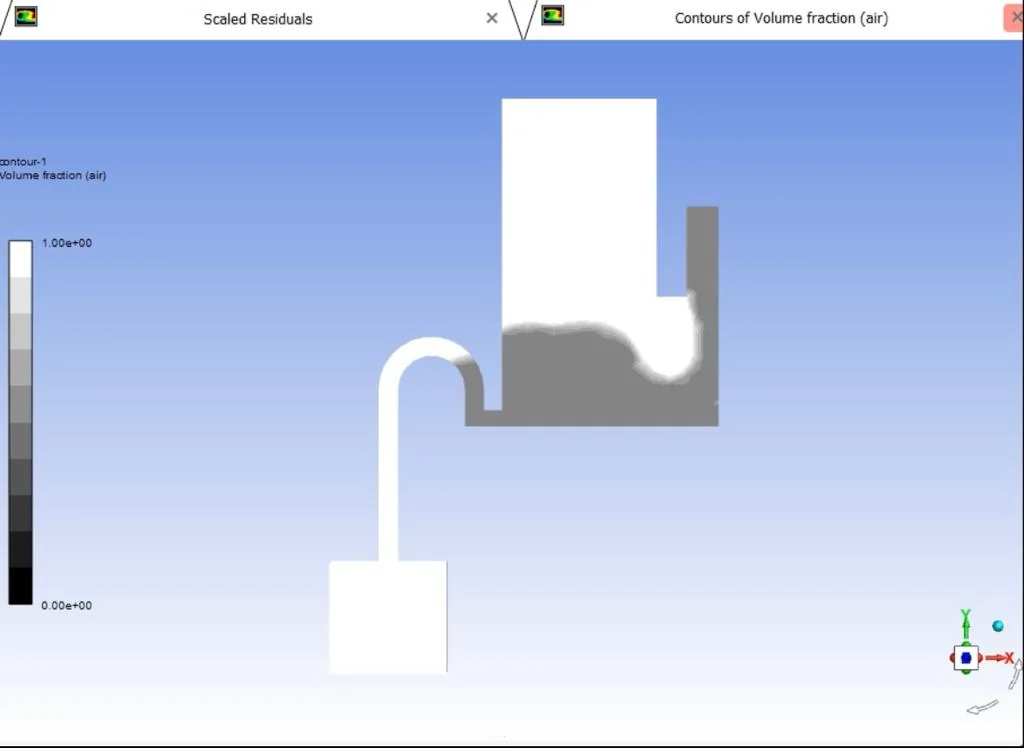

With the supply on for the first second, water enters the tank and the level begins to climb. The contour shows the water phase building up against the air above it, with the interface between them rising as the tank fills.
This is the stage that sets up everything after it, since the tank has to fill far enough for the water to reach the top of the U-tube.
The Siphon Empties the Tank
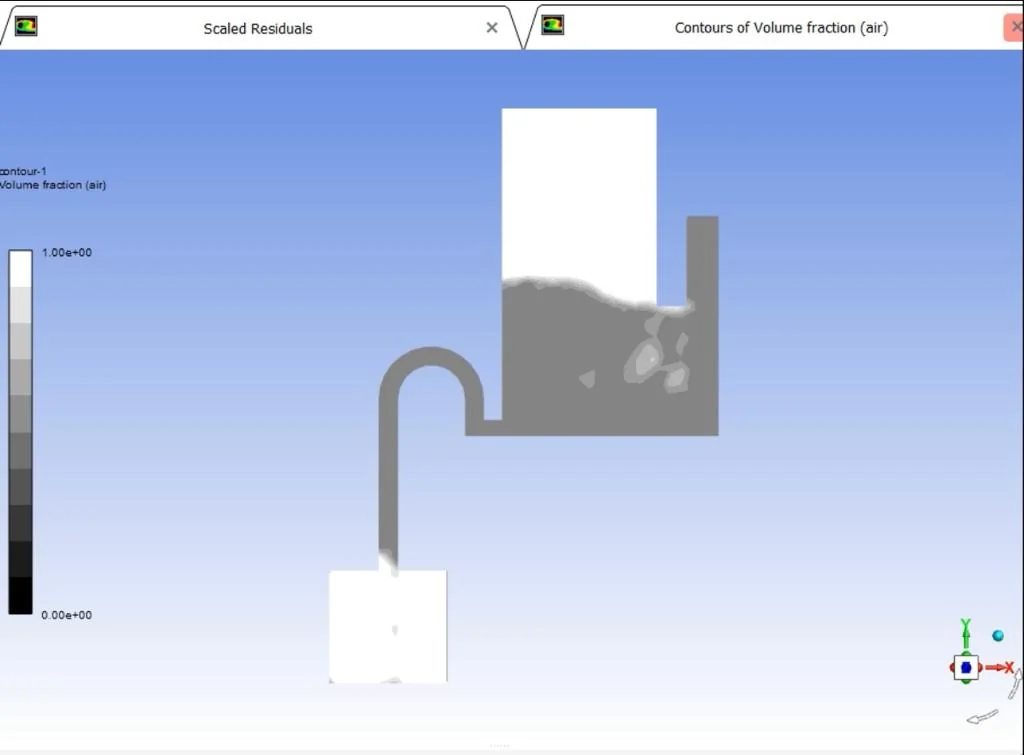
Once the water climbs over the top of the U-tube, it starts to run down the far side and pulls the water behind it, which is the siphon taking hold. From here the tank drains on its own, with the supply already switched off, until the level drops below the point where the siphon can keep going.
The contour and the animation on the project card both show this stage, where the water is being carried out through the U-tube and the tank empties itself.
Conclusion
The simulation captures the full cycle of a self-draining tank in one transient run: a short fill, the water reaching the U-tube, the siphon starting, and the tank emptying on its own. Solving it with the VOF multiphase model keeps a clean line between the air and the water the whole way through, which is what makes the level and the siphon easy to read. It is a compact example of how multiphase CFD can predict free surface behaviour that would be hard to judge any other way.
Multiphase and Free Surface CFD at Solvo Engineers
Anything with a moving liquid surface, filling, draining, sloshing, or siphoning, needs multiphase CFD to get right, because the shape of the air and water interface drives the whole behaviour. Tracking that interface in time is exactly what the VOF model is built for.
At Solvo Engineers we run multiphase and free surface CFD in Ansys Fluent and SolidWorks Flow Simulation for tanks, fills and drains, sloshing, mixing, and pipe flow, covering the air and water interface, flow rates, and pressure. If you have a filling, draining, or free surface problem and want to see how it behaves before building it, our team can help. Reach out through our contact page and talk it through with a CFD engineer.
Our Projects
See how Solvo Engineers has helped its clients achieve their vision of digital innovation.
Our Technologies
 Contact Us
Get in touch with us