Project overview
Injection moulds are cost-intensive to make, and changing one after it has been cut is slow and expensive. For a part that will carry moderate to high mechanical loads in industrial service, the design has to be proven before tooling and production begin.
In this project we ran a finite element analysis (FEA) of a nylon injection-moulded bracket in Ansys 2024 R2 to give the client that confidence. With accurate material modelling and realistic loads, we validated the part's strength, deformation and overall reliability, taking into account the behaviour of nylon, a widely used engineering thermoplastic.
Objectives
How we set up the bracket FEA
CAD preparation
The bracket's 3D CAD model was imported and prepared for meshing.
Material
Glass-filled nylon 66, with its Young's modulus, Poisson's ratio and yield strength defined; its nonlinear elastic-plastic behaviour was approximated from the available material data.
Mesh
Tetrahedral elements, refined around the fillets, the load-bearing supports and the mounting hole to capture the stress concentrations precisely.
Supports and load
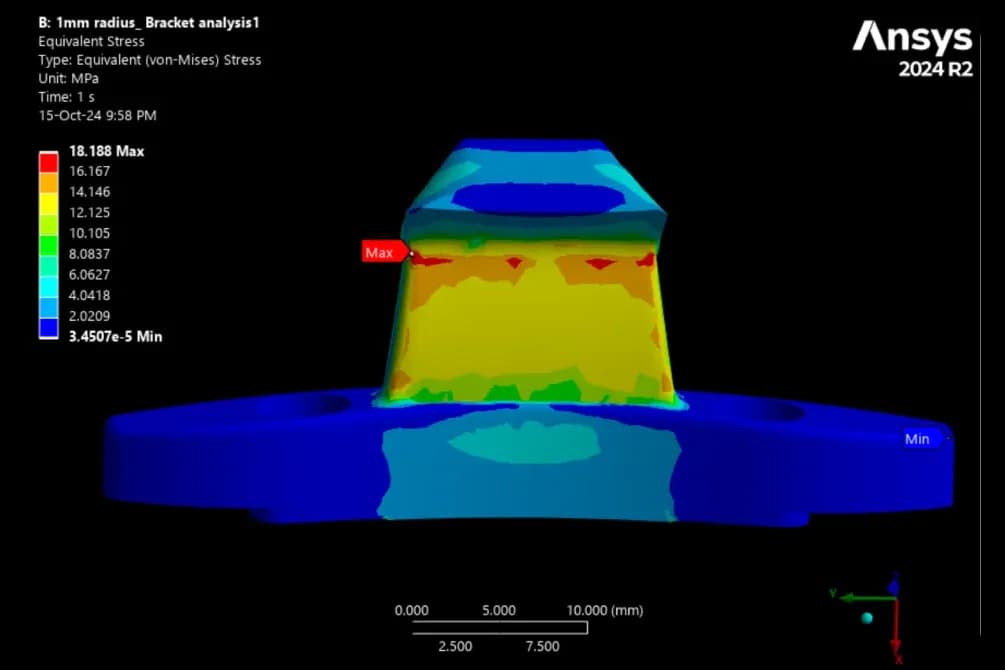
Fixed supports at the bolt holes, as in the real mounting, and a downward force on the upper face representing the service load.
Solution
The Static Structural solver in Ansys Mechanical, reporting total deformation, von Mises stress and shear strain.
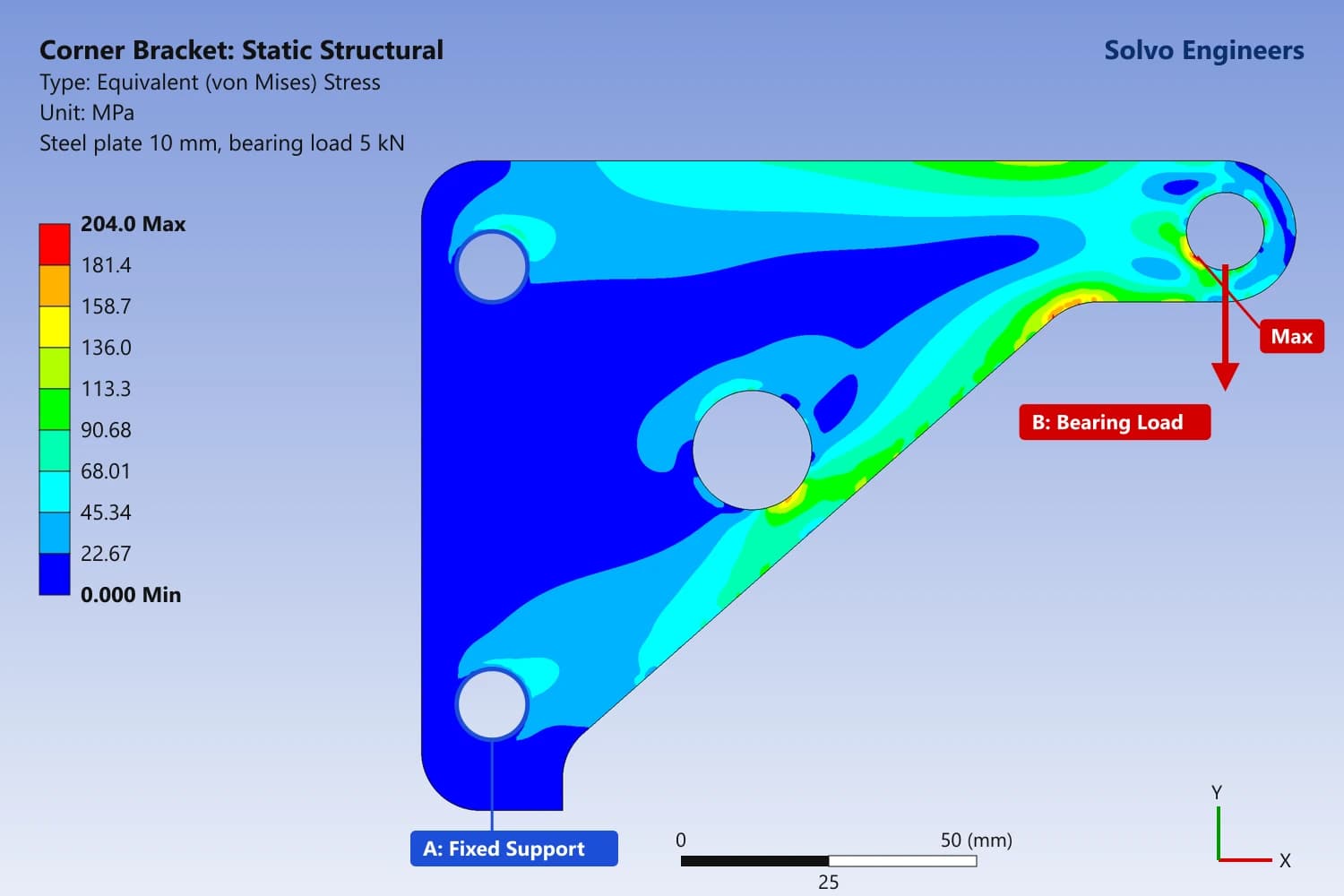
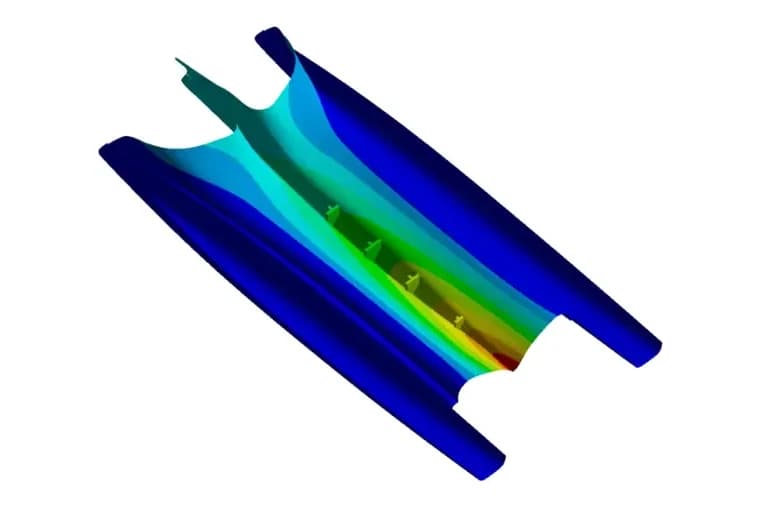
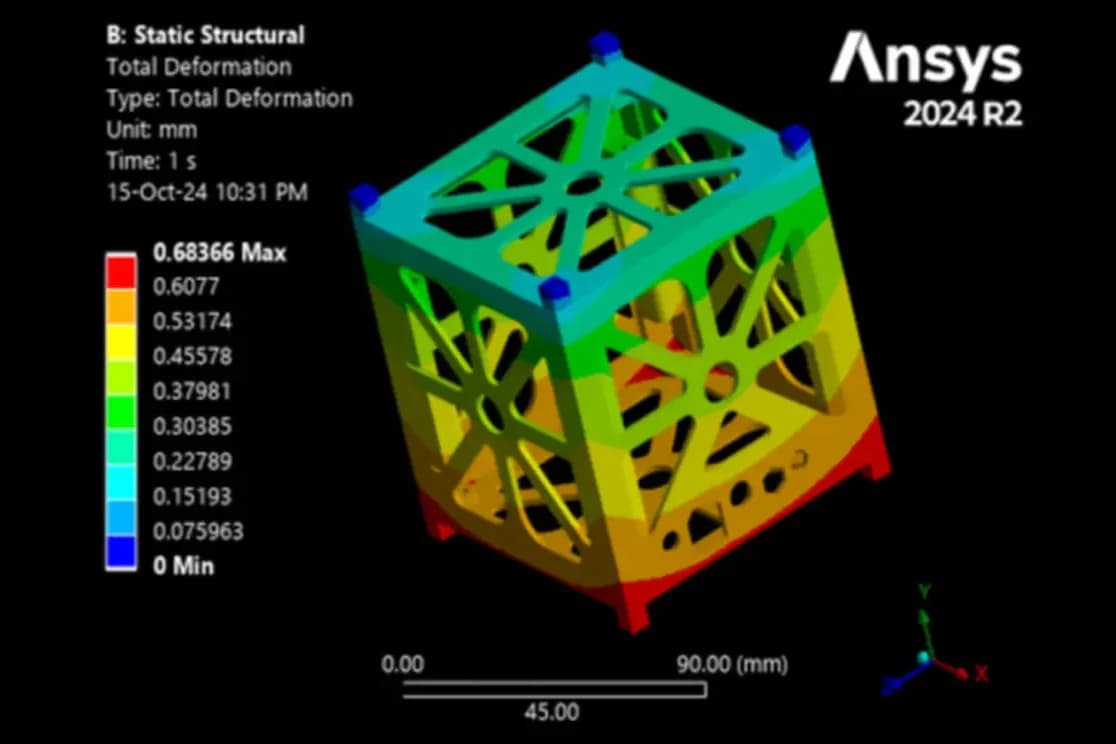
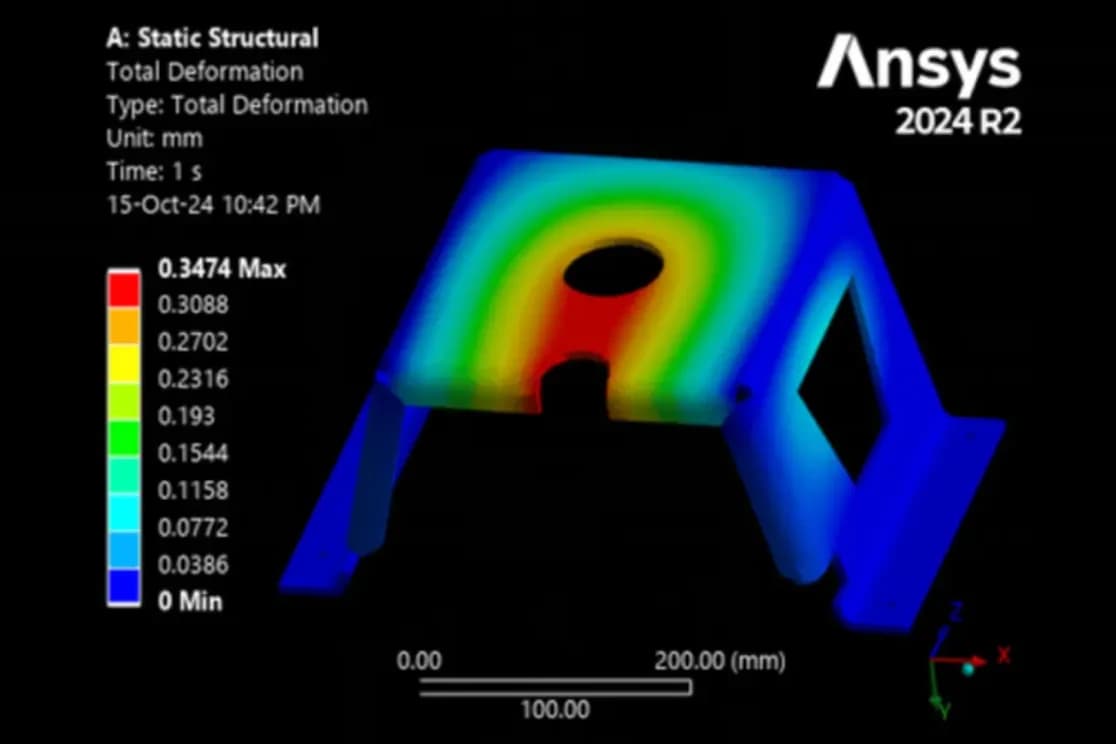
Results: stress, strain and deformation
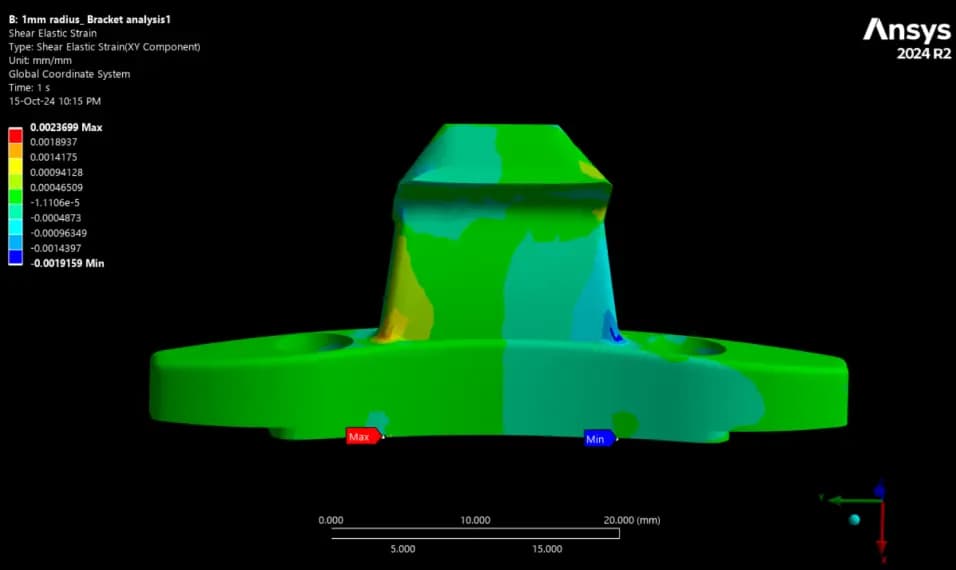
Overall, the analysis confirmed that the bracket can carry its service load safely, ahead of the investment in the mould.
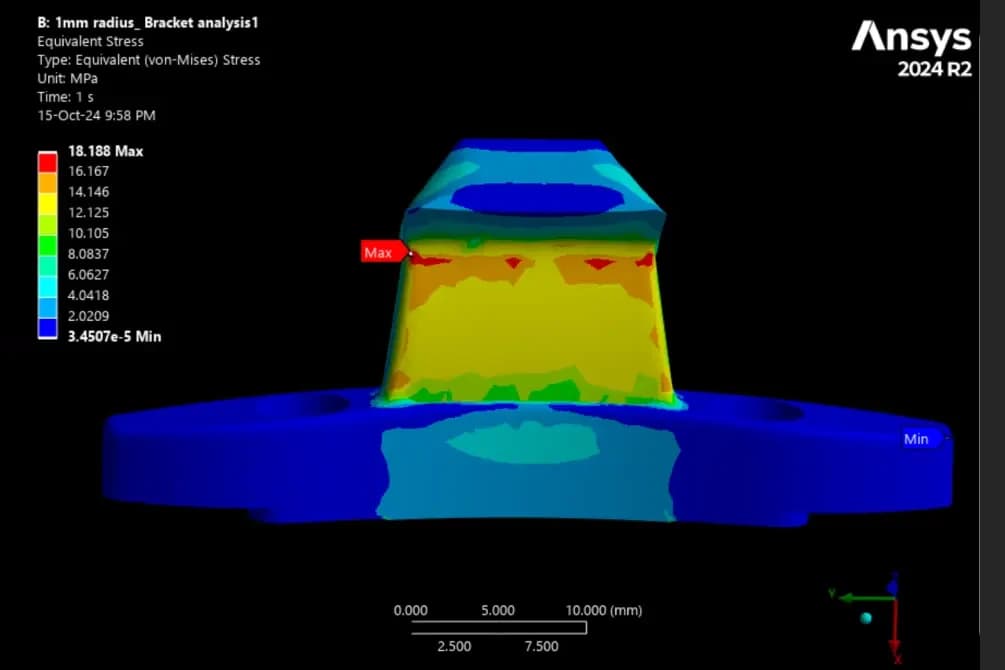
Design recommendations
To improve the stiffness and long-term durability further, we recommended two small design changes:
We cover these and other rules in our guide to plastic part design for injection moulding with FEA.
Frequently asked questions
Why run FEA on an injection-moulded part before tooling?
Because injection moulds are expensive and slow to change. FEA proves the part's strength and stiffness under its service loads before the mould is made, so problems are fixed in the CAD model rather than in steel.
Was the nylon bracket strong enough?
Yes. The peak von Mises stress was about 18.2 MPa, below the yield strength of the glass-filled nylon 66, the deformation stayed within acceptable limits and the shear strain at the mounting base stayed below the threshold limits.
How was nylon 66 modelled?
As glass-filled nylon 66 with its Young's modulus, Poisson's ratio and yield strength defined, and its nonlinear elastic-plastic behaviour approximated from the available material data.
What design changes were recommended?
Enhancing the local fillets and adding reinforcing ribs in the loading direction, to improve the bracket's stiffness and long-term durability.