Automotive Crash Simulation and Lightweighting: How FEA Makes Vehicles Lighter and Safer

Introduction
Every vehicle programme faces the same tension: make it lighter for efficiency, range and performance, but keep it at least as safe in a crash. Take material out of the wrong place and you can lose a safety rating; add it everywhere and you waste weight and money.
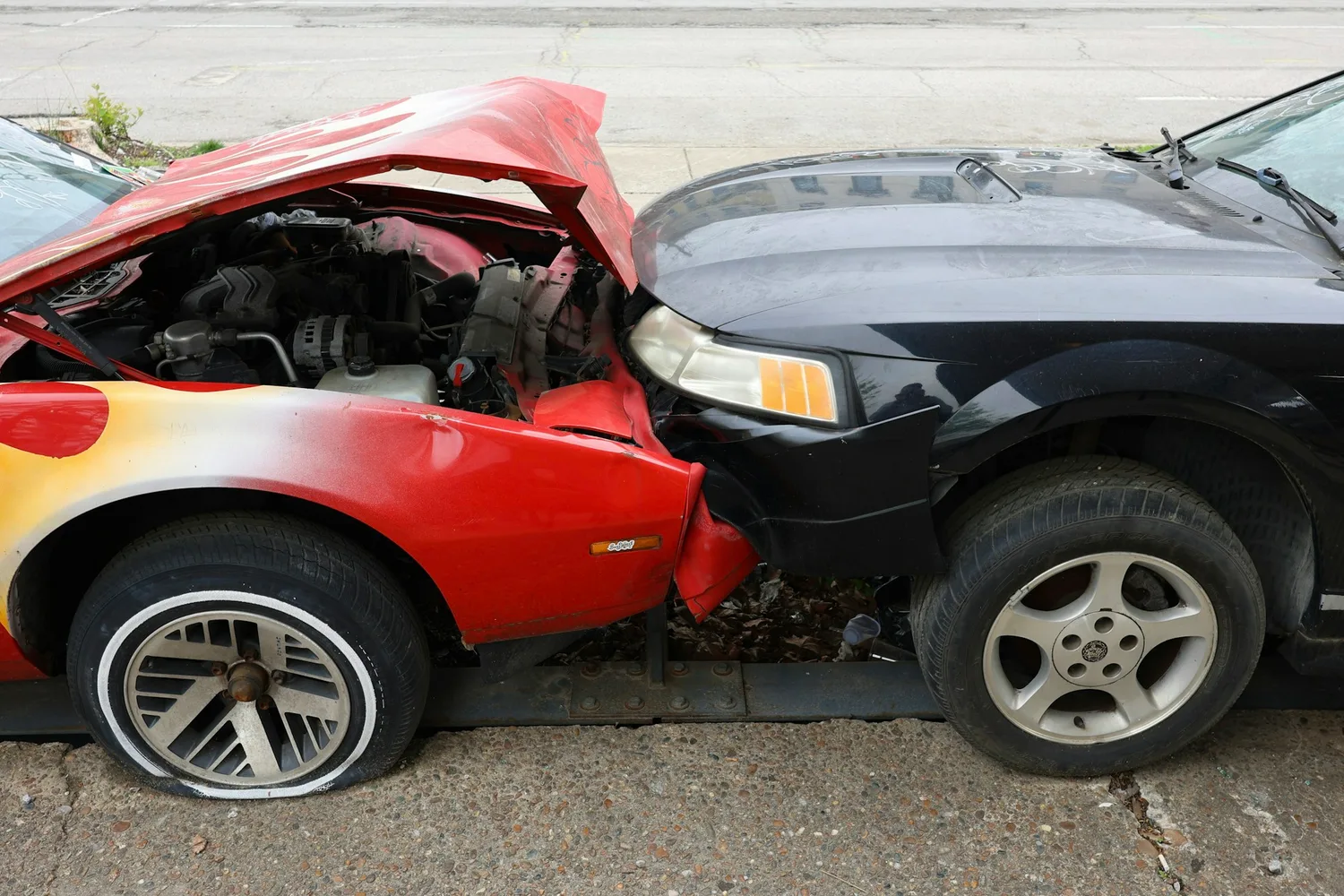
Crash simulation with explicit Finite Element Analysis (FEA) resolves that tension. It shows how a structure folds, absorbs energy and protects the people inside, and lets engineers try new materials and shapes long before a vehicle is crashed for real. This guide explains how crash simulation works and how it supports lightweighting.
Why Lightweighting Matters
- Fuel economy: the US Department of Energy notes that a 10 % reduction in vehicle weight can improve fuel economy by 6 to 8 %.
- Electric range: battery packs add hundreds of kilograms, so saving weight elsewhere adds range or lets a smaller battery do the same job.
- Knock-on savings: a lighter body needs smaller brakes, suspension and motors, which saves even more weight.
- Payload: for trucks, buses and trains, every kilogram saved in the structure can be carried as payload instead.
How Crash Simulation Works
A vehicle crash is over in about a tenth of a second. Explicit solvers such as LS-DYNA, Ansys Explicit Dynamics and Abaqus/Explicit take very small time steps to follow the large deformations, folding, contact and tearing that happen in that time. A crash model includes:
- Material models that capture how metals, plastics, composites and foams behave at crash speeds, including how they fail. Good material data is the biggest single factor in accuracy.
- Contact between thousands of parts, and parts folding onto themselves.
- Joints such as spot welds, rivets, adhesive and bolts, modelled as connections that can fail.
The results show the deformation, how far parts intrude into the cabin, how much energy each part absorbs, and the crash pulse that sets the loads on the occupants. Our explicit dynamics impact simulation on foam shows the same approach on an energy-absorbing material, the kind used in bumpers and other energy absorbers.
Crash Load Cases and Standards
- Regulations: UN regulations such as R94 (frontal), R95 (side) and R135 (pole), and US standards such as FMVSS 208 (occupant protection) and FMVSS 214 (side impact).
- Consumer ratings: Euro NCAP, IIHS and other NCAP programmes, whose tests are often tougher than the regulations.
- Pedestrian protection: UN R127 and Euro NCAP test how well the bonnet and bumper protect a pedestrian's head and legs.
- Component tests: seat and seatbelt anchorages, roof strength and low-speed bumper tests that decide repair costs.
- Rail: EN 15227 sets the crashworthiness requirements for railway vehicle bodies.
Bonnets, Bumpers and Pedestrian Safety
A bonnet has to be stiff enough not to flutter at speed or dent easily, yet soft enough to cushion a head impact, with enough space underneath to deform before it reaches anything hard. Bumper beams, crash boxes and foam absorbers have a similar balance to strike between low-speed repair costs, pedestrian safety and high-speed crash performance.
Our car bonnet damage analysis compared flax and jute natural-fibre composites under load and in an explicit dynamics impact, tracking fibre and matrix damage separately to show which material holds up better.
Lightweight Materials and How to Simulate Them
- High-strength steels: thinner panels, and press-hardened steels for the safety cage around the occupants.
- Aluminium: extrusions and castings, including large single-piece castings that replace dozens of stamped parts.
- Composites: carbon and glass fibre, and natural fibres such as flax. They fail differently from metals, through fibre breakage, matrix cracking and delamination, so they need composite failure criteria rather than a single stress limit.
- Engineering plastics: brackets, clips and covers in glass-filled nylon, polycarbonate and similar materials, whose strength depends on fibre orientation from moulding, temperature and moisture.
Our FEA of a nylon injection-moulded part and our material comparison of polycarbonate, PA11, PA12 and PA12CF show how simulation picks the right plastic for the load. Mixed materials also bring joining questions, and welded joints need a fatigue check too, as explained in our guide to weld fatigue analysis.
Optimising for Weight and Safety Together
- Topology optimisation shows where material is really needed and where it can go.
- Thickness and material studies compare gauges and grades for each part against the weight target.
- Crash rail design: the shape of front rails and crash boxes decides whether they fold progressively and absorb energy, or buckle and fail early.
- Every load case at once: a lighter part still has to meet stiffness, vibration and durability targets, not just the crash.
In electric vehicles, the sills and crossmembers also protect the battery, which our guide to EV battery pack simulation covers in more detail. The same principles apply beyond cars: in our case study on a train's rubber-to-metal bonded side bumper, FEA helped reach a stiffness of 0.7 kN/mm and a fatigue life of more than 600,000 load cycles.
Simulation and Physical Crash Tests
Virtual testing does not replace the crash tests needed for approval, but it means fewer prototypes and a much better chance that the first physical test passes. Confidence is built step by step: material coupon tests to calibrate the material models, component tests such as drop-tower impacts, and then the full vehicle, with the model correlated against the test at each stage.
The same explicit methods are used well beyond cars, for example in drop test simulation for consumer products.
What We Need to Start
- 3D CAD of the structure or component (STEP, IGES, Parasolid or native files), or drawings for our 3D CAD team to model.
- Materials and thicknesses, plus any material test data, ideally stress-strain curves at different strain rates.
- The load cases: the tests or standards you need to meet, with impact speeds and masses.
- Your targets, such as maximum intrusion, deceleration, energy absorbed and weight.
- Weld, rivet, adhesive and bolt positions.
Frequently Asked Questions
What is the difference between implicit and explicit FEA?
Implicit FEA suits slow or steady loads, such as stiffness and strength checks. Explicit FEA suits short, violent events such as crashes, drops and impacts, with large deformation and lots of contact.
Which software do you use for crash simulation?
We work in LS-DYNA, Ansys Explicit Dynamics and Abaqus/Explicit, and choose the solver that fits your project and your existing models.
Can you simulate composite and plastic parts in a crash?
Yes. Composites are modelled with failure criteria that separate fibre and matrix damage, and plastics with properties that change with strain rate. Good material data makes the biggest difference to accuracy.
Can simulation replace physical crash tests?
Not for approval, which still needs physical tests. It does cut the number of prototypes and tests, and greatly reduces the risk of a failed test late in the programme.
How do we get a quote?
Send your CAD files, materials and load cases through our contact page. We will reply with a scope, timeline and quote.
Make It Lighter Without Making It Less Safe
Whether you are designing a crash structure, moving a part to composites or plastics, or protecting an EV battery, our engineers can show you how it behaves in a crash and where weight can come out safely. Send us your CAD files and requirements, and we will reply with a clear scope and quote.
Cover photo: Scott Greer on Unsplash