
Vibration Analysis for Industrial Machinery: Modal, Harmonic and Random Vibration Explained

Introduction
Vibration is behind many of the problems machine owners fight every day: noise, poor surface finish, lost accuracy, loosening bolts, cracked welds and early bearing failures. In most cases the cause is resonance, where something in the machine shakes it at exactly the frequency it most wants to vibrate at.
Vibration analysis with Finite Element Analysis (FEA) finds those frequencies before the machine is built, and helps diagnose machines that are already shaking. This guide explains the main types of vibration analysis, what each one tells you, and the practical fixes that work.
Why Machines Vibrate
Every structure has natural frequencies, set by its stiffness and mass. Problems start when an excitation frequency lands on one of them. Common sources in machinery are:
- Rotating unbalance at the running speed, and misalignment, which often shows at twice the running speed.
- Gear mesh at the number of teeth times the shaft speed.
- Blade and vane pass in fans, pumps, compressors and turbines.
- Electromagnetic forces in motors and generators, including vibration at twice the line frequency.
- Impacts and reciprocating motion in presses, punches and robots stopping and starting.
Simulation can predict these excitations too: an electromagnetic FEA of a synchronous machine gives the torque and magnetic behaviour of a motor, and a CFD analysis of a wind turbine gives the rotor speed that sets its forcing frequencies.
Modal Analysis: Natural Frequencies and Mode Shapes
Modal analysis is the starting point. It calculates the natural frequencies of the structure and shows the shape it takes at each one.
- The model has to include how the machine is really supported: its foundation, mounts and bolted connections all change the frequencies.
- A common rule of thumb is to keep natural frequencies at least 10 to 20 % away from the excitation frequencies.
- The mode shapes show where the structure moves most, which is exactly where stiffening is most effective.
Campbell Diagrams for Rotating Machinery
For machines that run at different speeds, a Campbell diagram plots the natural frequencies against the running speed, together with the excitation lines (1×, 2×, gear mesh and so on). Where they cross are the critical speeds to avoid or to pass through quickly. Rotor dynamics analysis adds effects such as gyroscopic forces and bearing stiffness that change with speed.
Harmonic Response: How Big Will the Vibration Be?
Knowing a resonance exists is not always enough; you also need to know whether it matters. Harmonic response analysis applies the real forces at their frequencies and calculates the resulting vibration.
- The results can be compared with vibration limits, such as the evaluation zones of ISO 20816 (which replaced ISO 10816) for machine vibration.
- Damping has a big effect at resonance, so realistic damping values matter.
Random Vibration and Shock
Equipment that is transported, mounted in vehicles or launched into space sees random vibration rather than a single frequency. Random vibration analysis uses a power spectral density (PSD) input to predict stresses and fatigue, and shock analysis covers short, sharp events such as drops and impacts.
Launch vibration was one of the effects considered in our thermal-mechanical stress analysis of a 1U CubeSat, and vibration and shock are key loads for structures such as the one in our FEA of a battery module frame.
Practical Ways to Fix Resonance
- Change the stiffness: add ribs or bracing, or thicken plates where the mode shape moves most.
- Change the mass: moving or adding mass shifts the natural frequency away from the excitation.
- Change the speed: with a variable-speed drive, skip bands can keep the machine away from critical speeds.
- Isolate: isolation mounts reduce the vibration passed on to the floor and to nearby equipment, but only well above the natural frequency of the isolation system itself.
- Add damping: tuned mass dampers and damping layers reduce the peak at a stubborn resonance.
- Reduce the source: balance rotors to a suitable grade (ISO 21940-11) and correct misalignment.
Troubleshooting a Machine That Already Vibrates
For machines in service, the most reliable approach combines measurement and simulation:
- Field measurements, such as accelerometer readings, operating deflection shapes or an impact hammer test, show the frequencies and shapes the real machine has.
- The FEA model is then tuned to match them, so it can be trusted.
- Fixes are tested on the tuned model before anything is changed on site, so the first modification is the right one.
Frequently Asked Questions
What is the difference between modal, harmonic and random vibration analysis?
Modal analysis finds the natural frequencies and mode shapes. Harmonic analysis predicts how strongly the structure responds to forces at specific frequencies. Random vibration analysis predicts the response to broadband vibration such as transport or vehicle motion.
What is a critical speed?
A running speed at which an excitation, usually the rotation itself, matches a natural frequency of the rotor or its supports, so the vibration grows sharply.
Can you use our vibration measurements?
Yes. Measured frequencies and vibration levels are very valuable: we use them to tune the model and to confirm the root cause.
How do we get a quote?
Send your CAD files, the operating speeds and any measurements through our contact page. We will reply with a scope, timeline and quote.
Get to the Root of Your Vibration Problem
Whether you are designing a new machine or fighting vibration in one that is already running, our engineers can find the cause and show you the fix that works. Send us your CAD files, speeds and any measurements, and we will reply with a clear scope and quote.
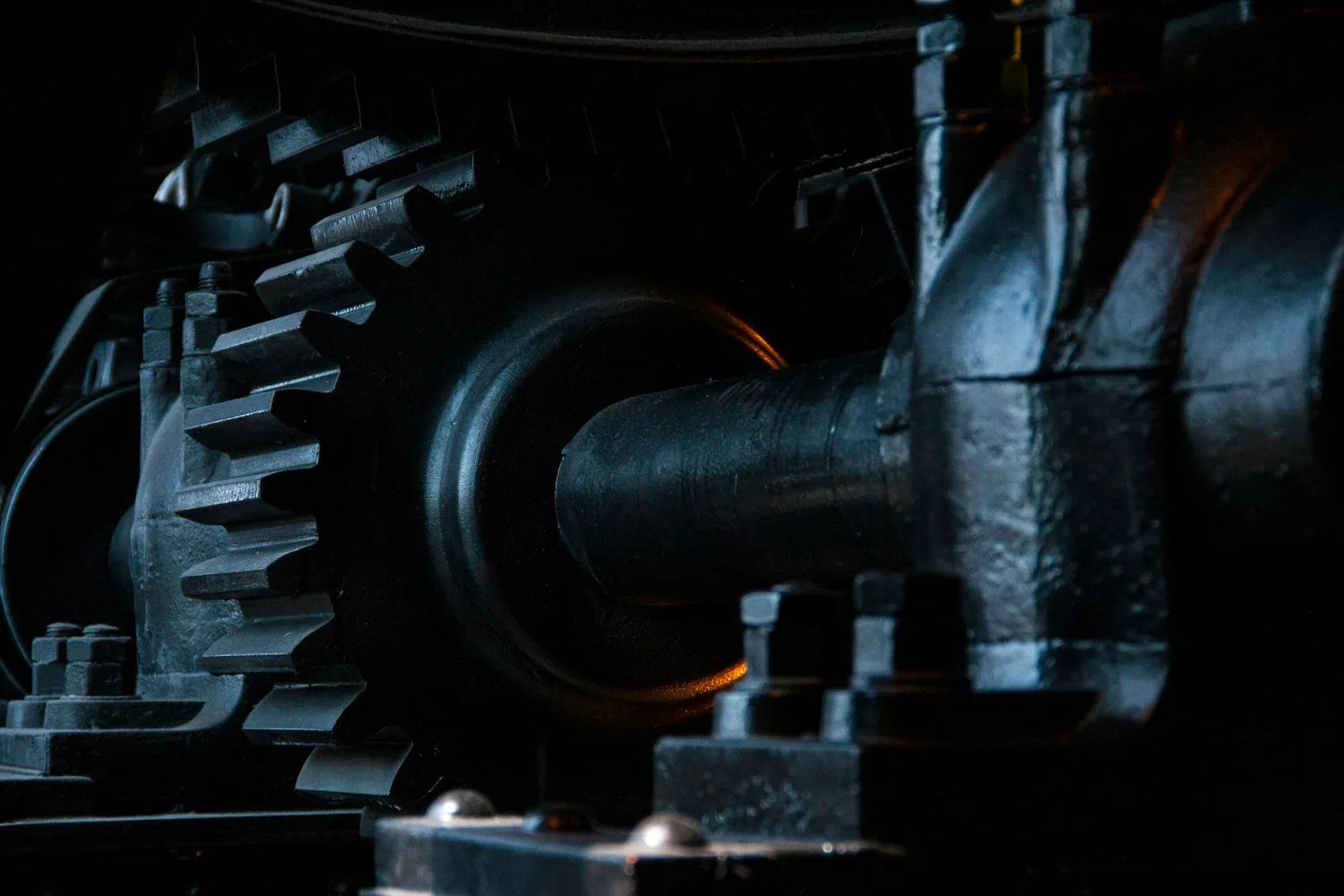
Cover photo: Isis França on Unsplash