
Robot Arm Design with FEA: How to Get the Stiffness, Payload and Accuracy You Need

Introduction
A robot arm is only as good as its structure. Motors and controllers can do a lot, but they cannot make up for an arm that bends under its payload, takes too long to stop shaking after a move, or is so heavy that it needs oversized motors to reach the cycle time you want.
Finite Element Analysis (FEA) lets robotics teams size links, joints and end effectors on screen, check them in their worst-case poses and take weight out where it does nothing, all before a single part is machined. This guide explains what really limits a robot arm's accuracy and payload, and how simulation helps you design around it.
What Limits a Robot Arm's Accuracy?
When the tool tip ends up in the wrong place, the cause is usually a combination of small effects that add up along the arm:
- Link deflection: each link bends and twists under the payload, its own weight and the forces from motion.
- Joint compliance: gearboxes, bearings and joint housings are often more flexible than the links themselves, especially compact reducers under high torque.
- Thermal growth: motors and gearboxes warm up during operation and the structure grows with them.
- Backlash and play in the drive train.
FEA models the links and housings in detail and includes the joint stiffness from the gearbox and bearing datasheets, so you can see which part of the arm contributes most to the error and fix that first.
Sizing Links for Payload and Stiffness
The worst case is usually the arm fully stretched out, carrying its maximum payload while braking hard. Checking only the nominal pose can hide the real problem.
- Loads: payload, the weight of the arm itself and the inertia forces from acceleration and deceleration, taken from the motion profile.
- Sections: hollow, closed sections give the most stiffness for their weight, in both bending and torsion.
- Materials: aluminium, steel and carbon fibre each trade weight, stiffness and cost differently, and FEA shows which one actually meets the deflection target.
- Weight: every gram saved near the tool tip reduces the torque needed at every joint behind it.
We took this approach in our structural analysis of a 6-DOF robotic drilling arm and its joints, where the whole arm and its bolted joints were checked together under the drilling loads.
Joints, Bearings and Bolted Connections
Loads in a robot arm concentrate at the joints, so that is where stress, wear and loss of stiffness usually start.
- Joint housings and bearing seats need to be stiff enough to keep the bearings properly aligned under load.
- Bolted flanges between links have to stay clamped: FEA with contact shows whether the joint opens or slips under the worst load.
- Cable routing holes and cut-outs near joints create stress concentrations that are easy to miss without a detailed model.
Vibration and Settling Time
In many applications the real limit on cycle time is not how fast the arm can move, but how long it takes to stop vibrating at the end of a move.
- Modal analysis finds the natural frequencies of the arm in each pose. The lowest one decides how quickly it settles, and it drops as the arm stretches out.
- Raising that frequency, by adding stiffness or removing mass far from the base, lets the controller move faster without overshoot.
- The results also help the controls team, who need the structural frequencies to tune the servo loops.
End Effectors and Grippers
The end effector sits at the very end of the arm, so its weight costs payload and its flexibility costs accuracy.
- Grippers and tool mounts need to be light and stiff at the same time, which makes them ideal candidates for FEA-led design.
- Many are made from aluminium or from 3D-printed and moulded polymers such as PA12 or carbon-filled nylon, where choosing the right material matters.
- Gripper fingers flex thousands of times a day, so strain and fatigue are worth checking as well as strength.
Our FEA material comparison of polycarbonate, PA11, PA12 and carbon-filled PA12 and our FEA of a nylon injection-moulded part show the kind of polymer analysis that goes into these parts.
Motors and Actuators
The structural results feed straight into motor and gearbox selection: the payload, the arm's inertia and the target accelerations set the torque each joint needs.
- A lighter, stiffer arm can often use smaller motors and gearboxes, which saves weight and cost at every joint.
- For custom actuators, electromagnetic FEA of an electric machine predicts torque, magnetic flux and losses before a prototype is wound.
- Thermal analysis checks that motors and drives stay within their temperature limits through a full duty cycle.
Collaborative Robots and Collisions
Collaborative robots work next to people, so how they behave in a collision matters as much as how accurately they move.
- ISO/TS 15066 gives the limits on contact forces and pressures that power- and force-limited cobots are designed around.
- Simulation helps you understand what happens in a contact, how padding and rounded shapes spread the load, and how the arm structure responds.
- For impacts and crashes, explicit dynamics is the right tool; we used it in our impact simulation in Ansys Explicit Dynamics.
What We Need to Start
- 3D CAD of the arm or end effector (STEP, IGES, Parasolid or native files), or drawings for our 3D CAD team to model.
- Payload, reach and the accuracy or deflection you need.
- The motion profile: speeds, accelerations and the poses you care about.
- Gearbox, bearing and motor datasheets for each joint.
- Materials for each part, and any test data you already have.
Frequently Asked Questions
Can FEA predict the tool-tip accuracy of our robot?
It predicts the part of the error that comes from structural and joint deflection under load, which is usually the largest part you can design out. Errors from calibration and control are handled separately.
Can you help us make our robot arm lighter?
Yes. We find where material does little work, test lighter sections and materials, and check that the lighter arm still meets your stiffness, strength and vibration targets.
Do you work with robotics startups?
Yes. Simulation is especially valuable early on, when each prototype round is expensive. We can start from a concept model and grow the analysis with the design.
How do we get a quote?
Send your CAD files and a short description through our contact page. We will reply with a scope, timeline and quote.
Build a Stiffer, Lighter Robot Arm
Whether you are designing a new arm, an end effector or a complete robot cell, our engineers can analyse it and show you exactly where to improve stiffness, weight and accuracy. Send us your CAD files and requirements, and we will recommend the right analysis and reply with a clear scope and quote.
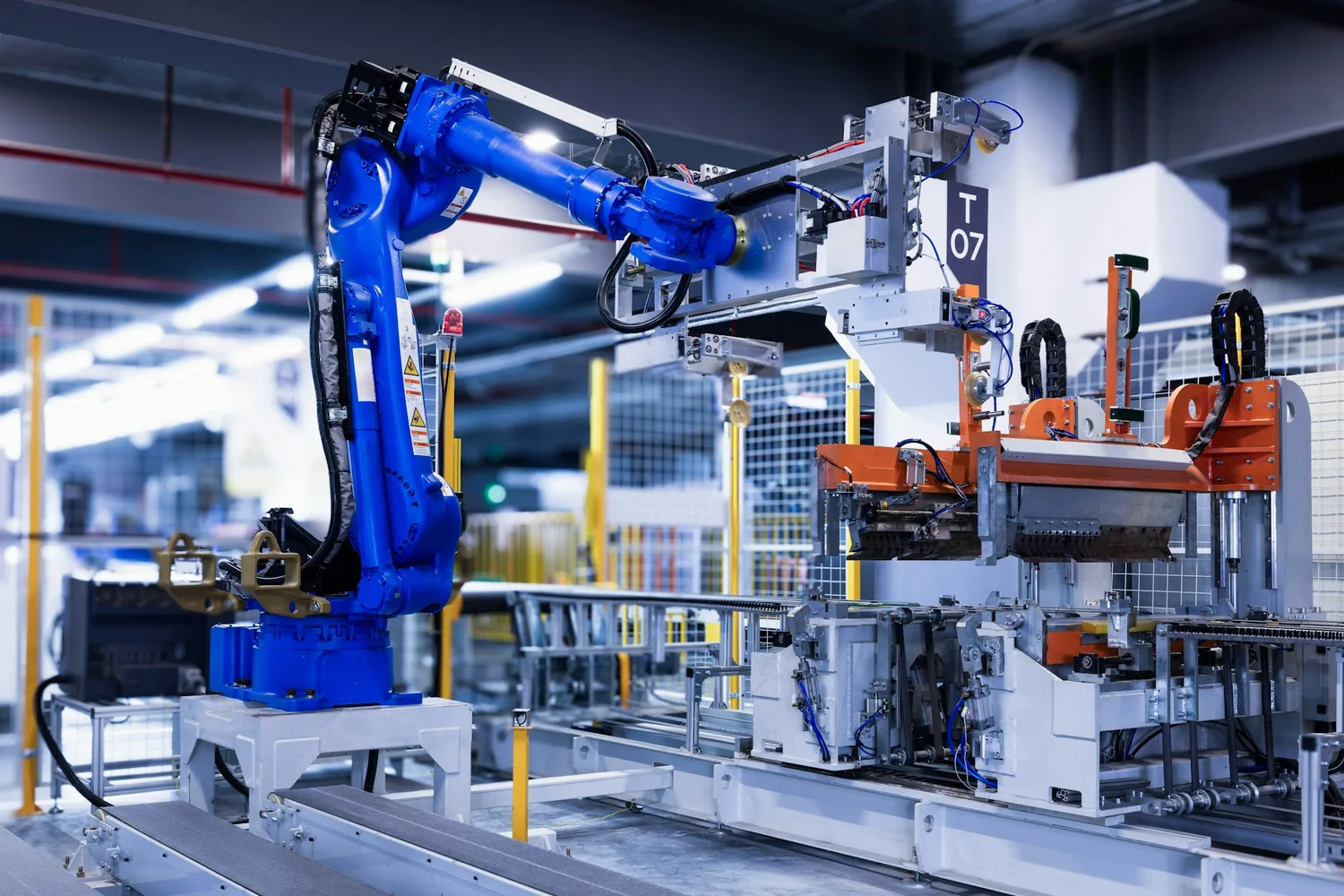
Cover photo: Homa Appliances on Unsplash